





May Day Under Police Watch in Noida: Workers’ Resistance Persists
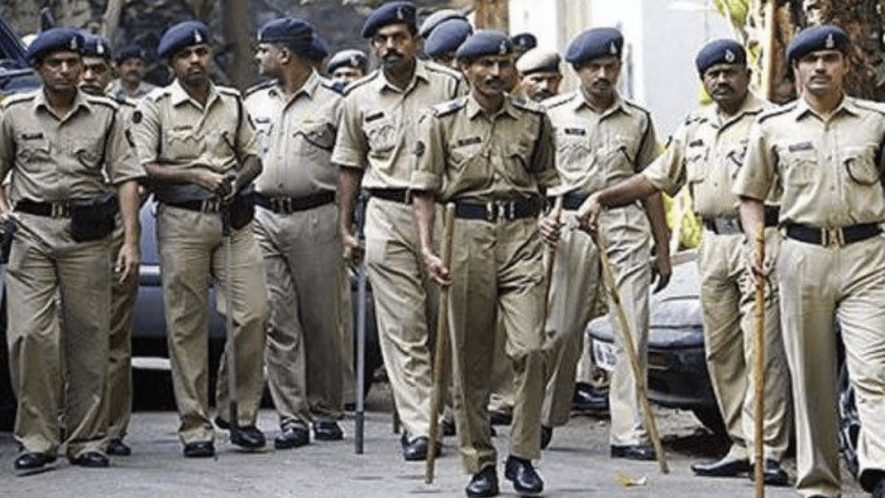
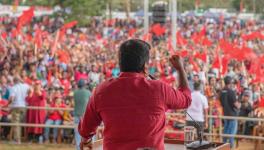
Representational Image
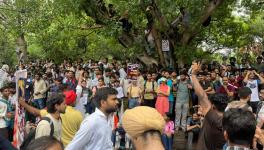
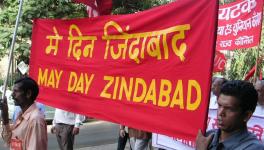
New Delhi/Noida: This year’s International Workers’ Day on May 1, in Noida and the industrial belt of Gautam Buddh Nagar was far from a routine commemoration. Instead, it unfolded as a politically charged moment shaped by workers’ assertions of rights, visible state surveillance, and an ongoing confrontation between labour and authority. Despite heavy police deployment and administrative restrictions, workers not only observed May Day but also sent a clear message of unity and resistance.
From early morning, an unusually high police presence was visible across Noida, Greater Noida, and adjoining industrial clusters. Security personnel were stationed outside several factories, reportedly to prevent workers from assembling or organizing collective events. According to labour leaders, in multiple instances activists were placed under informal house detention, prevented from putting up banners and posters, and even discouraged from raising slogans. The administration’s approach appeared aimed at ensuring that workers’ collective visibility on a politically significant day like May Day remained minimal.
Yet, these efforts did not entirely succeed.
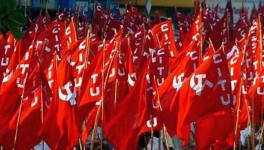
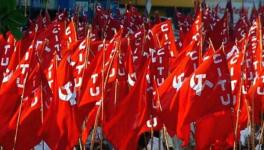
At several locations—including the Anmol Industries unit in Greater Noida—workers and members of the Centre of Indian Trade Unions (CITU) gathered in small but determined groups. They hoisted red flags, held brief meetings, and reaffirmed their commitment to labour rights. For many participants, the act itself carried symbolic weight: a declaration that intimidation and restrictions could not silence workers’ voices.
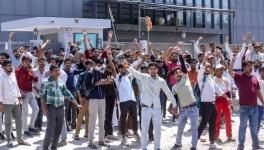
This year’s May Day observance must be understood in the backdrop of the recent wave of labour unrest that began in Noida on April 9. Thousands of workers had taken to the streets, demanding an increase in minimum wages, implementation of an eight-hour workday, fair overtime compensation, and enforcement of basic labour protections. Workers argued that wages ranging between ₹11,000 and ₹13,000 per month were grossly inadequate in the face of rising living costs.
The movement quickly grew in scale, drawing attention from both the administration and industrial management. However, tensions escalated following incidents of violence reported on April 13. In the aftermath, the region witnessed intensified policing: detentions of workers and activists, frequent raids, and the creation of what many described as a “security grid” across industrial zones. Labour groups have consistently alleged that these actions went beyond maintaining law and order and were aimed at suppressing the workers’ movement itself.
The atmosphere of control extended into May Day.
While authorities appeared determined to prevent large gatherings, workers adapted by organizing decentralized events. These smaller assemblies became acts of symbolic defiance—assertions that workers would not abandon their historical legacy or collective identity under pressure.
A notable moment occurred when Gangeshwar Dutt Sharma, Vice President of CITU (Delhi-NCR), engaged in a heated exchange with police officials who attempted to stop him and his colleagues from hoisting the flag and addressing workers. Sharma reportedly asserted that in a democratic society, such restrictions were unacceptable, adding that even the threat of force would not deter them from observing May Day.
He further stated that an atmosphere of fear and intimidation was being deliberately created across industrial areas. According to him, the administration was attempting to divert attention from workers’ real issues—low wages, lack of basic rights, and exploitative conditions—by imposing restrictions on their democratic expressions. “Industrial peace cannot be established through repression,” he emphasised, arguing that genuine stability would only emerge when workers receive their due rights and exploitative practices are addressed.
Sharma also highlighted persistent violations of labour standards. Workers, he noted, are frequently denied overtime payments, weekly holidays, and bonuses—benefits that are legally mandated. He described attempts to prevent May Day celebrations as deeply troubling, given the historical and symbolic importance of the day.
Mukesh, district president of CITU in Gautam Buddh Nagar, drew attention to another structural issue: regional disparities in minimum wages. He pointed out that workers in Delhi, Gurugram, and Noida receive significantly different wages despite facing similar living costs. This disparity, he argued, has contributed to growing dissatisfaction among workers. Even the recent wage revisions, he said, fall short of meeting basic livelihood needs.
Mukesh further alleged that workers are routinely made to work 10–12 hours a day without appropriate overtime compensation. He also expressed concern over what he described as intimidation tactics by authorities, including police visits to factory gates and the filing of questionable legal cases against workers.
Bringing a broader perspective, A.R. Sindhu, National Secretary of CITU, connected the current struggle to the historical legacy of May Day. She recalled that the demand for an eight-hour workday was won through intense struggles over a century ago, yet workers continue to raise the same demands today. This, she argued, reflects the unfinished nature of the fight for labour rights. She cautioned that any further weakening of labour laws would only deepen workers’ vulnerabilities.
Rupesh Verma, district secretary of the All India Kisan Sabha (AIKS), emphasised the importance of worker–farmer solidarity. He described May Day not merely as a commemorative event but as a symbol of ongoing struggle. Attempts to restrict its observance, he said, were unfortunate but ultimately ineffective, as workers had demonstrated their resolve to continue fighting for their rights.
Labour organisations have also raised broader concerns about the role of the state. They argue that the government’s actions signal an attempt to reassure industrial interests that profitability will be protected, even at the cost of labour rights. According to them, the recent upsurge in worker mobilisation has exposed the exploitative conditions underlying Noida’s image as a modern industrial hub.
The developments in Noida thus raise critical questions about India’s development trajectory. Can industrial growth be sustained if it sidelines workers’ rights? What does it mean for democratic practice when expressions of labour solidarity face restrictions? These questions go beyond a single region and reflect larger tensions within the country’s economic model.
May Day 2026 in Noida stands as a powerful illustration of these contradictions. On one hand, there is visible state control—police presence, restrictions, and surveillance. On the other, there is persistent worker resistance—adaptable, determined, and rooted in a long history of struggle.
Despite the constraints, workers succeeded in marking the day, reaffirming their demands, and sustaining their collective voice. Their message was clear: repression may limit visibility, but it cannot extinguish the underlying grievances or the will to resist.
In that sense, the events in Noida are not just about one day or one region. They are indicative of a broader moment in India’s labour landscape—one where questions of dignity, fairness, and rights are being asserted with renewed urgency. And as history has shown, such assertions, once articulated collectively, rarely fade away quietly.
(This is a translated version of the original article published on our Hindi website)
Get the latest reports & analysis with people's perspective on Protests, movements & deep analytical videos, discussions of the current affairs in your Telegram app. Subscribe to NewsClick's Telegram channel & get Real-Time updates on stories, as they get published on our website.