





HKH Region Faces Climate Financing Shortfall: ICIMOD Report
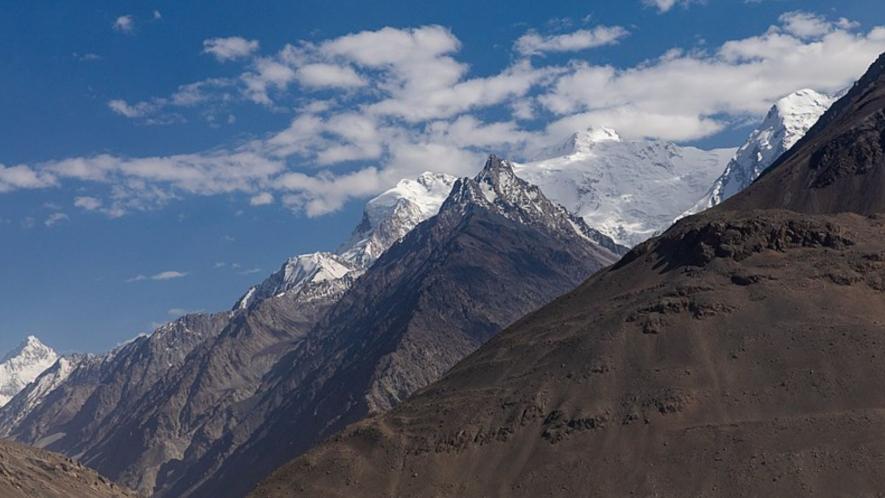
Image Courtesy: Wikipedia
With climate change impacts turning worse and rising temperatures posing a serious threat, developing countries are facing a big challenge to arrange funds to fight them. A latest report revealed that Hindu Kush Himalaya (HKH), a vital water source for billions in the South Asian region, faces a staggering climate financing shortfall.
Kathmandu-based the International Centre for Integrated Mountain Development (ICIMOD), which conducted the analysis, highlighted that the current financial commitments were insufficient to address the region’s adaptation and mitigation needs, projecting a required total of $12.05 trillion by 2050.
Ghulam Ali, ICIMOD’s innovative investment specialist and lead author of the report, said: “Mobilising the ambitious target of USD 12 trillion is like climbing the Everest of funding. The strategy to mobilise these resources has to be creative, comprehensive, and collective to achieve such significant goals.”
In November 2025, keeping this factor into consideration, the UN Climate Change Conference (COP29) ended with a new finance goal to help countries to protect their people and economies against climate disasters, and share in the vast benefits of the clean energy boom.
The COP29 has set a triple finance to developing countries, from the previous goal of $100 billion annually, to $300 billion annually by 2035.
However, ICIMOD’s analysis concludes that the annual climate finance requirement for the eight HKH countries is approximately $768.68 billion. China and India account for 92.4% of the total projected need.
Pema Gyamtsho, Director General of ICIMOD said in the report that: “Evidence and analysis are an important part of advocating and influencing policy development for climate financing in the region,” .
He further said the grounded data this report offers enhances understanding of the actions required to address the financial needs of our region to build economic resilience.
The report identifies a stark disparity in climate vulnerability and financial capacity. The countries highly exposed to climate effects, including Bangladesh, Bhutan, India, Myanmar, Nepal, and Pakistan, are also the least equipped to manage these risks.
The HKH region faces an adaptation burden far exceeding global averages, forcing nations, such as Afghanistan, Nepal, and Pakistan to spend significantly more than income-group averages on disasters and adaptation, trapping them in a cycle of repair with limited funds for other needs.
The crisis is framed as an economic equality issue. The annual per capita climate finance needs ranges from as low as $24 in some countries to over $2,126 in others, representing 6% of GDP to a crippling 57%, respectively. This places immense pressure on policymakers who are facing trade-offs between development and survival for vulnerable populations, the report said.
To bridge the funding gap, the report recommends a three-track approach: improve access to existing multilateral funds, pioneer innovative mechanisms like debt-for-climate swaps, and increase public spending for mountains and environmentally sensitive areas.
Get the latest reports & analysis with people's perspective on Protests, movements & deep analytical videos, discussions of the current affairs in your Telegram app. Subscribe to NewsClick's Telegram channel & get Real-Time updates on stories, as they get published on our website.