





TERI WSDS 2026: From Dialogue to Transformation?
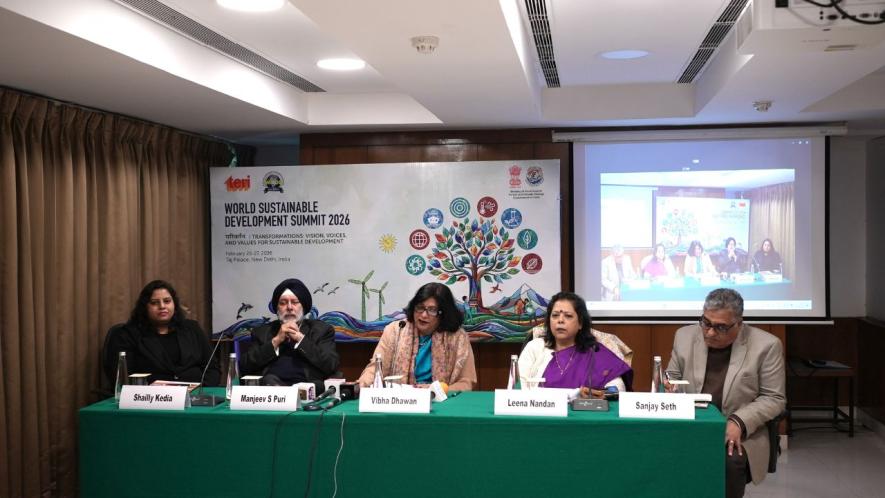
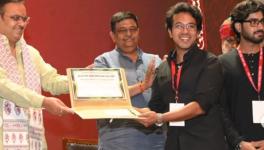
wsds pre event press conference recently held in new delhi
New Delhi: As climate negotiations remain gridlocked and the global North continues to dilute its historical responsibility for the climate crisis, The Energy and Resources Institute (TERI) on has announced the 25th edition of the World Sustainable Development Summit (WSDS), positioning it as a platform to foreground Global South concerns and localised climate action. The Silver Jubilee edition of the Summit will be held from February 25 to 27, 2026, in New Delhi.
At a pre-event press conference in the Capital, TERI leaders and former policymakers outlined the summit’s priorities amid what they described as an increasingly fragmented global climate regime—marked by shrinking climate finance, stalled mitigation commitments, and growing geopolitical tensions.
Over the past 25 years, WSDS has evolved into one of the visible sustainability platforms hosted in the Global South, bringing together governments, multilateral institutions, industry leaders, financiers, and civil society. While global climate forums, such as COP meetings, continue to be dominated by Northern capitals and corporate interests, WSDS seeks to frame sustainability debates through the lens of development, equity, and differentiated responsibilities.
As climate impacts intensify across the Global South—through heatwaves, floods, droughts, and food insecurity—the question remains whether dialogue-heavy platforms can translate ambition into structural transformation.
Silver Jubilee in a Shifting Climate Order
The timing of WSDS 2026 is politically significant. India is set to host the BRICS Summit later this year, where climate action, green finance, energy transition, and sustainable development are expected to figure prominently. TERI officials said WSDS would complement these priorities, especially as BRICS countries increasingly push back against Western dominance in global climate governance.
Vibha Dhawan, Director General, TERI, said sustainability debates today were unfolding amid overlapping crises—climate breakdown, economic inequality, and geopolitical realignments.
The summit’s theme—“परिवर्तन | Transformations: Vision, Voices, and Values”—she said, reflected the need to move beyond rhetorical commitments towards implementation. “Vision without participation and values cannot lead to meaningful outcomes,” Dhawan noted, stressing that inclusive transitions must be central to climate action.
However, critics have long argued that the language of “transformation” is increasingly being appropriated by corporate and policy elites without challenging extractive growth models or unequal power relations. Against this backdrop, WSDS 2026 will be closely watched for whether it interrogates the political economy of sustainability or merely accommodates it.
Policy Coherence and Institutional Gaps
In her address, Leena Nandan, Distinguished Fellow at TERI and former Secretary of the Ministry of Environment, Forest and Climate Change (MoEFCC), spoke on the role of State institutions in environmental governance. Drawing on decades of policy experience, she emphasised the need for coherence across ministries and levels of government.
“The sustainability journey TERI embarked upon 25 years ago has found resonance across the world,” Nandan said, adding that WSDS 2026 would offer “hope for a better tomorrow.”
Environmental governance in India continues to face criticism over regulatory dilution, weakened public consultation processes, and project clearances that prioritise growth over ecological and social safeguards. Nandan’s remarks, while optimistic, also underscored the gap between policy intent and implementation that defines much of India’s climate and environmental record.
Science, Policy, and Whose Evidence Counts?
Presenting an overview of the summit, Shailly Kedia, Curator of WSDS and Director at TERI, described the summit as a science-policy platform aimed at evidence-based decision-making. She outlined focus areas, such as climate mitigation and adaptation, energy transitions, green finance, and resilient development.
While the emphasis on scientific evidence is significant, activists have often pointed out that “science” in climate policymaking is not neutral. Whose data is prioritised, whose knowledge systems are recognised, and whose voices are marginalised remain contested questions—particularly for indigenous communities, informal workers, and climate-vulnerable populations.
Whether WSDS 2026 will create space for these subaltern perspectives, beyond institutional and expert voices, remains a key concern.
Global South, Local Action—and Global Power
Offering a diplomatic perspective, former Ambassador Manjeev Singh Puri, Distinguished Fellow at TERI, placed WSDS within the broader geopolitics of climate negotiations. He said collective action by the Global South was essential to counterbalance entrenched interests in multilateral forums.
“Major sustainability conferences are often held in cities like New York, Vienna, or Geneva,” Puri said. “But where do the real problems lie? Platforms like WSDS bring the conversation closer to where climate impacts are being lived.”
He also highlighted TERI’s long-standing emphasis on integrating scientific research into sustainability discourse. However, the challenge remains translating local action narratives into binding global commitments—particularly on climate finance, technology transfer, and adaptation support, areas where developed countries have repeatedly fallen short.
A Platform at a Crossroads
Sanjay Seth, Chairperson of the Silver Jubilee Committee, WSDS, and Senior Director at TERI, reflected on the summit’s 25-year trajectory. He reiterated the need to strengthen Global South voices and reassert the principles of equity and justice in sustainability transitions.
Seth said WSDS 2026 aimed to shape alternative narratives on development and climate action and call for media support. Yet, as climate discourse becomes increasingly corporatised—through net-zero pledges, carbon markets, and green finance instruments—the real test for WSDS will be whether it can challenge dominant paradigms rather than merely accommodate them.
Beyond Symbolism?
Leaders from industry, technology, finance, and civil society are expected to participate in WSDS 2026, sharing experiences from implementation on the ground. While such multistakeholder engagement is often presented as a strength, critics caution that power asymmetries between corporate actors and affected communities can dilute accountability.
As TERI marks the Silver Jubilee of WSDS, the summit stands at a crossroads. At a time when climate impacts are deepening inequality and exposing the limits of market-led solutions, the question is no longer about convening conversations—but about whether platforms like WSDS can meaningfully influence policy, redistribute power, and advance climate justice.
Whether WSDS 2026 can move from dialogue to genuine transformation will depend on how far it is willing to confront uncomfortable questions about growth, responsibility, and justice—questions that remain central to the Global South’s climate struggle.
Get the latest reports & analysis with people's perspective on Protests, movements & deep analytical videos, discussions of the current affairs in your Telegram app. Subscribe to NewsClick's Telegram channel & get Real-Time updates on stories, as they get published on our website.