





US Imperialism, Attack on Venezuela and Global South
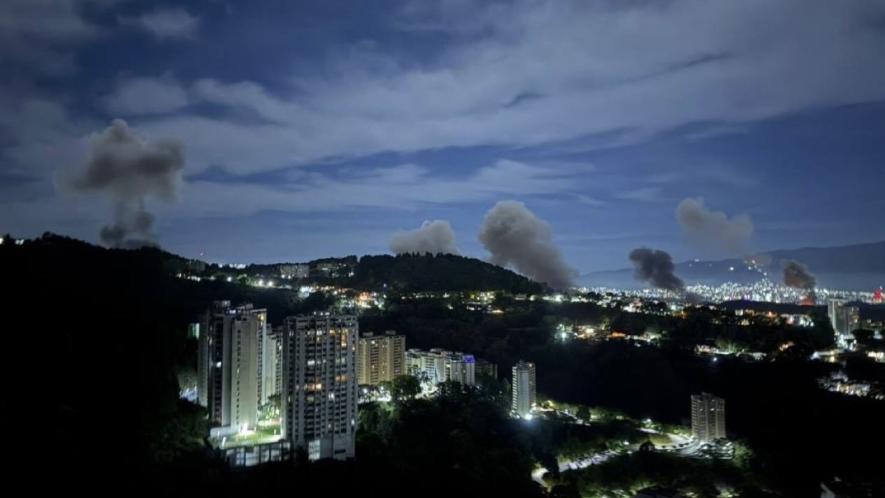
Smoke rises in Caracas, Venezuela on January 3, 2026 following a US bombing campaign. Photo via X
The United States’ assault on the people of Venezuela is a unilateral coercive economic war in all its macabre dimensions, resulting in the deaths of tens of thousands and the distress migration of many more. This war has been ongoing since the beginning of the 21st century. It has now culminated in the kidnapping of President Nicolás Maduro and his spouse and comrade, Cilia Flores, alongside air attacks that killed scores of people, in violation of every tenet of international law.
The attack should not be treated as an episodic shock or a personality-driven outburst. It must be understood, unlike in the past where verbiage sought a mask, as the naked enactment of a doctrine the US government now articulates with effrontery: that of hemispheric primacy, enforced through armed coercion but justified through the language of security. US President Donald Trump has criminally pronounced that the US government “will run Venezuela” and once again gratuitously appropriate its natural resources, oil above all.
Read Also: ‘We’re Going to Run the Country’
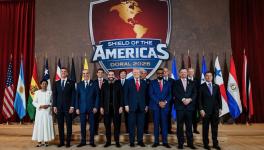
What does this criminal act imply and what long-run strategy does it reveal? The 2025 US National Security Strategy answers with remarkable clarity. It explicitly commits the US to “assert and enforce” a “Trump Corollary” to the Monroe Doctrine, to restore American “preeminence” in the Western Hemisphere, protect “access to key geographies,” and identify “strategic points and resources” for “protection and joint development.”
It sets out a programme to deny “non-Hemispheric competitors” control over strategically vital assets, and an intention to identify “strategic points and resources” for protection and development, alongside a posture of economic coercion masquerading as commercial diplomacy; tariffs, reciprocal agreements, and investment positioning interwoven with security “partnerships”. This is a programme to negate strategic autonomy in Latin America.
In other words, externally orchestrated or enforced regime change, in violation of international law, is here not an accidental excess of an individual US President. It is the violently criminal edge of a policy architecture that revolves around imperialism.
Some apologists for US imperialism present the assault as a necessary intervention to remove an “illegitimate dictator” and restore democracy. Yet the public rationale offered by the Trump administration that frames a military operation as law enforcement against “drug trafficking” is precisely what legal experts are soundly disputing. Drug trafficking and gang-related charges do not supply an internationally recognised basis for the use of force; absent self-defence, host-state consent, or UN Security Council authorisation, the operation clearly reads as a textbook violation of the UN Charter’s prohibition on force and non-intervention.
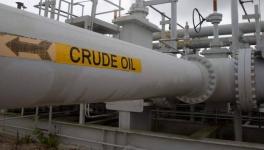
The ideological structure is familiar: democracy-talk sanitises imperialist coercion, while the material motive is disclosed in the same breath. President Trump saying the US would “run” Venezuela “for now,” and emphasising rebuilding (to be read as takeover) of its oil industry, is an extraordinary admission that collapses the “humanitarian” façade into a plainly predatory ambition to retake the Venezuelan political economy. After all, Venezuela holds the world’s largest proven oil reserves, concentrated in the Orinoco belt.
Some mainstream media commentary treats this criminal act of the US government as an ostensible dramatic break from “America First” restraint. That framing is politically convenient: it seeks to individualise what is patently structural. The US coercive campaign against Venezuela is older than Trump, and it spans administrations with different rhetorical styles.
Read Also: The US War on Venezuela Began in 2001
Public sources, including US Congressional research, trace US sanctions policy as a long arc: targeted measures expanded into financial restrictions, then deepened into oil-sector pressure and asset controls, including the tightening around PDVSA (the oil producing company of Venezuela) and constraints on transactions designed to choke the administrative capacity of the Venezuelan government. This was accompanied by repeated coup attempts, the setting up of parallel illegal governments, and support for criminal elements inside Venezuela who sought to illegally subvert the government.
The criminal US action of January 2026 is an escalation, brutal and overt, but not conceptually new. It is the terminal point of the repertoire of US imperialism: delegitimise, sanction, isolate, sponsor criminal alternatives, intensify coercion, followed by the illegal “rescue”.
The US government's chosen legal idiom in this case; arrest, indictment, narco-terrorism, is not incidental. It is designed to convert regime change through ideological sleight of hand into “policing”, thereby seeking to evade two constraints: international law constraints on the use of force, and domestic legal constraints. It also provides a cover behind which US “allies” can fall into line without seeming too strategically diffident to the peoples of their own countries.
“Left-wing” apologists of US imperialism try to construct false equivalence arguments about which countries get to violate sovereignty. These arguments are often deployed not to analyse, but to blur moral and legal specificity, turning criminal acts of the US government into a fog of cynicism. The relevant baseline remains: no force without self-defence or UN authorisation. Venezuela evidently does not pose an existential threat to the US people, but the Bolivarian process is a challenge to US imperialism.
The assault on Venezuela is about signalling to Latin America and to rivals that the US government is prepared to reintroduce direct coercive enforcement through criminal military action where illegal unilateral sanctions and criminal proxies have not delivered strategic submission rapidly enough.
The criminal US attack on Venezuela in January 2026 shreds whatever was left of the cosmopolitan neoliberal cover story of US imperialism. The ongoing trade war of the US government, which too is in violation of international law, complements this.
The US is carrying out a criminally violent regime-change operation in Venezuela and is attempting to justify it as policing, while simultaneously spouting the language of imperial control and resource extraction that is explicitly neo-colonial.
US imperialism is currently the clear and present danger to world peace and the maintenance of international law, as has been repeatedly demonstrated. However, some governments in the Global South, including the current Indian government, are exhibiting a degree of strategic timidity vis-à-vis US criminal actions that is detrimental to their own national interests by every conceivable authentic definition.
In this light, the defence of sovereignty in the Global South requires the expansion of South-South Cooperation from the economic domain to the security domain. Such a defence of sovereignty is a necessary condition for any progressive social transformation, which must consequently confront US imperialism.
Shirin Akhter is Associate Professor at Zakir Husain Delhi College, University of Delhi: C. Saratchand is Professor, Department of Economics, Satyawati College, University of Delhi. The views are personal.
Get the latest reports & analysis with people's perspective on Protests, movements & deep analytical videos, discussions of the current affairs in your Telegram app. Subscribe to NewsClick's Telegram channel & get Real-Time updates on stories, as they get published on our website.