





Green Energy, Old Inequalities?
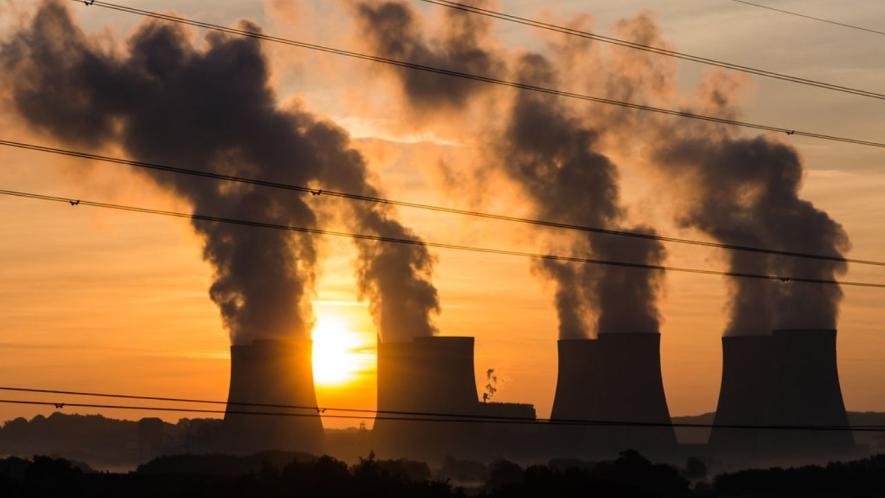
Representational Image. Image Courtesy: Flickr
India’s shift to renewable energy is often narrated as a success story. Wind turbines tower over agricultural landscapes and solar parks spread across deserts and legislators celebrate ambitious targets for the production of sustainable electricity. The growth story of India has been renewable energy, with promises of 500 GW of non-fossil fuel capacity and net-zero emissions by 2070.
But there’s a problem that’s seldom discussed underneath the rhetoric of green development and sustainability: who is footing the bill for the move to renewable energy? The answer increasingly points to India’s development trajectory following a well-established pattern.
Urban consumers, businesses and investors usually benefit from renewable energy, but it is rural communities, farmers, pastoralists and Indigenous peoples – whose access to land and means of subsistence is being undermined in the name of green development – who often pay the price. The switch to clean energy could be key. But it isn’t always fair.
The Recent Land Boom
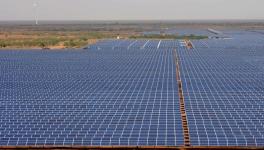
Renewable energy is frequently claimed to be environmentally benign relative to large hydroelectric projects or coal mining. While solar and wind energy projects avoid many of the pollutants tied to fossil fuels, they take a heavy toll on land. Utility-scale solar parks require large amounts of land. Wind farms require large land corridors, transmission infrastructure, roadways and sub-stations. Transmission networks, green hydrogen projects and battery manufacturing sites put even more pressure on land resources. States are competing for renewable energy investments. A new land rush is underway.
Rajasthan, Gujarat, Maharashtra, Karnataka, Andhra Pradesh and Tamil Nadu all have vast renewable energy projects transforming their rural landscapes. Land that has traditionally been used by communities for communal resource management, forest-based livelihoods, seasonal farming or grazing is increasingly being tapped for energy infrastructure. This means local rights and climate goals are increasingly at odds.
The Invisible Nature of the Commons
Understanding land in policy contexts is one of the biggest hurdles. Governments often turn to official ownership data to see if property is available for renewable energy projects. “Wasteland” areas are often considered suitable for solar production because they seem underused in administrative records.
However, many "wastelands" are far from being empty. Commons support small farmers, forest-dependent communities, pastoral groups and landless households across rural India. These settings offer grazing areas, fuelwood, feed, access to water and seasonal revenue opportunities. Such uses often fall out of planning processes because they are poorly documented in official property records.
As renewable projects expand, communities can be stripped of resources that have supported livelihoods for generations, even if they are not considered displaced populations in official numbers. The problem is not just compensation. It is a recognition one.
Green Energy, Agrarian Distress
The lines between agriculture and renewable energy are increasingly blurred. In a number of states, private developers are leasing agricultural land for solar energy projects. Some of the farmers have a steady income through lease arrangements and it reduces the risk of unstable agricultural markets and climate uncertainty.
But they are not equal for everyone. Agricultural productivity is falling and the biggest beneficiaries of renewable leasing agreements are often big landowners but landless labourers, tenant farmers and farm workers may lose their jobs. This raises a more general question in the political economy: can the expansion of renewable energy have the unintended consequence of exacerbating existing rural disparities?
The conversion of agricultural land to energy infrastructure may generate novel forms of exclusion in areas already ailing from agrarian distress. Landowners are paid rent, but farm workers may have no such alternatives. And, so the transition to renewable energy is at risk of repeating the patterns that have attended previous waves of infrastructure expansion.
Advice From Coal-Producing Regions
Environmental movements have attacked coal mining for decades for its social and environmental damage. Mining operations led to the displacement of communities, the destruction of ecosystems and the concentration of benefits far from the areas affected.
Renewable energy was supposed to be a different model. Some recent conflicts, however, indicate that renewable energy projects can also generate local grievances when issues such as compensation, participation and land rights are not resolved.
Solar parks are not coal mines. These have significant difference in effects on the ecosystem. Rather, it points to an important reality: even if the energy source changes, questions of distribution, ownership and control persist. A shift that ignores local communities could repeat many of the governance mistakes associated with the development of traditional energy.
The Issue of Energy Justice
Increasingly, governments are recognising the importance of energy justice. The concept highlights three interrelated aspects: fair distribution of advantages and disadvantages, meaningful participation in decision-making and the identification of vulnerable populations.
This approach to India’s renewable energy transformation raises disturbing issues.
- Who decides where renewable projects are sited?
- Who is included in the planning?
- Who benefits financially from green infrastructure?
- Who pays the price when there is less access to resources and land?
Far too often, discussions around renewable energy are more about megawatts installed than justice served. In this narrow perspective, the energy transition is understood as a technological problem. Indeed, it is a social and political process.
Controversy Over Transmission Infrastructure
The land issue is not about the details of power projects. The transition to renewable energy in India will need a significant transmission infrastructure to transport electricity from resource-rich areas to urban and industrial demand centres. Transmission corridors transect communal land, woodland and farmland. Compared with solar parks they are less visible, but they create specific environmental and social challenges.
The increasing contestation around transmission projects shows how energy transitions are also about resource allocation and spatial governance as well as energy production. With greater renewable capacity there are likely to be more, rather than less, conflicts over land use.
Can Transition be Made More Just?
The question is not whether India should go for renewable energy. The change is needed because of problems with air pollution, climate change and energy security. The real question is how the change is managed. There are a number of legislative changes that could help address new inequities. Planning procedures first need to recognise the economic and social advantages of commons and move beyond rigid land classifications. Official statistics label land as “unused” but it could be essential to the local way of life.
Second, impacted communities should have a meaningful opportunity to participate in project planning and decision-making, not be asked to weigh in after important decisions have already been finalised.
Third, the benefit-sharing arrangements should include landowners as well as workers, tenant farmers, pastoralists and other groups affected by land-use changes. Finally, the renewable energy policy should be linked to broader rural development goals and not be viewed as a mere infrastructure project.
Clean Power Isn’t Enough for Fair Transition
India has some of the largest ambitions in the world for renewable energy. This has made the country a successful leader in the global energy transition and proved that clean energy can be implemented on a large scale. But installed capacity, investment levels or carbon reductions cannot be used as a gauge of the success of the transition in themselves.
Another issue to be considered when considering a shift is the extent to which inequality is decreased or increased. Climate disaster is an urgent business. But speed is not a reason to ignore fairness issues. If the growth of renewable energy follows the patterns of marginalisation, dispossession and unequal development, the transition might look green on the surface but be profoundly unequal in reality.
India is building its energy system for the future – today. The question is whether the benefits and disadvantages of such a future will be evenly spread. The answer will determine if India’s renewable revolution is a model of sustainable development or just another chapter in the country’s long story of uneven growth.
The writer is a columnist and climate researcher with experience in political research analysis, ESG research and energy policy. The views are personal.
Get the latest reports & analysis with people's perspective on Protests, movements & deep analytical videos, discussions of the current affairs in your Telegram app. Subscribe to NewsClick's Telegram channel & get Real-Time updates on stories, as they get published on our website.