





India’s Renewable Energy Success Story Must Address Rural Energy Poverty
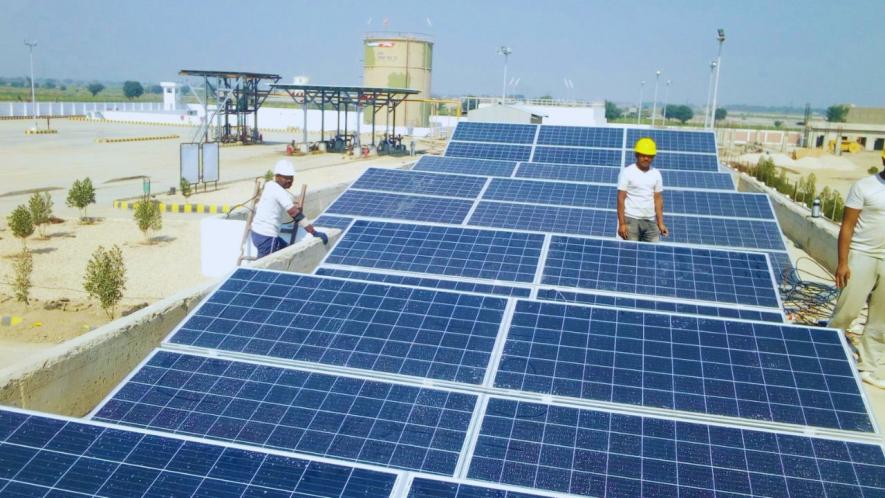
Representative image. Image Courtesy: Pexels
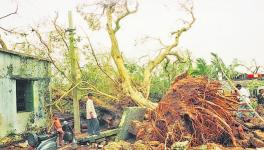
When heavy monsoon rains hit isolated areas, electricity is usually one of the first services to go down. A broken transmission line can take out power for hours or days. Such interruptions are inconvenient for urbanites. They can disrupt irrigation, health care, education and the livelihoods of rural households.
Rarely is this truth invoked in the discussion of India’s transition to renewable energy.
Over the past decade, India has become one of the world’s largest markets for renewable energy. The country has set ambitious goals for solar and wind energy, lured billions of dollars in investments and built some of the world’s largest solar parks. Government authorities routinely cite installed capacity levels as a sign of success.
These are significant achievements. As the world’s fifth-largest economy, India has to address climate change while improving its energy supply. Renewable energy is a vital component of that effort.
While installed gigawatts and climate pledges are celebrated, a critical question often remains unanswered: Has India’s pivot to renewables enhanced energy security for those who need it most?
Much of rural America still waits for the news.
Electrification is Not Equal to Energy Security
India has made substantial progress in increasing access to electricity. Schemes like Saubhagya and earlier rural electrification schemes have connected millions of families to the grid. But an electricity connection does not always mean reliable access to energy.
In many parts of rural India, there are still households which suffer from frequent power cuts, voltage fluctuations and supply disruption during heavy rains, floods and cyclones. In some locations, electricity may be technically available but unreliable for productive activities, such as irrigation, small-scale industry and food processing.
This variation is important because energy poverty is not simply about a lack of electricity. It also means deficient, unreliable and expensive access to energy services.
A household may appear electrified in government statistics, but be experiencing the real-world challenges of energy instability. This can lead to irregular watering schedules for farmers. Students may experience disruption to study hours. It can affect medical refrigeration and the operation of critical equipment in a healthcare facility. “Unreliable power supply can hamper productivity and increase operating costs of small businesses.
The challenge is to deliver actual access to reliable energy, not merely power connections.
The Limitations of a Centralised Energy Model
India’s power grid has traditionally relied on a centralised paradigm. Electricity is produced by large power plants and distributed through extensive networks before it reaches consumers. This strategy has broadened access and fueled economic growth. But it also poses risks, especially to remote and physically isolated communities.
Many rural communities are still some distance from major transmission lines. Mountainous regions, forested areas, islands and flood-prone districts sometimes face additional obstacles in maintaining a consistent electrical supply. These vulnerabilities are likely to be compounded by climate change. Extreme weather is becoming more frequent and more severe. Floods, cyclones and heatwaves are putting more pressure on energy systems, which could lead to long outages.
Such interruptions often have a disproportionate impact on rural populations. This raises an important policy question: can a large-scale project-based renewable energy transition adequately respond to the reality of rural energy poverty?
Why Decentralised Energy Is Important
Decentralised renewable energy offers an alternative. Instead of relying on distant power generation and transmission networks, decentralised energy solutions produce electricity closer to where it is used. This includes rooftop solar, solar microgrids, community solar, and hybrid renewable energy systems.
Such systems can increase resilience by reducing reliance on long transmission networks with potential failure points.
When electricity is generated locally, communities are less vulnerable to outages elsewhere on the power grid. Decentralized systems can also reduce transmission losses and make the power supply more reliable.
These benefits are especially pertinent in rural India. Solar powered irrigation systems allow farmers to be less dependent on erratic electricity schedules. Community solar projects can provide reliable electricity to schools, hospitals, and local businesses. Decentralized systems could be a more practical alternative in remote areas where extending the conventional infrastructure is costly and difficult. But the benefits are not just in performance terms.
Decentralisation and Democratic Participation
One of the less publicised benefits of distributed energy is its ability to enhance local engagement. Large infrastructure projects are normally designed and built by top down decision processes. Communities affected by these initiatives sometimes have little voice in project design, implementation or benefit-sharing arrangements.
Decentralised systems can work differently. Community-owned and controlled renewable energy projects enable participation of local communities in energy governance. People can be energy producers, not power consumers.
This distinction matters, because energy is more than a financial commodity. It also produces social and political power. Communities that have more control over energy resources are more likely to have a say in the priorities for local development. Energy projects are being tied to broader efforts to improve livelihoods, education, health care and economic opportunities.
Decentralised energy is, therefore, not just a technical solution. It is a democratically elected body too.
The Unfinished Agenda for Energy Justice
India’s renewable energy transition is often viewed in terms of investment, capacity growth and climate commitments. Justice issues receive a lot less attention.
Who benefits from investments in renewable energy? Where are the areas still energy insecure as the country moves forward? Who makes decisions on energy infrastructure?
The energy justice paradigm is a useful lens through which to explore these concerns. Three core principles of energy justice are the equitable distribution of benefits and burdens, meaningful participation in decision-making, and recognition of vulnerable populations.
In this perspective, the shortcomings of the current approaches become more apparent. Of course, large-scale renewable energy projects are a contribution to national climate objectives. But local energy inequities are not automatically addressed. People living in energy poverty are often excluded from policy debates despite being among the groups most affected by the instability of energy.
Renewable energy generation is only a part of a just energy transition. It is important to ensure that vulnerable groups benefit from transformation.
Policy Priorities: A Revision
India’s hopes in the renewable space should not be curtailed. Large scale renewable energy projects will remain important for meeting future electricity demand and reducing emissions. The question isn’t: Should we ramp up utility-scale renewable energy still more. The question is whether politicians are giving enough attention to decentralised options that directly address the energy needs of rural areas.
Today discussions on policy are often focused on more tangible indicators such as installed capacity and flows of investment. These measures are useful, but they do not completely capture the lived experience of energy availability. A community with a spotty electrical service can help national electrification numbers but still be in significant energy poverty.
That is why distributed energy deserves more policy attention. Increasing support for community solar initiatives, improving ways to finance decentralised projects and increasing local participation in energy planning could all contribute towards bridging the still existing rural energy access gap.
A Transition for All
India’s energy transition to clean energy will shape the course of the country’s development for decades. We should not measure the success of the transition by how many solar panels we installed or how much investment in renewable energy we attracted. It should also be judged by the degree to which it brings tangible benefits to people’s everyday lives.
Reliable, affordable electricity access is inextricably linked with education, healthcare, employment and economic opportunity in rural communities. India’s challenge is not just to generate more renewable energy. It makes sure that the benefits of renewable energy get to those who have been left behind.
Infrastructure alone will not suffice for a people-centered energy transition. It demands participation, inclusion and justice. Not all problems of rural India can be solved by decentralized renewable energy. If this is not done, some of the nation’s most vulnerable places are at risk of being excluded from the country’s success story on renewable energy.
If India’s energy transition is to be transformational, it must tackle not just climate targets but the continuing reality of rural energy poverty.
The writer is a columnist and climate researcher with experience in political research analysis, ESG research and energy policy. The views are personal.
Get the latest reports & analysis with people's perspective on Protests, movements & deep analytical videos, discussions of the current affairs in your Telegram app. Subscribe to NewsClick's Telegram channel & get Real-Time updates on stories, as they get published on our website.