





American Century is Over: Imperialism at Breaking Point
Image Courtesy: Wikimedia Commons
The year 2026 marks a decisive moment in the deepening crisis of world imperialism. What bourgeois analysts portray as a “financial transition” or a “multipolar adjustment” is, in fact, the unfolding of a structural truth long established by Marxism–Leninism: imperialist domination is historically limited, sustained only through unstable contradictions that eventually rupture.
The so-called American Century, constructed through the global supremacy of the US dollar, the militarised control of energy flows, and the subordination of the Global South, is now entering its terminal phase. This is not merely a geopolitical contest between the United States and China, but a systemic crisis of the imperialist stage of capitalism itself. As Lenin wrote, imperialism is the epoch in which monopoly capital, finance capital, and the export of capital dominate the world order. That order is now fracturing under the weight of its own contradictions.
Debt Empire: Finance Capital Devours the State
At the centre of the US decline lies the unsustainable explosion of sovereign debt. By early 2026, federal liabilities surpassed $38 trillion, exceeding projected GDP (gross domestic product) of $30.5 trillion (Congressional Budget Office, 2026). This is not merely a fiscal imbalance, but a classic symptom of an imperial core no longer able to reproduce dominance through productive expansion, relying instead on speculative finance, credit inflation, and militarised accumulation.
Read Also: The Battle for a Multipolar World
Annual deficits remain near $2 trillion, forcing the Treasury to issue new debt simply to sustain State operations and service existing obligations (Congressional Budget Office, 2026). Revenues of roughly $5.26 trillion are overwhelmed by expenditures above $7 trillion, while interest payments now rival military allocations (USFacts, 2026). The empire survives by mortgaging its future to preserve its present rule.
The Federal Reserve has become the central mechanism of imperial solvency. Through large-scale bond purchases and liquidity injections, it stabilises Treasury markets and sustains deficit financing (Federal Reserve Board, 2026). This represents the fusion of State and finance capital that Lenin identified as the essence of imperialism.
Moreover, more than $7.1 trillion in intragovernmental debt is drawn from Social Security and Medicare trust funds, meaning the state increasingly borrows from its own future obligations (Social Security Administration, 2025).
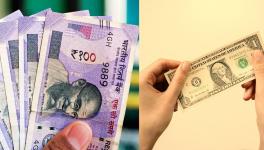
De-Dollarisation and Erosion of Monetary Command
For decades, dollar supremacy rested upon the petrodollar regime, through which global oil trade was overwhelmingly settled. That foundation is now steadily eroding.
Russia and China now conduct nearly 90% of bilateral trade in rubles and yuan, while Iran and Saudi Arabia have expanded non-dollar settlement mechanisms in energy exports (World Financial Review, 2026). Central banks are also reducing exposure to US Treasuries. China’s holdings have fallen to $680 billion, while Japan has shown increasing hesitation to expand dollar reserves amid instability (US Treasury TIC Data, 2025/2026). This is not technical diversification, but the gradual weakening of imperial monetary discipline.
Stagnation in Britain, Adjustment in Europe
The crisis is not confined to the US. Britain’s economy reflects the contradictions of late capitalism: stagnant output, weak investment, and growing insecurity for the working class. Forecast GDP growth of only 1.2% in 2026 signals not renewal but the exhaustion of Britain’s imperial economic base. Even inflation’s decline toward the Bank of England’s 2% target is achieved through suppressed demand, wage restraint, and intensified discipline over labour—hardly a victory for the masses.
Across Europe, the EU’s diversification toward India and Brazil through trade agreements is not progressive internationalism but an imperialist adjustment strategy. The India–EU Free Trade Agreement, eliminating tariffs on over 90% of trade, reflects capital’s search for new markets and cheaper value chains amid weakening internal accumulation. Yet, investment remains sluggish, exposing the limits of neoliberal restructuring.
Europe’s selective engagement with democratic BRICS members, while maintaining hostility toward China and Russia, signals not independence but recalibration within the imperialist hierarchy—a hedging maneuver under conditions of US decline.
Washington’s Shift: Pragmatic Protectionism
Under the current US administration, imperial strategy has shifted from ideological crusades toward pragmatic protectionism. The rhetoric of “regime change” has been replaced by transactional trade stabilisation, particularly with China. Yet, structural dependence persists: the US remains a major recipient of Chinese capital inflows through Treasury holdings, underscoring the interlocked contradictions of global finance imperialism.
BRICS Expansion and Multipolar Energy Front
The enlargement of BRICS to include major energy exporters such as Iran and the United Arab Emirates —alongside tacit Saudi coordination—accelerates the emergence of a multipolar oil regime. Late-2025 energy contracts involving Saudi Arabia, Iran, and China were reportedly settled in yuan, signaling the weakening of petrodollar monopoly power (Foreign Policy, 2026). This directly undermines one of the core pillars of American financial hegemony: compelled global demand for dollars through oil dependence.
Alternative Financial Architecture: Beyond SWIFT
The weaponisation of SWIFT (Society for Worldwide Interbank Financial Telecommunication) and Western banking networks—most clearly through the freezing of Russian assets in 2022—has driven the construction of parallel infrastructures now operational in 2026.
- mBridge has processed over $55 billion in cross-border CBDC settlements (Ledger Insights, 2026).
- CIPS/SPFS enable trade beyond US surveillance.
- BRICS Pay, launched in 2026, bypasses Western credit monopolies.
Under India’s BRICS chairmanship, CBDC (central bank digital currency) linkage is advancing toward bypassing the dollar entirely in trade settlement (Ledger Insights, 2026). This is the material emergence of a post-imperial financial geography.
Sanctions Exhaustion: Empire’s Siege Weapon Blunts
Sanctions, long central to US coercion, are losing effectiveness. Russia recorded GDP growth of approximately 2.6% in 2025 despite SWIFT exclusion and frozen reserves, sustained through energy exports and alternative payment systems (International Monetary Fund, 2026). Iran increasingly circumvents blockades through barter arrangements and yuan-denominated exchange, weakening unilateral siege tactics (World Bank, 2026).
Material Constraints on US Technological Power
Despite “decoupling” rhetoric, US high-tech and defence sectors remain dependent on Chinese industrial capacity. China controls roughly 30% of global semiconductor backend packaging and testing (Semiconductor Industry Association, 2025). Restrictions on gallium, germanium, and graphite have exposed severe vulnerabilities in Western military-industrial supply chains, while US refining capacity remains insufficient for rapid substitution (U.S. Geological Survey, 2026).
Imperialism’s Crisis and Revolutionary Opening
The decline of the American Century is not a moral event but the structural outcome of imperialism’s contradictions. Debt expansion, monetary weaponisation, de-dollarisation, sanctions erosion, and the rise of alternative systems reveal an imperial order entering contested transition.
The question is no longer whether US hegemony can endure indefinitely—it cannot. The decisive question is what replaces it:
- renewed militarism and inter-imperialist conflict, or
- the revolutionary advance of oppressed nations and working classes against global monopoly capital.
History has entered a new phase. The American Century is over. The struggle over the future has begun.
The writer, an economics professor and author, is currently engaged in research on Sustainable Economic Development, Political Economy of the Global South, and India’s Socioeconomic Crisis. The views are personal. acpuum@gmail.com.
Get the latest reports & analysis with people's perspective on Protests, movements & deep analytical videos, discussions of the current affairs in your Telegram app. Subscribe to NewsClick's Telegram channel & get Real-Time updates on stories, as they get published on our website.