





Who Gets to Do What? Caste & Segregation of Women's Work
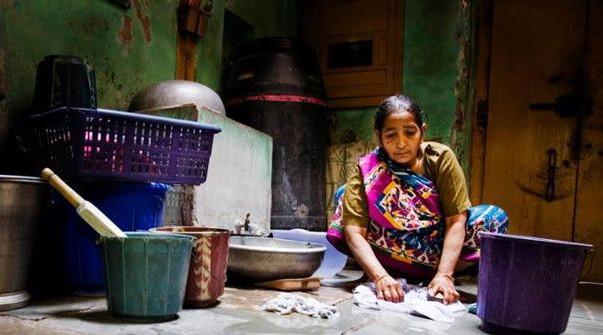
Representational image. File Image
Constitutionally, untouchability was abolished more than seven decades ago. Yet our fieldwork suggests that, for many Dalit women workers, caste continues to shape not only social interactions but also the kinds of work they are expected to perform, the skills they are encouraged to acquire and the economic opportunities available to them. The boundaries of caste have not disappeared. They have become embedded in the organisation of labour itself.
Much of the public discourse on caste discrimination focuses on exclusion from employment. Our fieldwork, however, points to a more complex reality. Many Dalit women are not denied work altogether. Instead, they are channelled into particular occupations, denied access to others, and constrained in their opportunities for skill acquisition and occupational mobility. Discrimination, therefore, operates not only by determining whether women work, but also by determining the work they are allowed to do.
These observations emerge from two independent but related studies conducted in very different settings. One draws upon interviews with migrant women domestic workers in Delhi. The other is based on fieldwork among women workers in Jamsar, a village near Bikaner in Rajasthan. Although separated by geography and social context, the two studies reveal remarkably similar patterns. Caste continues to organise labour in ways that have little to do with productivity and much to do with inherited social hierarchies.
Our interviews with migrant women domestic workers in Delhi revealed that Dalit women often encountered discrimination after entering the labour market rather than before it. Employment was available, but not all forms of employment. Several women described how cleaning work was relatively easier to obtain, while cooking and kitchen work remained difficult to access.
Employers rarely articulated the reasons explicitly, yet the pattern across interviews reflected the continued influence of ideas of purity and pollution. Even where women possessed the experience and willingness to undertake all household tasks, caste frequently determined the responsibilities entrusted to them.
This distinction has important economic consequences. Domestic work is not a single occupation but a bundle of different activities, each associated with varying degrees of trust, responsibility and remuneration. Restricting Dalit women to particular tasks narrows their opportunities for income growth and occupational advancement. They participate in the labour market, but not on equal terms.
Jamsar is a small village in the Bikaner district of Rajasthan, where a Khadi centre has operated since the 1980s with the objective of generating local employment. Managed by Khadi Mandir, Bikaner, the centre distributes raw materials, primarily cotton and wool, to local workers, who undertake spinning at home and return the finished thread and yarn in exchange for piece-rate payments. The land for the centre was allotted by the village gram panchayat and the facility is located in the basti inhabited by a Dalit community in Rajasthan.
The location of the centre has had an important bearing on who participates in its activities. Women who approach the centre for work are overwhelmingly members of Dalit communities or Muslim. Upper-caste women from the neighbouring colony rarely visit the centre because it is situated within the Dalit settlement. Instead, where upper-caste households engage with the Khadi Mandir, it is usually the men or young boys who collect the raw materials and return the finished cotton thread and wool yarn on behalf of the women.
One episode from the fieldwork illustrates vividly how caste and gender together shape access to skill development. Khadi Mandir organised a free weaving workshop to train women in producing small asanas and daris for sale. Participants were to be paid on a piece-rate basis for the items produced during the training and were assured of continued employment after its completion. To maximise participation, the local anganwadi worker was requested to inform village women about the programme and facilitate enrolment.
Her response was immediate and unequivocal. She stated that none of the upper-caste women from the colony would enrol because the training was being conducted in the Dalit basti. Only Dalit and Muslim women, she explained, were likely to participate. When asked whether the promise of better remuneration and future home-based employment might encourage participation, she replied that she herself would not be able to send her daughters-in-law to the workshop because of its location.
The episode demonstrates that the location of the training centre became an immediate barrier to skill acquisition. The programme was free, offered paid training and promised future employment, yet these incentives were insufficient to overcome entrenched caste boundaries.
Ironically, in this instance, the immediate economic cost of caste segregation was borne by upper-caste women, who were effectively denied access to an opportunity for skill enhancement and better-paid work. More broadly, the episode illustrates how caste-based spatial segregation can undermine the effectiveness of employment and livelihood programmes even when they are formally open to all.
The implications extend beyond one training programme. Many women in Jamsar continue to depend on rolling papads under highly exploitative piece-rate arrangements that generate modest earnings despite long hours of labour. While weaving offered an opportunity to diversify skills and potentially improve livelihoods, caste boundaries restricted access to that opportunity. Here, discrimination as well as restrictions on women’s mobility shaped not only employment but also access to human capital formation.
The persistence of caste-based occupational boundaries is visible even within public institutions. A colleague teaching at a private college in a remote district of Uttar Pradesh recounted that whenever the institution hosted external examiners or official guests, she was routinely asked to supervise or prepare the meals because most upper-caste visitors were unwilling to eat food prepared by lower-caste cooks. Whether exceptional or representative, the episode illustrates how notions of purity and pollution continue to influence the allocation of everyday work.
Taken together, these observations point toward an important economic question. Labour markets are expected to allocate workers according to their skills, experience and productivity. Yet our fieldwork suggests that caste continues to shape this allocation. In Delhi, it influences which tasks Dalit women are permitted to perform. In Jamsar, it shapes interaction between the job market, skill development and earnings. Across both settings, capability alone is insufficient to determine occupational outcomes.
The consequences extend well beyond the women directly affected. Occupational segregation traps workers in low-paying activities, restricts skill acquisition, limits labour mobility and prevents talent from being deployed where it is most productive. Employers lose access to capable workers, while the broader economy bears the cost of a labour market organised by inherited social hierarchy rather than economic efficiency.
Perhaps the most significant finding is that these forms of discrimination rarely operate through formal rules. They are reproduced through countless everyday decisions made by employers, families, community leaders and local institutions. Because these decisions are decentralised and socially normalised, they often remain invisible to policymakers even as they profoundly shape labour market outcomes.
If India is serious about achieving inclusive economic development, removing barriers to employment will not be sufficient. It must also dismantle the invisible boundaries that determine who gets to do what. Until labour markets begin to reward capability rather than caste, religion or gender, equality will remain a constitutional promise that is only partially realised in everyday working lives.
Shirin Akhter is Associate Professor at Zakir Husain Delhi College, University of Delhi. Ganita Bhupal is Associate Professor, Department of Economics, Rajdhani College, University of Delhi. The views are personal.
Get the latest reports & analysis with people's perspective on Protests, movements & deep analytical videos, discussions of the current affairs in your Telegram app. Subscribe to NewsClick's Telegram channel & get Real-Time updates on stories, as they get published on our website.