





Snow Cover Decline in HKH Region Threatens Water Shortage
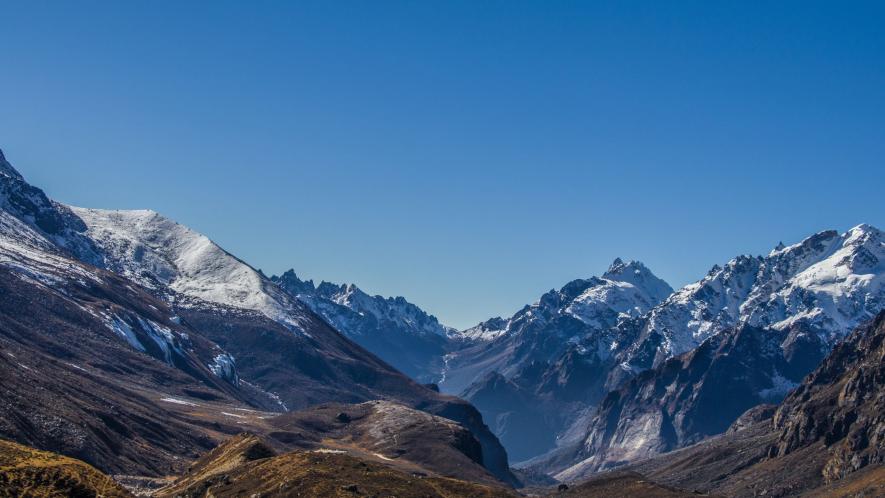
Representational Image. Image Courtesy: Wikimedia Commons
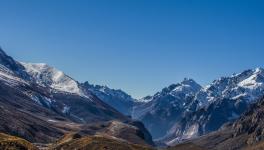
Amid reports of early heat wave in several areas in April itself and the extreme heat likely to worsen this summer across India, a latest scientific report has flagged that snow cover across the Hindu Kush Himalaya (HKH) region has fallen to 27.8% below the long-term average, breaking last year’s record low and marking the fourth consecutive year below-normal snow persistence. This is set to threaten water security, which is already a challenge due to climate change in the HKH region.
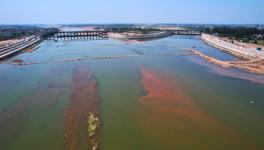
What adds to the alarm is that India Meteorological Department (IMD) has recently predicted that India could witness “below normal monsoon” in 2026, and there are reports of some rivers drying in mid-April as well as different water bodies on the verge of drying. The ground water level is going down.
According to the Snow Update 2026 released on Friday (April 24) by the Kathmandu-based International Centre for Integrated Mountain Development (ICIMOD), the persistent decline signals a systemic collapse of seasonal snow reserves across the world’s highest mountain range, posing an immediate and escalating threat to water security for nearly two billion people who depend on the 12 major river basins originating in the HKH.
Ten of those basins now have below-normal snow persistence. The Mekong, Tarim, and Tibetan Plateau have recorded their lowest levels in 24 years of monitoring.
“What we are seeing is a persistent trend where the seasonal snow reservoir is shrinking, year after year”, said Sher Muhammad, author of the HKH Snow Update 2026. “The 2026 numbers confirm a breaking point: ten out of twelve basins are below normal, and several have hit their lowest recorded persistence in two decades.”
Seasonal snowmelt contributes up to 77.5% of annual runoff in the Helmand basin and 74.4% in Amu Darya, meaning reduced snow this year will directly impact water availability for drinking, irrigation, hydropower, and ecosystem. This situation is particularly concerning for water supply and flood management. Reduced snowmelt will lower spring runoff and intensify water scarcity in downstream areas, especially in the western river basins.
Farmers in the Indus, Helmand, and Amu Darya basins face irrigation shortfalls during early growing seasons. Hydropower operators in the Mekong, Yangtze -- where the Three Gorges Dam operates -- and Brahmaputra should anticipate below-normal generation in the early summer.
Compounding the crisis, consecutive low-snow years have prevented groundwater and soil moisture from replenishing, increasing vulnerability to future droughts. “Every dry spell will hit harder,” the report warns. “Regional cooperation on these interconnected issues has now become urgent. We need to shift from emergency response to proactive, science-based governance.”
Only two basins recorded above-normal snow persistence: the Ganges at plus 16.3% and the Irrawaddy at plus 21.8%, offering limited local relief but insufficient to offset the regional crisis. In contrast, extreme deficits persist in the Mekong at minus 59.5%, the Tibetan Plateau at minus 47.4%, and the Salween at minus 41.8.
Last month, ICIMOD's two reports highlighted that glaciers across HKH were melting at an accelerating rate, with ice loss rates doubling since the year 2000.The reports reveal a total loss of up to 27 metres of ice thickness since 1975, sounding an alarm for the nearly two billion people downstream who depend on meltwater from the 'Water Towers of Asia'.
HKH holds the largest volume of ice outside the poles, with an inventory of over 63,700 glaciers covering nearly 55,782 square kilometres. These glaciers are the source of at least ten major Asian river systems, supporting the food, water, energy, and livelihood security of billions. However, around 78% of this glacier area, located between 4,500 and 6,000 metres above sea level is highly exposed to elevation-dependent warming.
The comprehensive analysis reveals that between 1990 and 2020, HKH glaciers lost about 12% of their total area and 9% of their estimated ice reserves. According to Sudan Bikash Maharjan, remote sensing analyst at ICIMOD and lead author of the glacier dynamics report, the most immediate threat comes from the region's smallest glaciers.
"Between 1990 and 2020, HKH glaciers lost about 12% of their total area, but the losses are most acute for the region's smallest glaciers—those below 0.5 km²—which are shrinking more rapidly than others," said Maharjan.
"This poses immediate risks of localised water shortages for high mountain communities and intensifies hazards like glacial lake outburst floods. The danger is magnified because three-quarters of the region's glaciers fall into this vulnerable size class. We are not just losing ice; we are facing a rapid escalation of risks," he added.
Get the latest reports & analysis with people's perspective on Protests, movements & deep analytical videos, discussions of the current affairs in your Telegram app. Subscribe to NewsClick's Telegram channel & get Real-Time updates on stories, as they get published on our website.