





Return of Bhagat Singh: Why Students Have Rediscovered a Revolutionary
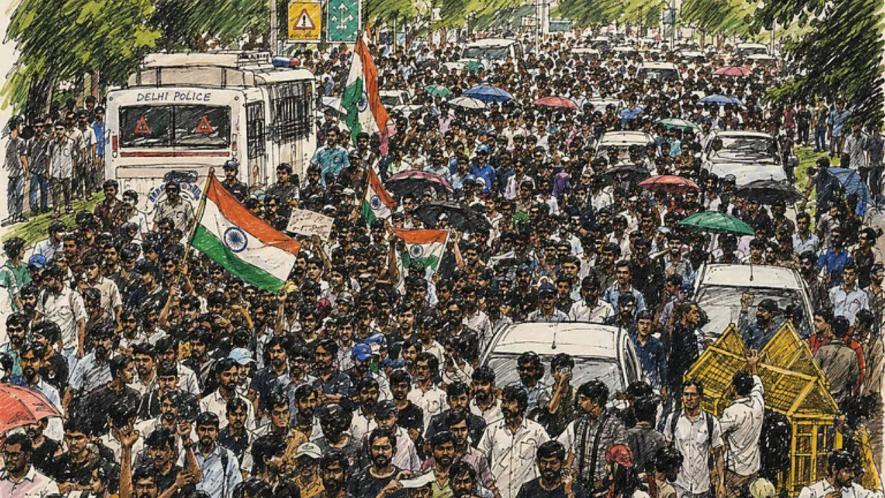
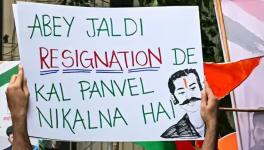
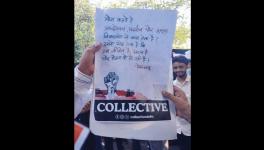
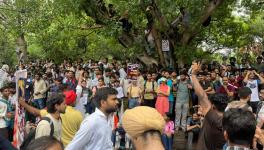
History is remembered in many ways. Some nations preserve it in monuments, others in museums and memorials. India has often preserved it in protest. Across university campuses, public squares, and demonstration sites, the past continues to speak through slogans, songs, and symbols. No figure has returned more persistently than Bhagat Singh. Nearly a century after he walked to the gallows of Lahore Central Jail, his portrait still rises above student marches, while the cry of ‘Inquilab Zindabad’ echoes from Jantar Mantar to the campuses of Bihar, West Bengal, Maharashtra, Uttar Pradesh, Rajasthan, Jammu and beyond.
This remarkable recurrence raises an important historical question. Why does a revolutionary, executed in 1931 at the age of 23, continue to define the political imagination of students born generations after Independence? Why has Bhagat Singh, among the countless heroes of India's freedom struggle, become the most enduring face of student protests?
The answer lies not in the repetition of history but in the survival of historical memory. Every generation inherits its heroes, but no generation inherits them unchanged. It reconstructs them according to its own anxieties, aspirations, and moral imagination. Bhagat Singh has survived because he has continually been rediscovered, not as a relic of colonial India, but as a living symbol through which successive generations express their own concerns.
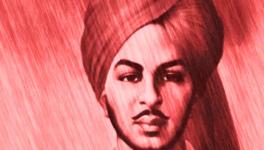
There were, in fact, two Bhagat Singhs. The first belonged to history. Born in 1907, he emerged from the revolutionary nationalism of colonial Punjab and dedicated his short life to ending British rule. The second belongs to memory. He has outlived the empire he fought, the prison that confined him, and even the political debates of his own time. This remembered Bhagat Singh continues to evolve with every generation that invokes his name.
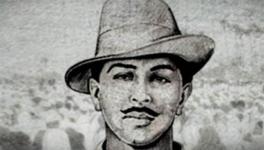
Understanding this transformation requires looking beyond the familiar image of the young revolutionary wearing a felt hat. Bhagat Singh was not merely a man of extraordinary courage. He was one of the most intellectually sophisticated figures produced by the Indian freedom movement.
During imprisonment, Bhagat Singh immersed himself in history, political philosophy, economics, literature, and revolutionary thought. His prison notebooks reveal engagement with Marx, Lenin, Rousseau, Thomas Paine, Bertrand Russell, and many others. His celebrated essay, Why I Am an Atheist, demonstrated a mind committed to rational inquiry and fearless self-examination. For him, revolution was never simply the overthrow of colonial authority. It was the reconstruction of society through justice, equality, and critical thought.
The defining moment in his political evolution came not only through the Assembly bombing but through the Lahore Jail hunger strike of 1929. Alongside Batukeshwar Dutt, Jatin Das, and other revolutionaries, Bhagat Singh demanded equal treatment for Indian political prisoners, access to books and newspapers, decent food, and recognition of their political status. Jatin Das died after 63 days of fasting, while Bhagat Singh's endurance transformed the prison into a theatre of moral resistance. Their suffering exposed the inequities of colonial rule more effectively than many speeches or manifestos could have done.
By the time Bhagat Singh was executed on March 23, 1931 at the age of 23, he had ceased to be merely a revolutionary. He had become an idea.
History, however, rarely preserves ideas in their original form. Independent India produced a third Bhagat Singh, one remembered less for revolutionary strategy than for youthful sacrifice. School textbooks, popular cinema, theatre, literature, and patriotic commemorations elevated him into the nation's most recognisable martyr. Yet, memory did not stop there.
The fourth Bhagat Singh emerged in the era of student politics. As universities became spaces where questions of education, employment, social justice, democratic accountability, and public policy were debated, students increasingly found in Bhagat Singh a figure who represented intellectual courage rather than political conformity.
Unlike many national leaders who entered government or held public office, Bhagat Singh remained forever 23 years old. His youth became timeless. Every new generation could imagine him as one of its own.
This explains why student protests across contemporary India repeatedly converge around his image despite profound differences in their immediate demands. Demonstrations concerning examination irregularities, educational reforms, unemployment, campus governance, or regional issues rarely share a common political programme. Yet, they often share a common historical vocabulary. Bhagat Singh provides that vocabulary. His portrait has become less an ideological statement than a moral language through which students express courage, dissent, sacrifice, and hope.
The evolution of ‘Inquilab Zindabad’ tells a similar story. The slogan was first popularised by the freedom fighter and poet Maulana Hasrat Mohani before being immortalised by Bhagat Singh and his comrades during the anti-colonial struggle.
Detached from its original context, it gradually became India's most adaptable slogan of democratic protest. Unlike slogans tied to specific parties or governments, ‘Inquilab Zindabad’ survived because it spoke to an aspiration rather than a programme. Every generation invested it with new meaning while preserving its association with the possibility of transformative change.
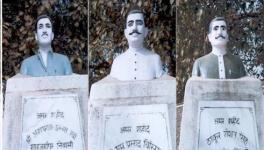
This raises another important historical question. Why has Bhagat Singh become the dominant icon of student protest while other great revolutionaries, such as Chandrashekhar Azad, Ram Prasad Bismil, Ashfaqulla Khan, or even Subhas Chandra Bose, have not occupied the same symbolic space?
The answer lies in a rare convergence of qualities. Bhagat Singh combined intellectual depth with youthful idealism, personal sacrifice with political courage, and martyrdom with an unfinished vision of social transformation. He left behind not only heroic deeds but also powerful ideas. Students inherit both.
Critics rightly caution that Bhagat Singh's legacy has often been selectively interpreted by competing ideological traditions. Different political groups have emphasised different aspects of his thought while overlooking others. Yet, this very contest confirms his continuing relevance. Historical figures become subjects of debate only when they continue to matter. Forgotten heroes are seldom contested. Living symbols always are.
The resurgence of Bhagat Singh, therefore, reveals something profound about Indian democracy. It demonstrates that history in India is not confined to archives, memorials, or anniversaries. It continues to live in the public sphere, where each generation reinterprets the past to understand its present. Students do not invoke Bhagat Singh because they wish to recreate the politics of 1931. They invoke him because they recognise in his life an enduring grammar of moral conviction, intellectual independence, and public responsibility.
History seldom grants revolutionaries a second life. Bhagat Singh has lived many lives. The young man who walked calmly towards the gallows in colonial Lahore continues to march through India's universities and public squares, not because the past has returned, but because the questions he raised have never entirely disappeared.
Bhagat Singh’s greatest legacy, therefore, is not that he changed the history of India's freedom struggle. Nearly a century later, he continues to shape the democratic imagination of those who believe that ideas, when joined with courage and sacrifice, can still speak to the conscience of a nation.
The writer is a South Asian history researcher whose work explores contested histories, political memory, and overlooked voices. The views are personal.
Get the latest reports & analysis with people's perspective on Protests, movements & deep analytical videos, discussions of the current affairs in your Telegram app. Subscribe to NewsClick's Telegram channel & get Real-Time updates on stories, as they get published on our website.