





Punjab: Why is Religious Conversion Issue Being Raised Now?
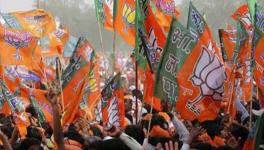
Articles 19 to 25 of the Constitution of India grant the right to adopt any religion or belief of his or her choice to every Indian citizen. Religion is considered a personal matter in any developed democratic and secular country. However, over the past few years, the issue of religious conversion has increasingly gained prominence in the country’s politics. The current ruling Bharatiya Janata Party (BJP) at the Centre is amplifying this issue to further its politics of polarisation.
So far, anti-conversion laws have been enacted in 12 states of India, most of which are governed by BJP. Strict punishments have been prescribed under these laws for those involved in religious conversions.
Organisations opposing religious conversion claim that preachers of other religions are forcibly converting or luring people—especially the poor and Dalits—from their religion (the majority religion). But the reality behind these claims appears to be quite different. In fact, the reasons for religious conversion lie in socio-economic inequality and in the centuries-old system of caste discrimination and untouchability, remnants of which still exist in society.
Political and religious groups opposing conversion even appear to stand with those exploiting Dalits and marginalised communities within their own religion, rather than fighting for social justice for them. They even glorify caste divisions as part of their culture and are even seen opposing Dalits entering temples in many places. These groups want marginalised communities to remain part of their religion, but refuse to fight for social justice on their behalf.
There have also been media reports of these same opposing groups converting people of other religions into their own faith through inducement, pressure, and deception. Leaders of the majority religion justify this conversion by calling it a “sacred act” and “Ghar Wapsi” (homecoming).
In 2016, journalist Neha Dixit, in her report ‘Operation #BetiUthao’ published in Outlook magazine, revealed how organisations with Hindutva ideology were taking girls from tribal areas to camps run by them across different states under the pretext of providing good education, where they were indoctrinating them with their ideology and “brainwashing” them. No reports emerged of action being taken against such people under anti-conversion laws.
Now this issue is being discussed in Punjab as well. It is being claimed that Christian preachers are forcibly converting Dalits, Sikhs, and Hindus through inducements. Along with religious organisations, political parties have also begun making statements on this issue.
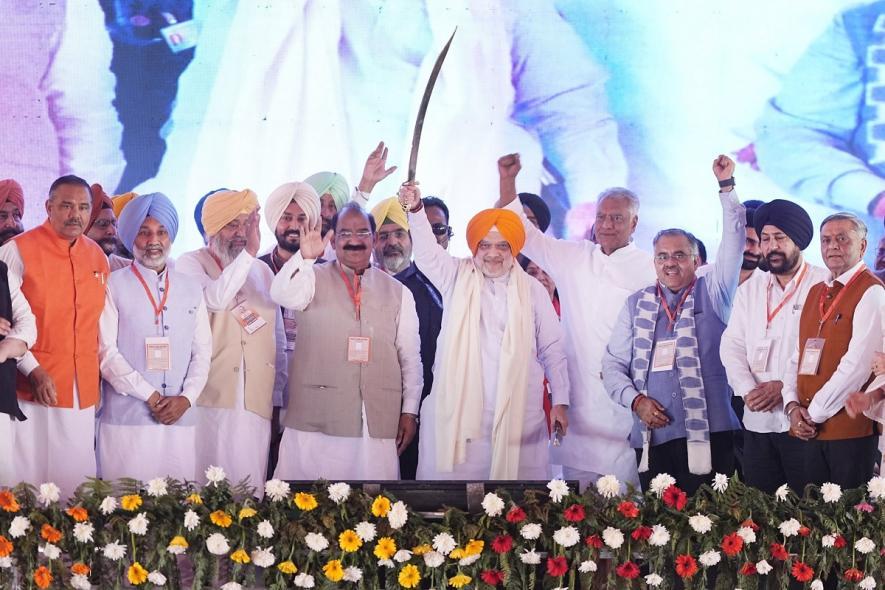
On March 14, Union Home Minister Amit Shah, while addressing a “badlav” (change) rally in Moga, Punjab, raised this issue in a highly provocative manner, saying that the BJP would bring a new law in Punjab to stop conversions.
At another event in Mumbai marking the 350th martyrdom anniversary of Guru Tegh Bahadur Ji, Shah, while presenting himself as sympathetic to Sikhs, expressed his anti-conversion political ideology in this way: “It is being said that religious conversions are taking place in Punjab. Guru Tegh Bahadur Ji sacrificed himself to protect the religion of others, but if conversions are happening due to any kind of inducement, then it is an insult to the teachings of our Gurus.”
According to the 2011 Census, Christians made up 1.5% of Punjab’s population. Naturally, this number has increased since then, but there are no accurate figures because no official Census has been conducted after 2011. At the non-governmental level, estimates suggest this number may have risen to around 15%, while some claims put it even higher, though such figures do not appear to align with reality.
The number of churches in Punjab appears to have increased compared with earlier, especially in the Doaba and Majha regions, which are independently run by pastors different from traditional Catholic or Protestant churches. In such churches, people gather every week. In Punjab’s border areas, especially in many villages of Gurdaspur and Amritsar, churches have been established, which are frequented by members of the Dalit community, including Balmiki and Mazhabi Sikhs. Moreover, most of the religious leaders running these churches are from the so-called upper castes.
Tarsem Peter, president of Pendu Mazdoor Union, says: “The pertinent question regarding the issue of religious conversion is why it is raised only during election time? In Punjab, not a single case of forced religious conversion has come to light so far, nor has any FIR been registered. Everyone has the right to adopt any religion of their choice.”
Pointing at the political intention of BJP, Peter says: “In reality, the BJP, like in the rest of the country, is trying to emotionally provoke Sikhs in Punjab and make Sikhs and Christians (especially Dalits) fight among themselves to achieve its political objectives. It may not be capable of winning elections in Punjab, but it is trying to govern the state by instigating people on the basis of religion and caste and by bringing leaders from other parties into its own party.”
Peter further said: “The BJP is also working to create conflict among Dalits themselves, such as between Balmikis and Ravidasis, and between Mazhabi and Ramdasia communities. Earlier, Christian missionaries received international funding, but after restrictions by the Central government, some pastors started independent organisations, such as the Ankur Narula Ministry and the Barjinder Deol Ministry, among others. People from weaker sections of society go there because they do not receive respect in their previous religion and have to face caste discrimination. On one hand, the BJP incites the Sikh community against these institutions, while on the other hand, several Dalit political leaders within the BJP also visit these institutions.”
On social media, you can find many Punjabi hymns and songs related to devotion to Jesus Christ, sung by people who also come from ordinary Dalit families. Some Dalit artistes also say that these churches have given their art a proper direction and provided them recognition. Singer Deepak Johanson, who performs in these Christian gatherings, shares his experience like this: “I wanted to become a singer, but I did not know that I would become a singer for my Lord.”
Dalit devotees who attend these places say that they find mental and physical healing in these churches and their children receive good education at little or no cost in educational institutions run by these Christian religious leaders. The devotees also feel that the respect they did not receive in their previous religion, they receive here. These statements were shared with us by some Dalit Christian devotees in Tarn Taran district.
Dalits who convert to Christianity often record their old religion in the Census and other records so that the reservation benefits they receive are not discontinued. The recent Supreme Court decision is even more discouraging for them.
Even a large number of turban-wearing people can be seen among those who attend churches. There are also many who continue to perform rituals or recite prayers from their former religion, while also repeating the “mantra or scripture given by Jesus Christ”, as instructed by the pastor. For this reason, many scholars in Punjab view this not as religious conversion but as similar to Dera culture, where people also place their hope for relief from suffering in a Dera head (saint) while remaining connected to their previous religion. In many Dalit households in the Majha region, you will find pictures of Sikh Gurus alongside Jesus Christ.
Dalits who have converted to Christianity state that in their former religion they faced caste-based discrimination. On being targeted by radical Sikh groups, these people argue that, like others, they also have the right to follow the religion of their choice and no one has the right to obstruct their religious freedom. They also demand that their right to reservation should remain intact even after adopting Christianity. In border areas, the issue of land for cemeteries is a major concern for these Christian followers.
Dalits make up 32% of Punjab’s population, rising to 37% in rural areas. In many parts of the Doaba region, this population goes up to 45 to 50%, but the Dalit vote bank as a whole never moves in one direction. There are several reasons for this. The Dalit community in Punjab is divided into 39 castes whose interests often conflict with each other.
However, it is believed that the condition of Dalits in Punjab is better compared with other states in the country (especially North India). There is no place for casteism in Sikhism either. But there are some harsh truths of the present and the past that cannot be ignored.
In the early 20th century, discrimination was practiced against Dalits even at the Harmandir Sahib. They were assigned separate timings for visiting the Darbar Sahib and separate places for bathing. At that time, the dominant class of mahants and priests, who had British patronage, did not accept karah prasad from Dalit hands and would not perform ardas for them. The Sikh community had to carry out a long struggle against this.
Punjabi writer Balbir Madhopuri, in his article ‘Aadi Dharam and the Way Dalits Were Treated’, published in the Punjabi Tribune on June 25, 2020, mentions that before the 1931 Census, when ‘Aadi Dharam’ was registered as a new religion in Punjab, a systematic form of oppression against communities considered untouchable by Hindus and Sikhs became visible. Hindus and Sikhs considered it an insult that people who had been enslaved for centuries were becoming their equals. In response, blockades were imposed against ‘untouchables’. They were attacked in various places. In many parts of Punjab, Dalits who recorded their religion as ‘Aadi Dharam’ in the Census were killed.
In his acclaimed autobiography ‘Chhangya Rukh’, which portrays caste discrimination in Punjab, Balbir Madhopuri states: “In Punjab, lower-caste communities have certainly improved somewhat economically after independence. However, the struggle against social inequality is still ongoing. Since childhood, I have personally witnessed and endured untouchability, the prohibition of Dalits entering gurdwaras, and the sexual exploitation of Dalit women. Even today, there are reports of Dalits being barred from some gurdwaras in Punjab. This is why separate Gurdwaras and Deras for Dalits came into existence. This is also why many Dalits are converting to Christianity. In many villages, Dalits have separate cremation grounds. Their social exclusion from Gurdwaras is still announced even today. Even the Dalit community itself suffers from internal hierarchy and discrimination.”
During the paddy harvest season, the rates for transplantation are set by wealthy farmers themselves. There are instances of social boycott of Dalit agricultural labourers if they protest for raising their wages. Local leaders of major political parties are also found to be involved in such boycotts.
Similarly, there is the issue of the one-third share of Dalits in panchayat land, which is often not given to them. Even when they demand this right, they face social boycott in many places. In the Malwa region of Punjab, several Left-wing organisations have strongly fought this struggle. Mukesh Malod is the main face of this movement.
In 2003, the conflict between Jatts and Dalits over Dalit representation in the management committee of the ‘Gurdwara Shaheed Nihal Singh’ in the village Talhan (Jalandhar district) became a topic of national discussion. After this, a social boycott of Dalits was announced by the Jatt community. As a result, Dalits carried out large-scale protests. During these protests, a Dalit activist named Vijay Kumar also died. The Talhan incident also marked the political rise of BJP leader Vijay Sampla.
In 2014, after the Narendra Modi government came to power at the Centre, Hindu nationalist organisations ran a ‘Ghar Wapsi’ campaign in various parts of the country, under which poor Christians and Muslims were converted to Hinduism. At that time, in Bathinda district of Punjab, members of organisations like Vishwa Hindu Parishad also facilitated the conversion of some Dalit Christians (who among Dalits were Mazhabi Sikhs) to Sikhism. During the conversion, they were made to wear a locket of Bhai Jaita Ji (a Sikh historical figure from a marginalised background who was given the title “Guru ka beta” by Guru Gobind Singh Ji).
After this incident, Sikh religious institutions and the then ruling Shiromani Akali Dal, an ally of BJP in Punjab, criticised it and called it “interference” in Sikh religious affairs. The then Jathedar stated that forcing such conversions goes against Sikh principles. Several Sikh scholars also criticised the incident, stating that in Sikhism, the issue of conversion is not even a concern. Organisations like the RSS (Rashtriya Swayamsevak Sangh) and its affiliates were said to be attempting to impose their traditions and ideology within Sikhism.
After this, the incident of sacrilege of Guru Granth Sahib in Punjab hurt Sikh sentiments. Then a series of such incidents occurred, the full truth of which could not come to light. Gradually, religious and emotional issues began to gain momentum in Punjab politics.
In recent years, some Sikh leaders have also begun opposing the conversion of Dalits to Christianity. The Shiromani Gurdwara Parbandhak Committee has even started its own religious propagation work to prevent this. Radical Sikh groups and Nihang bands have, in the past, made hateful statements against Christian preachers and have gone to Christian events to create disturbance and vandalism. Before going to jail, Amritpal Singh also continued making hateful statements against Christianity and Jesus Christ.
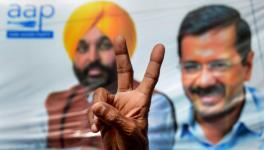
Keeping their vote banks in mind, other political parties have also started doing politics on this issue. During the 2024 Lok Sabha elections, Arvind Kejriwal of Aam Aadmi Party also made a statement on the issue of Dalits converting to Christianity. In this way, political parties and Sikh institutions in Punjab made Hindutva-related issues their agenda.
Sikh thinker and writer Jaspal Sidhu expresses his views on this matter as follows: “Opposing religious conversion or forcibly trying to stop it is in no way a part of Sikh principles. Sikhism is based on the idea of remaining steadfast in one’s own faith, but if someone leaves it, you cannot force them. In reality, the BJP is using Sikhs in Punjab to advance its expansionist agenda of Hindutva. Sikh organisations that are opposing Dalit Christians are, knowingly or unknowingly, becoming instruments of the BJP’s politics of communal polarisation.”
Those who oppose religious conversion repeatedly argue that Dalits are converted through greed and fear, but they have not been able to present any concrete evidence of this so far. After all, which religion is free from fear and greed? The 84 lakh yonis (rebirths), heaven and hell, liberation from rebirth, the ‘houris’ found in heaven—are all these not based on fear and greed? In the end, a person will base their choice on the kind of temptation they desire in this world itself. Who has seen the other world?
Restricting a person’s freedom to choose religion is a restriction on free thinking itself. In reality, it is important to understand the social and inequality-related causes behind religious conversion.
The writer is a freelance journalist based in Punjab. This is his own translation of the original published in Hindi. The views are personal.
Get the latest reports & analysis with people's perspective on Protests, movements & deep analytical videos, discussions of the current affairs in your Telegram app. Subscribe to NewsClick's Telegram channel & get Real-Time updates on stories, as they get published on our website.