





Provocative Exorbitance: How Dollar Order Cushions War for US
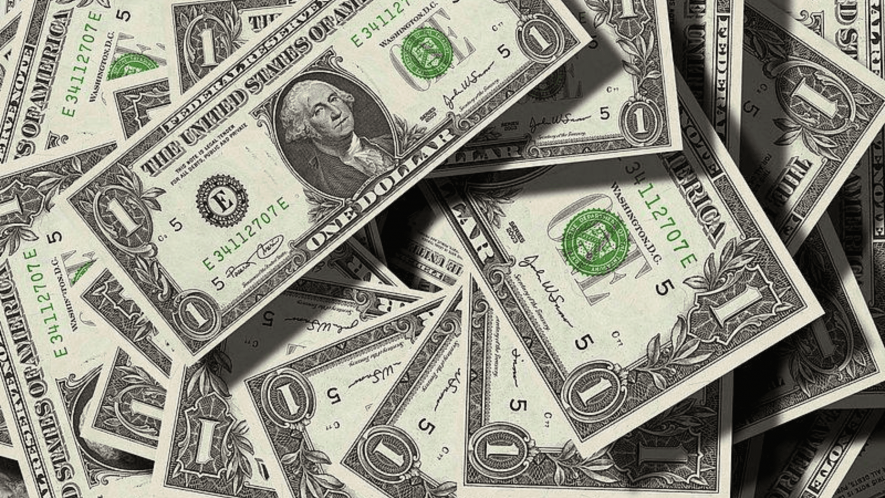
Dollar. Image Courtesy: Wikimedia Commons
Wars are costly. They destroy lives, drain public resources, destabilise regions, and leave societies burdened with displacement, inflation, debt and reconstruction. Yet the modern international monetary order reveals a troubling asymmetry, while war devastates much of the world, the structure of global finance often cushions its economic costs for the United States.
This does not mean that every war is planned in Washington, nor that all wars automatically benefit the US in a simple or immediate sense. The reality is more structural, so long as the dollar remains the central currency of trade, reserves and settlements, and as long as the US remains the world’s largest arms exporter, global conflict tends to reinforce the financial foundations of American power.
The core intuition is straightforward. The modern international monetary system gives the US unusual advantages during geopolitical crises, including wars. Even countries opposed to the US remain tied to the dollar system because global trade is still heavily dollar-denominated, major commodity markets operate in dollars, and cross-border payments frequently pass through dollar-clearing channels. International economic activity even that of rival states continues to sustain demand for dollar liquidity and US financial assets.
This structural reality forms the material basis of what former French president Valéry Giscard d’Estaing once described as America’s “exorbitant privilege.”
But today that phrase is no longer sufficient. Exorbitant privilege suggests an advantage passively enjoyed. What we are witnessing today is more active and more troubling. A more fitting description would be provocative exorbitance; a world order in which the hegemon is not merely protected by monetary centrality but continues to derive financial resilience from an international system repeatedly shaken by war, militarisation, sanctions and geopolitical coercion. In such a system, instability itself generates renewed demand for the hegemon’s currency, debt instruments and weapons.
To understand how this architecture emerged, we must return to the decline of sterling after the Second World War. Britain emerged from the war economically exhausted and geopolitically weakened, and these structural constraints steadily eroded the international role of the pound. Historical evidence suggests that more than 55% of global foreign exchange reserves were still held in sterling in 1950. Yet this dominance proved short-lived. As the US consolidated its economic and financial leadership in the post-war decades, sterling’s share declined rapidly.
The transition from sterling to the dollar was, therefore, not merely a technical change in reserve assets. It reflected a deeper transfer of imperial power from a declining Britain to a rising US whose industrial capacity, financial markets, military reach and global alliance system were expanding simultaneously.
It was in this context that the US dollar assumed global prominence. Post-war reconstruction, the institutional architecture created at Bretton Woods, the extraordinary scale of American industrial production, and the growing centrality of US capital markets together produced a monetary order in which the US could finance its global commitments under conditions unavailable to most other states.
Read Also: US Imperialism, Attack on Venezuela and Global South
Crucially, this advantage survived the collapse of Bretton Woods itself. Even after the suspension of dollar–gold convertibility in 1971, the dollar retained its central role because it had become deeply embedded in global trade invoicing, banking networks, sovereign reserve holdings and eventually the pricing of oil. By 2024, according to the Federal Reserve’s 2025 review, the dollar still accounted for roughly 58% of disclosed global official foreign exchange reserves far ahead of any rival currency.
What emerged, therefore, was not merely a monetary arrangement but a structure of geopolitical power. The currency of the dominant state became the currency through which global trade, finance and increasingly even security transactions were conducted. This embedded monetary centrality gave the US a degree of fiscal flexibility and financial insulation that few other countries could match an advantage that becomes particularly visible during periods of global crisis and war.
In this sense, what began as the dollar’s “exorbitant privilege” has gradually evolved into something more consequential: a system in which geopolitical instability can reinforce, rather than undermine, the monetary foundations of American power.
This becomes especially evident in wartime. When global conflict intensifies, three things tend to occur simultaneously. First, states require more energy, more shipping, more commodities, more insurance and more credit much of which still requires dollars.
Second, investors fleeing uncertainty move their capital into the deepest and most liquid “safe” assets, above all US Treasury bonds.
Third, arms purchases expand dramatically, and the largest single beneficiary of that militarised demand is the US, which accounts for roughly 42% of global arms transfers in 2021–25 and exports weapons to nearly a hundred countries.
Wars, therefore, generate dollar demand, safe-haven financial flows and expanding weapons revenues. This triangular reinforcement is what gives US supremacy its peculiar resilience. A country whose currency serves as the world’s principal reserve asset, whose government debt is treated as the safest destination for global capital, and whose firms dominate the international arms market occupies a structurally privileged position during crises.
The rest of the world experiences war as dislocation. The hegemon experiences it, at least financially, through mechanisms that partially absorb the shock.
Yet the argument should not be overstated. It would be misleading to claim that war benefits the US regardless of its outcome. Large wars impose enormous fiscal costs even on the hegemon. They generate rising debt, inflationary pressures, overextension, domestic discontent and political divisions. The wars in Iraq and Afghanistan cost the US several trillion dollars and left deep scars on its fiscal and political landscape.
The point is not that war is costless for Washington. It is that the international monetary order cushions these costs for the US far more effectively than it does for others.
History also reminds us that imperial monetary dominance does not last forever, it is lost when military reach declines and financial credibility erodes. Britain’s decline after the Second World War provides the clearest example: monetary supremacy followed material supremacy downward. The same logic ultimately applies to the US, though it has not yet reached that stage.
Indeed, the overuse of financial power may already be producing resistance. Sanctions, asset freezes and financial exclusions have encouraged countries to explore alternative payment systems, settle trade in non-dollar currencies and diversify reserve holdings. These alternatives remain partial and fragmented, but the trend is visible. Even the Federal Reserve acknowledges that the dollar’s share of global reserves has declined modestly from earlier peaks, even though it remains overwhelmingly dominant.
The dollar-centred order has failed to produce a more peaceful world. The post-1945 era has witnessed decolonisation wars, Cold War proxy conflicts, regional rivalries, occupations and interventions. Today the number of active armed conflicts is again reaching historic highs. The Uppsala Conflict Data Program recorded 61 active state-based conflicts in 2024, the highest number since records began in 1946.
What is distinctive about the present moment is that violence is increasingly financially organised around the dollar system. States preparing for or engaged in conflict must secure access to dollar liquidity. Commodity disruptions raise the premium on the currency that still dominates global trade. Investors frightened by instability move capital into US financial markets. Military procurement rises, and the largest supplier remains the US.
It is a structure of advantage.
The issuer of the world’s reserve currency enjoys greater fiscal flexibility and financial resilience during war than most other countries can hope to possess.
This is why the concept of provocative exorbitance becomes necessary. It captures the transition from privilege to structural reinforcement. The US does not merely sit at the centre of the international system; it occupies a centre repeatedly revalidated by instability. The world pays in blood, inflation, debt and shattered public goods, while the hegemon, even when strained, remains cushioned by the architecture of money.
For the Global South, the consequences are particularly severe. Wars raise import bills, intensify exchange rate pressures, trigger capital flight and force governments to divert scarce public resources from welfare to security. Countries already struggling with debt and development constraints absorb shocks generated by conflicts they neither initiate nor control.
Meanwhile, the very instability that weakens them often strengthens demand for the hegemon’s currency and debt.
The central question is not simply whether the US profits from war in a narrow sense. Wars impose real costs even on the hegemon. But the structure of the international monetary system ensures that those costs are distributed unevenly.
Since the global economy continues to operate through the dollar, geopolitical crises tend to increase demand for dollar liquidity, US financial assets and American military technology. Investors seek refuge in US Treasury markets. Governments engaged in conflict require dollars to finance trade and procure arms. Commodity disruptions reinforce the currency’s global role.
The result is a monetary architecture that cushions the economic impact of war for the US far more effectively than for most other countries.
For much of the world, especially the Global South, the consequences remain stark. Wars bring currency volatility, rising import bills, capital flight and the diversion of scarce public resources away from development and toward militarisation.
The world, therefore, confronts an uncomfortable question, can an international economic order built around the currency of the world’s dominant military and arms-exporting power ever become structurally oriented toward peace?
As long as global trade, energy markets, finance and military procurement remain deeply embedded in the dollar system, war will continue to produce asymmetric outcomes. For most of the world, it will remain a source of devastation and instability, but for the issuer of the global reserve currency, it will remain a crisis that the architecture of the monetary system is designed to absorb.
That is the deeper meaning of provocative exorbitance. It is not merely the privilege of issuing the world’s currency. It is the ability of a global monetary order to repeatedly reaffirm that privilege, even in the shadow of war.
Shirin Akhter is Associate Professor at Zakir Husain Delhi College, University of Delhi. The views are personal.
Get the latest reports & analysis with people's perspective on Protests, movements & deep analytical videos, discussions of the current affairs in your Telegram app. Subscribe to NewsClick's Telegram channel & get Real-Time updates on stories, as they get published on our website.