





Odisha: Who Owns the Mountains?
Representational image. | Image courtesy: steel guru
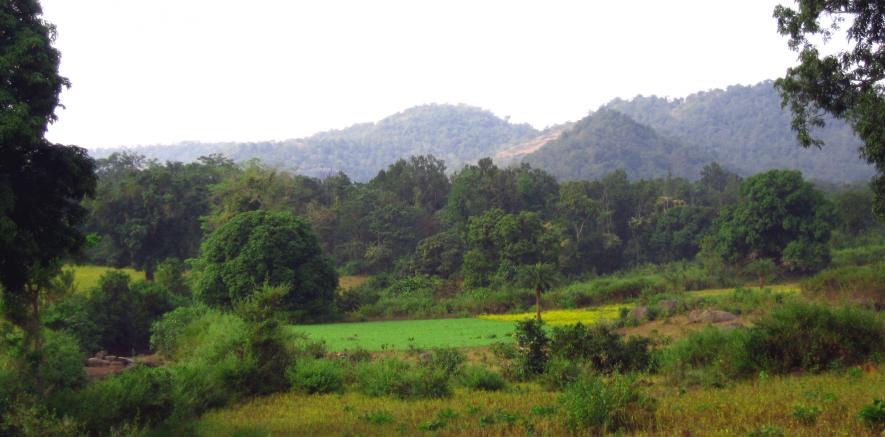
There is a question that Odisha has repeatedly postponed but can no longer escape: who owns the mountain? Is a mountain merely a geological formation, a parcel of mineral-bearing land recorded in a government register, a resource available for auction and extraction, or is it also an ancestor, a sacred landscape, a living archive and the foundation of a civilisation? The question becomes particularly urgent when we look at Gandhamardan, Deomali, Niyamgiri and Tijimali. These are not simply four mountains. They are four different windows into an older Odisha, where human identity was formed through relationships with forests, streams, animals, soil, ancestors and sacred peaks.
Modern law begins with ownership. Indigenous civilisation begins with belonging. That distinction is at the heart of the Adivasi question. For generations, Adivasi communities have not necessarily imagined the mountain as property in the modern capitalist sense. The mountain is territory, genealogy, shrine, livelihood, memory and moral authority at once. The contemporary State may classify land as forest, revenue land, government land or mineral-bearing territory. A corporation may see an ore body and calculate its commercial value. But the people who have lived with the mountain for centuries may see something entirely different: a living relative whose destruction would amount to the destruction of themselves.
Niyamgiri offers the clearest expression of this alternative political philosophy. For the Dongria Kondh, Niyamgiri is inseparable from Niyam Raja, their revered divine ancestor and moral authority. Their relationship with the mountain is not simply economic. The Dongria identify deeply with the hills, forests and streams, and their customary practices are embedded in that landscape. The community’s traditions describe Niyam Raja as the source of their relationship with the mountain and its resources. (Etribal Tribune). They are, therefore, not merely inhabitants of Niyamgiri; their identity is constituted through Niyamgiri.
This creates a profound challenge to the vocabulary of modern development. If the mountain is simultaneously god, ancestor, territory and livelihood, what does it mean to call it an “ore deposit”? The famous Niyamgiri conflict demonstrated precisely this collision of epistemologies. What appeared from an industrial perspective as bauxite-bearing terrain appeared to the Dongria as sacred territory that sustained their collective existence. The Gram Sabha process eventually became historically significant because it allowed affected communities to articulate their religious and cultural claims rather than reducing the dispute to compensation and employment.
But Niyamgiri should not be treated as an isolated story. Gandhamardan asks the same question in another historical language. The mountain carries layers of religious memory, medicinal knowledge, ecological significance and popular resistance. The Gandhamardan movement demonstrated that a mountain could become the centre of a political community’s defence of ecology, livelihood and cultural heritage. Scholarly research on the movement shows how local populations mobilised against industrialisation in defence of traditional livelihoods and the environment. (Sage Journals)
Gandhamardan, therefore, represents something larger than an environmental movement. It represents the possibility of a mountain becoming a democratic subject. Its history tells us that ecological resistance in Odisha did not arrive from an imported environmental vocabulary. It emerged from villages, religious traditions, livelihood systems and intimate knowledge of the landscape. The mountain was already protected by memory before the language of conservation arrived.
Then comes Deomali, the highest mountain peak of Odisha, rising within the Eastern Ghats. The official Koraput district account identifies Deomali as the state’s highest mountain at 1,762 metres and recognises its importance as a natural landscape for trekking and other activities. But a purely touristic description is insufficient. Deomali must also be understood through the cultural geography of southern Odisha, where mountains are woven into the lives, agricultural systems, oral traditions and ecological knowledge of Adivasi communities.
The danger is that the state can celebrate a mountain symbolically while simultaneously failing to recognise the communities whose historical relationship with that mountain gives it meaning. A mountain cannot be reduced to a tourism destination merely because it has a spectacular altitude. The real heritage of Deomali lies not only in its height but in the human knowledge accumulated around its slopes.
Tijimali sharpens the contradiction further. Locally known as Tijimali and officially associated with the Sijimali bauxite project, the mountain landscape has become part of a contemporary debate over mining, forests, rights and development. A recent National Law School of India University report describes the proposed project as involving large-scale bauxite extraction across forest, government and private land in Rayagada and Kalahandi, both Fifth Schedule areas with predominantly Adivasi populations. Here the old question of ownership returns with extraordinary force.
The crucial question is not whether Odisha needs minerals. It does. Nor is the question whether development is desirable. It is. The question is who has the authority to define development, and whose civilisation must pay its price?
For too long, the political economy of extraction has treated mineral-rich Adivasi landscapes as if they were empty spaces waiting for investment. Yet these landscapes are not empty. They contain languages, burial grounds, sacred sites, medicinal knowledge, agricultural practices, oral histories, community institutions and memories that cannot be adequately compensated through monetary packages.
The phrase “original ancestors” must, therefore, be handled carefully. Adivasi communities are not relics frozen outside history, nor can one make a single universal claim that every Adivasi community is literally the first population of every mountain. Their historical relationships with particular landscapes differ. But their enduring claim is powerful: their relationship to territory predates the contemporary administrative and extractive state. Their legitimacy comes not merely from possession documents but from generations of inhabitation, stewardship, ritual and collective memory.
This is where India must rethink ownership itself. The Forest Rights Act and the constitutional framework for Scheduled Areas provide important legal recognition of community interests, but the deeper transformation required is philosophical. We need to move from ownership to trusteeship, from extraction to reciprocity, and from consultation to consent.
A new Mountain Rights Framework could recognise four principles. First, every sacred Adivasi mountain should be treated as a cultural landscape, not merely a mineral landscape. Second, customary institutions should have meaningful decision-making authority over ecological and cultural matters. Third, cumulative ecological and cultural impacts should be assessed before individual mining permissions are considered. Fourth, ancestral knowledge should be recognised as a form of intellectual and ecological heritage rather than treated as informal folklore.
Gandhamardan, Deomali, Niyamgiri and Tijimali could thus become four laboratories for a new Odisha policy. Gandhamardan represents memory and resistance. Deomali represents ecology and cultural continuity. Niyamgiri represents sacred sovereignty and community consent. Tijimali represents the unresolved future of extraction and development.
Ultimately, the question “Who owns the mountain?” may be the wrong question. The better question is: who has the right to decide the mountain’s future?
The answer cannot belong exclusively to the state, the corporation or the market. Nor can history be settled merely by determining who possesses a legal title. The mountain has preceded our institutions and will probably outlive them. Those who have lived with it, worshipped it, cultivated its slopes, protected its streams and inherited its memories must have a decisive voice in determining what happens to it.
Perhaps the oldest political wisdom of Odisha is hidden in its mountains: the land does not belong to us; we belong to the land.
And if that wisdom is taken seriously, Gandhamardan, Deomali, Niyamgiri and Tijimali cease to be questions of mining alone. They become questions about civilisation itself.
The writer is Director, Center for Adivasi Research & Development (CARD), Odisha. The views are personal.
Get the latest reports & analysis with people's perspective on Protests, movements & deep analytical videos, discussions of the current affairs in your Telegram app. Subscribe to NewsClick's Telegram channel & get Real-Time updates on stories, as they get published on our website.