





Odisha: Power Sector Needs CAG Scrutiny Into ‘Huge Capex Extravaganza’
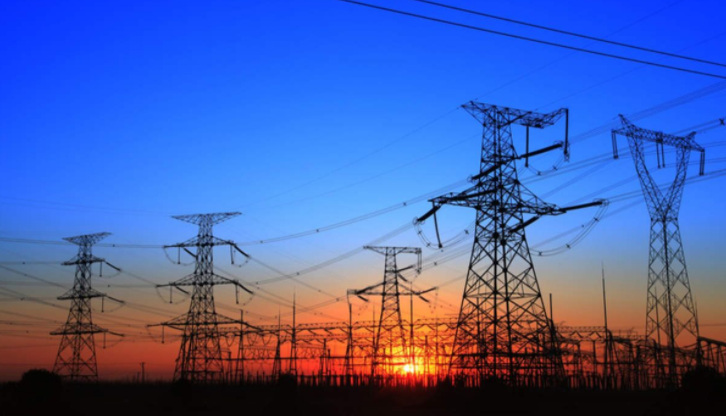
In 2020, Tata Power had been given the responsibility of managing four discoms (distribution companies) in Odisha, such as TPNODL, TPSODL, TPCODL and TPWODL. But consumers are now bearing the brunt of alleged financial mess in these private discoms.
“It is clear that there is an acute inner conflict within the power sector that is haunting the common consumer. The situation is so convoluted that only a CAG (Comptroller and Auditor General) audit can find out where things went off-centre”, Ramesh Satapathy, chairperson of the Bidyut Upabhogta Mahasangha (Power Consumer Association) told the media.
“At the centre of the entire mess is about Rs.20,000 crore as capex (capital expenditure). Delving into the details shows that the power sector is in trouble and requires a close scrutiny,” he said, adding that “I suspect that the state government, perhaps, has a tacit complicity”.
The issue became critical after the abrupt resignation of P. K Jena, Chairman of the Odisha Electricity Regulatory Commission (OERC) in May 2026.
During his short stint as the OERC head, Jena had found out several lapses in the execution of power distribution. The four discoms, the state government (Energy Ministry) and the OERC were engaged in a kind of shadow-boxing for a long time, according to industry observers.
Jena, known for his probity as an officer, had stated in his official observation that while handing over the distribution sector to Tata Power in 2020, the process should have been made more transparent through a third-party assessment. He had also suggested a CAG audit to know the pros and cons of the department.
“Certain findings by Jena can be traced to a capex of about Rs 20,000 crore since Tata Power took over in 2020. According to the OERC’s observations, there were alleged irregularities in the entire exercise. Even after spending such a huge sum, nothing has improved related to infrastructure, transmission and distribution”, said Satapathy.
“May be, Jena’s demand for a CAG audit stirred a hornet’s nest which ultimately led to his exit two months ago,” he said, adding that, “it is since 2013 or earlier to that the power sector was left to fend for itself while the state government was a mute onlooker.”
“Jena should have been more vocal in telling the people about what he observed in the files regarding the functioning of all the discoms and alleged financial extravaganza etc”. said Satapathy.
An OERC official held similar views. “When inconsistencies are so blatant then what stops the former OERC chairperson to come out openly”, he confided in this writer.
There has been a precedence of CAG audits in 2013 and in 2019 before the assigning of the entire operation of the power sector to some companies. In those audits, it was found that there had been a lot of omissions and commissions in the entire operation then, noted Jena and some of his predecessors in OERC.
This should have been taken as a signal by the state government to exercise more restraint before engaging one company for managing four discoms, which is unprecedented so far, sources in the state energy ministry pointed out.
This was just before the exit of Reliance Power in 2017, which was handling discoms in the state, but not all four.
This writer’s query to Tata Power’s top authority (the CEO, TPCODL) seeking clarifications over the alleged irregularities went unanswered even after a fortnight. The communication was sent on July 16, 2026.
The questions were few and related mainly to CAG audit or a third-party assessment before handing over the four discoms in 2020, as desired by OERC and the latter’s refusal for a fresh capex of about Rs 7,000 plus crore. TPCODL’s explanations were also sought over the 500 33/KV sub-stations allegedly facing virtual neglect.
No response has been received from the TPCODL CEO till the time of publishing this story.
The entire power infrastructure is visibly in a state of dire neglect despite a humongous financial stimulus given even after Tata Power held the reign in 2020. This has raised eyebrows within the power sector, as the “rot” can be traced to the period when the Biju Janata Dal (BJD) was in power, say industry observers.
It seems the current energy ministry, in a way, has inherited the “rot” from the erstwhile government and, perhaps, yet, has allegedly done little for a revitalisation and fixing responsibility on the predecessors.
It is widely felt that the incumbent energy minister, K V Singh Deo, who is also the Deputy Chief Minister, allegedly soft-pedalled over Tata Power’s alleged follies showing signs of his helplessness or confusion. Or has he been made a scapegoat!
“For example, an attempt was allegedly made to allot Rs. 3,800 crore for setting up of 500 33/11 KV sub-stations to absorb the load factor under OPTCL”, said Satpathy.
“Where are those 500, 33/11 KV substations that were left uninspected by the designated electrical inspectors, as mandated? The ramshackle condition of majority of such 33/11 KV sub-stations speak a lot. Have Rs 3,800 crore been consigned to the flames of abject apathy?” he said, adding “That was peoples’ money after all”.
Despite a mandate by the government, why did the designated electrical inspectors not make the required inspection of the 33/11 KV sub-stations? There is no explanation from the authorities concerned so far, he said.
When contacted, state energy minister Singh Deo said, “As per vesting order of OERC, against the committed capex investment of Rs 5,640 crore in five years, the discoms incurred an expenditure of Rs 7,260 crore till May 2026”.
“Similarly, the government has invested Rs 5,377 crore for infrastructure development under different government funded schemes”, he added.
This makes a total of about Rs 18,000 crore.
Further, the energy minister stated that “the discoms have submitted capex proposals of Rs. 1,503 crore (TPCODL-Rs. 486 Cr/ TPNODL-Rs. 400 Cr./ TPSODL-Rs. 233 Cr./ TPWODL-Rs. 384 Cr.) for FY 2026-27 before the OERC for approval, taking the total to about Rs.20, 000 crore.
The Contradictions Within
“No allegation pertaining to alleged irregularity done by the discoms has been received by the government, so the question of any order by government to probe does not arise” the minister said.
“On the day of his resignation, Jena attended rounds of meetings, but suddenly the news about his resignation from the chairmanship of OERC did the rounds, brewing a silent debate within the department and triggering speculation about what made the officer (a former Chief Secretary of the state) resign in a huff?” said Rabi Das, a political analyst.
OERC is a quasi-judicial body that brings into focus the roles of the Chief Minister Mohan Charan Majhi and also the Deputy CM K V Singh Deo, who is also Energy Minister, and the department secretary Vishal Deb. All three continue to maintain a mysterious silence on the high-profile resignation of Jena, ostensibly resigned on ‘personal ground’.
But Jena’s noting on the financial and structural irregularities and his decision to oppose any fresh capex amount speaks volumes about the deep decay within and the administrative opacity.
“Although good sense prevailed upon the Energy Minister, who had reportedly agreed for an inquiry into any ‘complaint’ on financial and administrative functioning by the discoms. But there is lack of administrative clarity on his part. Why has an audit by CAG not sought in 2020?, said Satapathy.
Meanwhile, there have been massive layoffs of contractual workers by Tata Power to effect “austerity”, but thousands of them came out in protest. “If austerity was an issue, then it could have been in phases and not at one go”, added Satapathy.
Smart Meter Extravaganza
Tata Power vide their letter dated 16.08.2021 had requested for early adoption of smart meters in prepaid mode. Further, Clause–3(b) of Central Electricity Authority (Installation & Operation of meters) (Amendment) Regulations, 2022, mandates installation of Smart Pre-paid Meters, for which an estimated Rs 7,000 crore was sought for. Moreover, OERC (Conditions of Supply) Code, 2019 also emphasises on the adoption of Smart Pre-paid Meters for DISCOMs to enhance billing efficiency and prevent accumulation of arrears. Which has not happened practically.
Regarding billing efficiency, out of one crore consumers, only 78% are billed. “Where does the power loss stand…..” sources in Tata power said.
The writer is a freelance journalist based in Odisha, with over40 years’ experience in the profession.
Get the latest reports & analysis with people's perspective on Protests, movements & deep analytical videos, discussions of the current affairs in your Telegram app. Subscribe to NewsClick's Telegram channel & get Real-Time updates on stories, as they get published on our website.