





Lessons From Sahel for International Day of Peasant Struggle
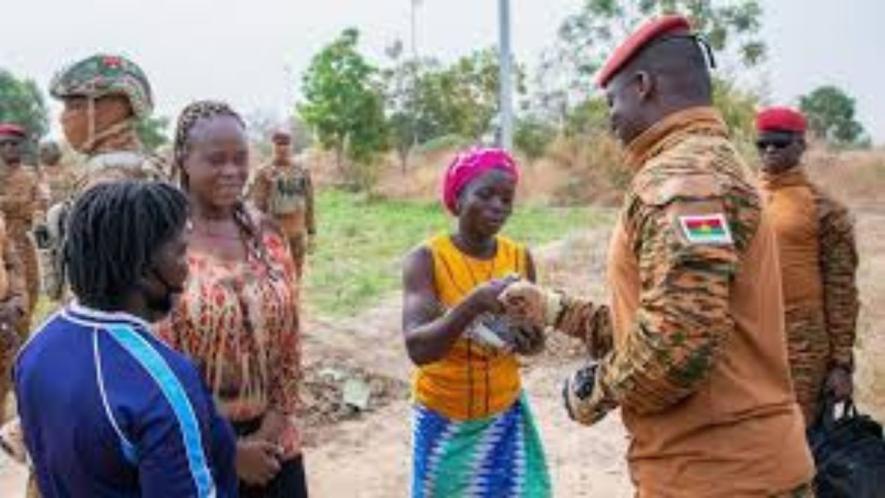
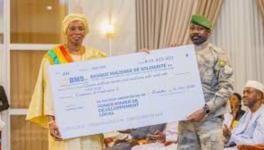
Ibrahim Traore visits women in agricultural production on International Women's Day. Photo: Burkina Faso Presidency
On April 17, 1996, military police in Eldorado dos Carajás, Brazil, killed 21 landless workers who were blocking a road to demand agrarian reform. They were members of the Landless Rural Workers’ Movement (MST). Since then, La Via Campesina has designated April 17 as the International Day of Peasant Struggle – a global day to honor those fighting for land, seeds, water, and food sovereignty, and to hold accountable those who profit from their dispossession.
As we observe the 30th anniversary of this day in Africa, we are compelled to pay closer attention to important developments in the Sahel region of our continent, where, when the terrorists arrived, the women of Burkina Faso hid seeds in their hair.
This is not a metaphor. It is also not improvisation. Before colonial borders were drawn across the Sahel, before cash crops displaced subsistence farming, and before structural adjustment dismantled public seed banks, the women of West Africa had long carried seeds on their bodies. Seeds were inherited – the record of generations of cultivated knowledge about which variety survived the dry season and which grew on degraded soil. Seed-keeping was a form of social reproduction as fundamental as any other, and women overwhelmingly carried it. That practice faded under colonial tax regimes, agribusiness inputs, and varieties designed not to be saved. Communities grew dependent on inputs they did not control.
Crisis brought it back. As armed groups (whose proliferation followed directly from NATO’s 2011 intervention in Libya) swept through farming communities across the Sahel – burning fields, killing, and forcing hundreds of thousands from their land – Burkinabé women returned to what their grandmothers knew: concealing seeds beneath their hair. When the terrorists had gone, they brought the seeds out again. They planted once more. The act was both practical and political: what was preserved was not only food but also the cultivated knowledge that makes food sovereignty possible.
Land as weapon, seeds as resistance
Every year, 360,000 hectares of agricultural land are lost in Burkina Faso due to terrorism-driven displacement, climate change, and the cascading effects of a decade of instability. Peasants displaced from their villages either move to cities without support or try to rebuild their lives and livelihoods on unfamiliar, unsuitable, or equally threatened land.
Terrorism serves to weaken and fragment agricultural production. The displacement of Burkinabé peasants benefits those who seek to keep Africa reliant on food imports, international aid, and the “goodwill” of imperialism.
In response, peasant organizations, united under the Coalition for Surveillance of Biotechnological Activities (CVAB), have created an agroecological alternative to dependence on corporate inputs. Their opposition to GMOs and corporate biotechnology is based on structural issues, not sentiment: patented seed systems transfer control of Africa’s food supply to external actors (reflecting the logic of structural adjustment, but applied to agriculture).
The state behind the seed
These issues are not new. They have been raised by the peasants and the organizations they have built for decades across the African continent. What, then, has changed under Ibrahim Traoré’s government? It is the scope of political possibilities. For the first time since Sankara, the agenda of peasant organizations – including food sovereignty, opposition to GMOs, and prioritizing locally produced food – has gained state support. The Agricultural Offensive launched in 2023 has redistributed tractors and inputs to farmers, redeployed agricultural engineers to rural regions, and achieved grain surpluses for two consecutive years. In his New Year’s address on December 31, 2025, Traoré declared that Burkina Faso had reached food self-sufficiency. In February 2026, the government established and nationalized five major agro-industrial complexes.
Importantly, the Alliance of Sahel States has established APSA-Sahel – the Alliance of Agricultural Seed Producers of the Sahel. Its clear mandate is to develop and distribute locally adapted, climate-resilient seeds; to build an indigenous regional seed market; and to end reliance on foreign seed imports that have left Sahelian farmers vulnerable for decades. The knowledge of locally adapted seed that the women of Burkina Faso have kept in their hair – which is irreplaceable – is now being formalized across three countries. The informal sector is becoming institutionalized.
April 17 and the African peasant
La Via Campesina’s call on April 17, 2025, highlighted that land, water, and territories are not commodities, and the act of conserving and exchanging traditional seeds should not be perpetually criminalized worldwide. The UN Declaration on the Rights of Peasants (UNDROP), adopted in 2018, affirms the collective rights of peasant communities over their seeds, land, and communal ways of life.
Food sovereignty, seed sovereignty, and environmental sovereignty are therefore strategic questions for the Africa Liberation struggle, commemorated on May 25 annually – not secondary concerns. In the Alliance of Sahel States, the fight over seeds is closely connected to the struggle for land, resources, and the right to influence development. It also puts the question of who the beneficiaries of these initiatives should be squarely on the table. In the spirit of April 17, the answer is clear: the Burkinabé, African and international peasantry must be the heartbeat of livelihoods in our communities and must therefore be at the center of the claims being made to sovereignty.
As Africa continues to fight for sovereignty and peasants strive for prosperity, there may be valuable lessons in the Burkinabé practice of preserving seed in women’s hair as a dignified symbol of the land (and continent) of the upright people.
Jonis Ghedi-Alasow is the Coordinator of the Pan Africanism Today Secretariat.
Courtesy: Peoples Dispatch
Get the latest reports & analysis with people's perspective on Protests, movements & deep analytical videos, discussions of the current affairs in your Telegram app. Subscribe to NewsClick's Telegram channel & get Real-Time updates on stories, as they get published on our website.