





Inquilab Zindabad: The Cry We’ve Forgotten How to Hear
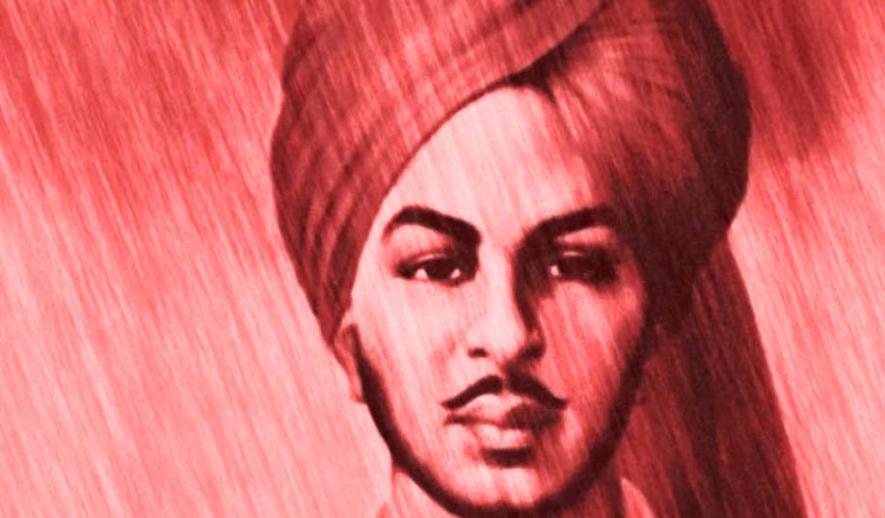
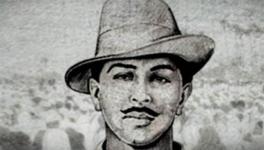
March 23 marks one of the darkest yet most inspiring days in India's history. On this date in 1931, Bhagat Singh, along with Sukhdev and Rajguru, was hanged by the British in Lahore Central Jail. He was just 23 years old. Today, as we approach March 23, 2026, the nation once again remembers him. Streets fill with slogans, social media lights up with his photos, and "Inquilab Zindabad" echoes everywhere.
But too often, we remember the martyr without truly understanding the man. Bhagat Singh was not just a symbol of courage. He was a deep thinker, a reader, a writer, and above all, a visionary who dreamed of a society free from every kind of exploitation. People often picture him as someone who loved violence, someone who threw bombs out of anger. That image is wrong. In his own words from the court statement after the 1929 Assembly bombing, he said clearly: "Revolution is not the cult of bombs and pistols. By revolution we mean the ultimate establishment of an order of society in which the sovereignty of the proletariat should be recognized." Those words cut through the noise. Revolution, for him, was never about destruction for its own sake. It was about building something new and fair.
In April 1929, Bhagat Singh and Batukeshwar Dutt walked into the Central Legislative Assembly in Delhi. They threw two low-intensity bombs. The explosions were loud enough to shake the room, but they caused no injuries. They shouted slogans, showered pamphlets, and waited to be arrested. They wanted the rulers to listen. They called it "to make the deaf hear." This was not random violence. It was a powerful message against an empire that ignored peaceful protests and crushed voices with force.
Bhagat Singh spent his time in jail reading and thinking. He studied Karl Marx, Lenin, and other socialist writers. He looked closely at the Russian Revolution and freedom struggles around the world. He understood that real freedom meant more than kicking out the British. It meant changing the entire system so that no one exploited another. He asked a sharp question in his writings: "What is this freedom? A transfer of power from the British to a handful of rich and powerful Indians? Will this freedom give the poor worker and farmer their rights? No."
For Bhagat Singh, inqilab stood on three strong pillars. First, full political independence. India had to break free from colonial rule completely. Second, economic justice. He hated landlordism, unchecked capitalism, and any system that kept workers and peasants poor while a few grew rich. He wrote about the suffering of farmers drowning in debt, weavers starving despite their hard work, and laborers building others' wealth but having nothing for themselves. Third, deep social change. He rejected caste divisions, communal hatred, and blind faith. He believed these things divided people and stopped them from fighting together against real enemies.
Religion, he said, should stay private. Exploitation of one person by another was the true problem. In his famous essay "Why I Am an Atheist," he explained his beliefs with honesty and strength. He refused to depend on gods or miracles. He warned against hero worship and called for clear thinking. For him, bravery meant both standing up physically and questioning everything fearlessly. He also fought hard against communal divisions.
In places like Punjab, Kanpur, and Delhi, he worked quietly and openly through groups like the Naujawan Bharat Sabha to stop riots and build unity. He saw how the British used religion to divide and rule, and he refused to let that weaken the struggle.
Yet today, many who raise his name ignore these parts of his thought. Some turn him into a narrow nationalist hero. Others use his slogan to stir division. That twists his message completely. Bhagat Singh stood for harmony, for class unity, for reason over superstition. India gained political freedom in 1947. Flags wave high now. But Bhagat Singh would ask harder questions. Has the deeper revolution happened? Do people live without fear of hunger, debt, or injustice?
Look around today. Reports show the richest 1% hold a huge share of the country's wealth. Young people with education struggle to find jobs. Farmers still face debt and despair, often leading to heartbreaking choices. Workers in cities toil long hours for low pay in uncertain jobs. Inequality grows while promises of progress remain on paper.
Bhagat Singh never saw violence as the goal. He used it only as a tool when peaceful ways were blocked. His real aim was always reconstruction: a society built on equality, dignity, and justice for all. "I am a man," he wrote, "all that affects mankind concerns me." He urged people to feel for others, fight for others, and stand together.
He also said, "The sword of revolution is sharpened on the whetting stone of ideas." Revolution needs thoughts, not just action. Ideas give it direction and lasting power. On the night before his execution, Bhagat Singh stayed calm. He read books, talked politics with friends, and faced death without asking for mercy. He asked to be treated as a war prisoner and shot, not hanged. His strength came from clarity, not drama.
This March 23, as we remember him, let us do more than share posters or shout slogans. Let us ask ourselves: Are we carrying forward what he lived for? If inqilab means ending exploitation in every form, then the fight continues. If it means thinking critically and rejecting hatred, then it is needed now more than ever. If it means standing together across lines of caste and religion, then we must protect that unity fiercely. Bhagat Singh's life was short, but his ideas burn bright. "Inquilab Zindabad" is not just a chant. It is a call to change systems, to build a world where no one is crushed under another's greed or power.
On this Martyrdom Day, let us honour him not only by remembering how bravely he died, but by living for what he truly believed in: a just, equal, and exploitation-free society. Long live the revolution. Not as empty words, but as a living promise.
Shabir Ahmad Ganaie is a Research Scholar in South Asian studies with special focus on the history of Ahmadiya community, He can be contacted through shabeerhistory18@gmail.com.
Harjeet Singh is an Assistant Professor of History, Akal University, Punjab. He writes on Sikh Empire, Historiography, Social, Philosophical and Cultural Issues. He can be reached at aishxing@gmail.com. The views are personal.
Get the latest reports & analysis with people's perspective on Protests, movements & deep analytical videos, discussions of the current affairs in your Telegram app. Subscribe to NewsClick's Telegram channel & get Real-Time updates on stories, as they get published on our website.