





History and Legacy of Hunger Strikes in India

There are few forms of political action that have displayed the historical continuity and moral force of the hunger strike in India. Governments have changed, ideologies have risen and fallen, and methods of protest have evolved with technology. Yet one practice has endured for more than a century. It asks neither for weapons nor wealth. Instead, it transforms the human body into a moral argument, compelling society and the state to confront questions that often remain unheard through conventional political channels.
Unlike demonstrations, strikes, or electoral campaigns, a hunger strike rests on voluntary suffering rather than coercion. It seeks to persuade rather than overpower. Its success has never depended solely on the length of the fast, but on the moral credibility of the protester, the legitimacy of the cause, public resonance, and the willingness of institutions to respond. The history of hunger strikes in India is, therefore, not merely a history of protest. It is the history of how moral conviction has repeatedly sought to shape political authority through peaceful means.
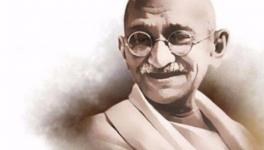
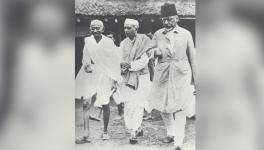
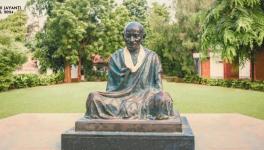
Although fasting has long occupied an important place in India's religious traditions, the hunger strike acquired its modern political character during the struggle against British colonial rule. It was Mohandas Karamchand Gandhi who transformed fasting into an instrument of ethical politics. Between 1918 and 1948, Gandhi undertook numerous fasts, not as acts of personal renunciation alone but as part of his philosophy of satyagraha, or truth force.
Whether appealing for communal harmony, protesting injustice, or encouraging non-violence, Gandhi regarded fasting as an appeal to the conscience rather than as an act of political blackmail. His fasts derived authority not from physical force but from personal integrity and public trust. In doing so, he gave the hunger strike a distinctive place in India's political imagination.
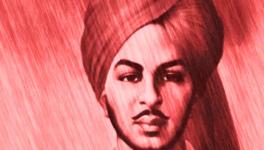
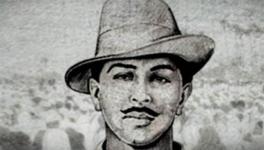
Yet Gandhi did not monopolise this tradition. The revolutionary movement also demonstrated the power of fasting under very different circumstances. In 1929, Bhagat Singh, Batukeshwar Dutt, and several fellow prisoners launched a historic hunger strike inside Lahore Central Jail. Their demands were not for personal freedom but for equal treatment of Indian political prisoners, better prison conditions, access to books, newspapers, and decent food comparable to that provided to European inmates. The strike attracted nationwide attention and exposed the discriminatory practices of the colonial prison system.
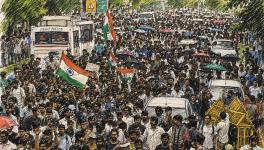
The most enduring symbol of this strike was Jatin Das, who refused food for 63 days before dying on September 13, 1929. His funeral procession from Lahore to Calcutta drew hundreds of thousands of mourners and became one of the largest public demonstrations of the freedom movement. While the colonial government sought to portray the protest as a prison disciplinary issue, the hunger strike instead transformed the prisoners into national heroes. It demonstrated that voluntary suffering could mobilise public opinion more effectively than many acts of violence.
These colonial experiences established an enduring pattern that would shape independent India. Hunger strikes succeeded not because they inflicted material damage upon governments, but because they created moral dilemmas that institutions could not easily ignore. They invited public scrutiny, generated sympathy, and often shifted the political conversation beyond the immediate demands of the protesters.
With Independence in 1947, the hunger strike did not disappear. Instead, it entered a new constitutional setting. The objective was no longer freedom from colonial rule but persuasion within a democratic republic.
The earliest and perhaps the most consequential example came through Potti Sriramulu, whose fast demanding a separate state for Telugu-speaking people became a defining moment in post- colonial India. After fasting for 58 days, he died in December 1952. His death triggered widespread public unrest and compelled the government of India to create Andhra state in 1953. More significantly, it accelerated the linguistic reorganisation of Indian states under the States Reorganisation Act of 1956.
Sriramulu's sacrifice demonstrated that even within a constitutional democracy, hunger strikes retained their capacity to influence public policy. The method had survived the end of colonialism because its moral logic remained intact. The political context had changed, but the language of self-sacrifice continued to resonate with the Indian public.
The decades that followed witnessed a remarkable transformation in the objectives of hunger strikes. If the colonial era had employed fasting against imperial rule and the early republic used it to shape the federal structure, the late 20th and early 21st centuries expanded its scope to include human rights, environmental protection, corruption, and educational accountability. The method remained unchanged, but the causes evolved with India's democratic journey.
No individual illustrates both the possibilities and limitations of the hunger strike more vividly than Irom Sharmila. In November 2000, following the Malom killings in Manipur, she began an indefinite fast demanding the repeal of the Armed Forces (Special Powers) Act (AFSPA). For nearly 16 years, she refused food and survived through force feeding while remaining in State custody for much of the period. Her protest became one of the longest political hunger strikes in modern history.
Although AFSPA was not repealed nationwide, her extraordinary endurance transformed a regional issue into a national and international debate on civil liberties and democratic accountability. Her struggle demonstrated that while hunger strikes may not always secure immediate policy change, they can profoundly reshape public discourse.
The tradition later found expression in environmental activism through Professor G. D. Agrawal, better known as Swami Sanand. A distinguished environmental engineer and former professor at IIT Kanpur, he dedicated his later years to protecting the ecological integrity of the Ganga. In 2018, he undertook another fast, demanding stronger measures to preserve the river from unchecked ecological degradation. After fasting for more than 100 days, he died in October that year.
Agrawal’s death marked a significant moment in the history of Indian environmentalism. It showed that the hunger strike had expanded beyond conventional political demands to embrace ecological justice, reaffirming that moral persuasion could be invoked in defence of nature as well as human rights.
The anti-corruption movement of 2011, led by Anna Hazare, introduced yet another dimension. Unlike earlier fasts that relied largely on newspapers and public meetings, Hazare's protest unfolded in the age of 24-hour television and social media. Millions followed the movement in real time. His fast galvanised unprecedented public participation and compelled Parliament to engage with demands for stronger anti-corruption mechanisms. While scholars continue to debate its long-term institutional impact, the movement confirmed that hunger strikes could successfully adapt to the digital age without losing their symbolic power.
That adaptation remains visible today. The recent hunger strike by engineer, education reformer, and Ramon Magsaysay Award recipient Sonam Wangchuk, accompanied by parallel fasts undertaken by several students at Jantar Mantar, represents the latest chapter in this century-long tradition. The issues, ranging from educational accountability to broader questions of democratic engagement, differ from those that animated Gandhi or Potti Sriramulu. Yet, the underlying principle remains remarkably familiar.
When conventional avenues appear inadequate, fasting continues to serve as an appeal to the conscience of society rather than an exercise in coercion. Whether these recent protests achieve their immediate objectives is a matter for history to judge. Their significance lies in demonstrating that even in an era dominated by digital campaigns and instantaneous communication, voluntary self-sacrifice continues to command moral attention.
Critics argue that hunger strikes exert undue pressure on elected governments by appealing to emotion rather than constitutional procedure. This concern cannot be dismissed lightly. Public policy should emerge through democratic deliberation, not simply through the endurance of individual protesters.
Yet, history offers an equally important corrective. Hundreds of hunger strikes have passed unnoticed because they failed to attract public support or articulate broadly shared concerns. The hunger strike, by itself, guarantees nothing. It acquires influence only when personal sacrifice resonates with a larger moral and political question. It is public legitimacy, not physical deprivation alone, that transforms a fast into a historical event.
The history of hunger strikes in India, therefore, reveals a striking continuity across changing political landscapes. Gandhi sought national freedom through fasting. Bhagat Singh and Jatin Das demanded dignity for political prisoners. Potti Sriramulu fasted for linguistic justice. Irom Sharmila challenged extraordinary security laws. Swami Sanand defended a river. Anna Hazare campaigned for cleaner governance. Sonam Wangchuk and student protesters have drawn attention to contemporary civic and educational concerns. Their causes differed profoundly, but each placed faith in the moral force of voluntary suffering as a means of democratic persuasion.
Ultimately, the history of hunger strikes in India is not merely the history of protest. It is the history of an enduring dialogue between moral conviction and political authority. Hunger strikes have never guaranteed political success, nor have they always produced immediate legislative change. Their lasting legacy lies elsewhere. They remind us that democracies are sustained not only by constitutions, elections, and institutions, but also by citizens who seek to awaken public conscience through peaceful means.
In an age increasingly shaped by spectacle and polarisation, the hunger strike continues to affirm a distinctly Indian political tradition, one in which the quiet discipline of self-sacrifice remains capable of provoking national reflection. It is this enduring moral dialogue, rather than any single victory or defeat, that constitutes the true legacy of the hunger strike in India's democratic journey.
The writer is a South Asian history researcher whose work explores contested histories, political memory, and overlooked voices. The views are personal.
Get the latest reports & analysis with people's perspective on Protests, movements & deep analytical videos, discussions of the current affairs in your Telegram app. Subscribe to NewsClick's Telegram channel & get Real-Time updates on stories, as they get published on our website.