





Forgotten Partition: Bengal’s Wounds in Punjab-Centric Memory
The other day, in a drawing room filled with laughter and crystal glasses, I told a Punjabi socialite — urbane, accomplished — that maybe it was time to forget and forgive, to get on with building an India that was diverse, progressive, forward-looking. She looked at me with a flash of something between pride and pain and shot back: “Jis tan lagga, wahi jane.” The one who suffers knows.
I was at a loss of words. In this polarised heartland, is the trauma of Partition going to remain a North Indian hurt alone!
I could have told her that I am Bengali, married to an East Bengali — that my in-laws’ lives were uprooted from Dhaka, Barishal, Mymensingh, Comilla, Sylhet. That my own West Bengali family is just one generation removed from that border. That I have grown up with the smells, cadences, and silences of people who lost everything but their dignity.
Punjab’s tragedy was monumental. The trains laden with corpses, the caravans of terror, the fields drenched in blood — they deserve every tear shed for them. But this country’s memory has been tilted. In popular imagination, Partition is almost always the Punjab story. Punjab’s tragedy was sudden, a detonation that killed and displaced millions in weeks
The Bengal story — equally soaked in violence, displacement, and loss — has been reduced to a footnote, if it is remembered at all. Because it was a slow burn. One was a sudden jhatka, the other a long-drawn halal, which continues in some manner even today
The Express recently carried a front page advertisement of Raman Batra’s new book, Kafila, published by Om. I do not have to see beyond the cover to know.
A Partition Before the Partition
Bengal’s trauma began decades before 1947. Lord Curzon’s 1905 Banga Bhanga — the first partition of Bengal — was dressed up as administrative convenience, but in reality, it was classic “divide and rule.” It may have been reversed in 1911 after the Swadeshi movement’s retaliation, but it left a scar. Communities began to see themselves as separate peoples — Hindus, Muslims, and further sub-divided as ghotis (from the West) and bangals (from the East).
The East was Muslim-majority, but the great landowners — zamindars — were often Hindu, many from West Bengal. This economic imbalance made for a volatile society, and it was in this soil that the idea of Partition found early traction. Migration began long before 1947, as communal tension pushed East Bengal Hindus westward — into a terrain that met them with hostility. Their dialects were mocked, their food caricatured, their very presence resented. They were refugees twice over — first from East Bengal, and then from their Hindu brethren in West Bengal.
The Bloodletting
By the mid-1940s, the poison was deep. Jinnah’s call for Direct Action Day in 1946 was read by many of his followers as a licence to slaughter. In Calcutta, a tsunami of bloodletting followed. The other side retaliated. The cycle was merciless.
When Partition came in 1947, Punjab and Bengal both burned — but Bengal’s fire smouldered far longer. The stream of refugees never stopped: the second great exodus in 1971 during the Bangladesh Liberation War; the smaller but steady trickle every time politics turned toxic in Dhaka. Even today, when Sheikh Hasina’s politics crumbled, fresh waves looked to India.
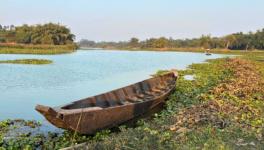
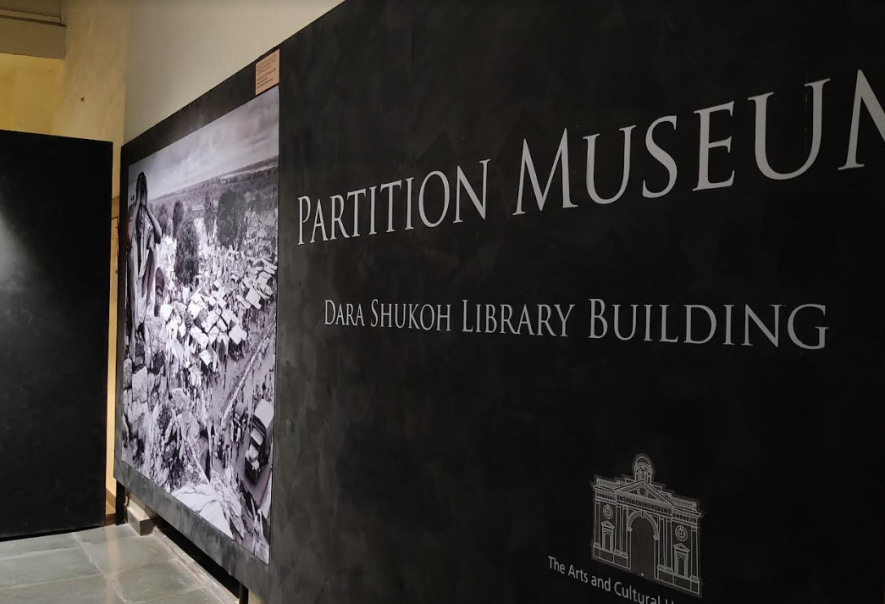
And yet, our national Partition Museum is filled with images of Punjab: the trains from Pakistan, the kafilas on Grand Trunk Road. How many artefacts speak of the Sealdah station crammed with East Bengali families? Of the boatloads crossing the river Padma? Of endless government colonies on Calcutta’s fringes?
Unequal Rehabilitation
The Punjabis — and here I do not grudge them — received land in the Terai, generous rehabilitation packages, and eventually, their own state. They transformed wasteland into the cradle of the Green Revolution.
The Bengalis got far less. There was no great redistribution of fertile land, no economic springboard. Bengal’s industrial base had been gutted — the jute mills, the port’s dominance, the trading networks — deliberately levelled to help “balance” the economy of a newly independent India. Refugee colonies were cramped, under-serviced, and politically neglected.
Punjab’s pain was expressed, heard, and addressed. Bengal’s was endured.
Silencing and Political Convenience
One reason Bengal’s trauma never became a rallying cry was the 33-year communist rule. The Left’s adherence to ideology over identity meant communal politics was kept at bay, the minorities were not othered. However, that resolve has been severely stretched with the influx of refugees ravaged by war, natural calamities, social and political tensions in the emergent Bangladesh. The precarity of the interface between nature and displaced populations have had tragic consequences, as the administration struggled to find these severely depleted and impoverished people the semblance of rehabilitation.
The nationalist camp, so quick to mobilise over temples and conversions, is strangely quiet here. They shout about Christian conversions in the Northeast, but show no sustained interest in the plight of East Bengali Displaced Persons — unless it can be weaponised for NRC or CAA theatrics. Or to justify a lopsided and faulty SIR classification. The humanitarian question is secondary to the electoral arithmetic. The communal obfuscated by rhetoric to an extent that it is impossible to distinguish between a refugee and a local, and simply convenient to harass by arbitrary religion-based branding. No election promises a settlement, and human suffering is carved up in communal colours.
Welfarism, it is alleged, is assuming a surreptitiously communal division through isolation and exclusions engineered by issues of voter lists, domicile and nationality. The social gains of the past five decades, can easily come unstuck by the politics of short-sighted communal opportunism.
The Cultural Blind Spot
Memory survives in art as much as in politics. Bengal’s Partition has its chroniclers — ace film director Ritwik Ghatak above all. His film, Meghe Dhaka Tara, Subarnarekha, and Komal Gandhar, are elegies for a lost homeland, shot through with the ache of dislocation. Ghatak himself, a refugee from East Bengal, drank himself to death under the weight of that wound.
Novelists like Sunil Gangopadhyay, Mahasweta Devi, and Samaresh Majumdar have told these stories, but mostly in Bengali. Outside Bengal, they remain unfamiliar.
Punjab’s story, by contrast, flowed naturally into the mainstream through Hindustani and Urdu: Amrita Pritam’s Ajj Aakhaan Waris Shah Nu, Bhisham Sahni’s Tamas, Manto’s Lahore tales, Kamleshwar’s Kitne Pakistan. Their words travelled from Delhi to Bombay to Doordarshan. Punjab’s images became the national Partition images. Bengal’s stayed regional, art-house, or untranslated.
Irony and Agony
When Bengal burnt and convulsed, Gandhi forsook the euphoria of independence and stayed ensconced in Noakhali, with his message of peace and non-violence, dousing flames, calming rage and embalming the hurt. His satyagraha in the aftermath of the Direct Action Day, retuned sanity to Bengal and Bihar. And yet Gandhi’s ideological progeny concentrated the rehabilitation efforts in the North, and even the partitioned Bengal was seen as a land of plenty whose resources could be redistributed across the less fortunate geographies of India. As the first avowedly Right-wing government completes its 100 days in West Bengal, it remains to be seen how they contain the genie of communal polarisation and xenophobia and go about the business of governance.
Closing the Gap
None of this diminishes what Punjab went through. They suffered horrifically. But for too long, one geography’s suffering has monopolised the nation’s Partition memory. The other — equally bloody, equally uprooting — has been dimmed, the inheritors of that heinous legacy made to tease open the scars, come elections
When that Punjabi socialite said “Jis tan lagga, wahi jane”, I was taken aback at her imagination of the body of India, which was hacked—and not just one geography. She eschewed the trauma of Dhaka and Barishal, in the refugee colonies of Jadavpur and Dum Dum, in the rice lines of Salt Lake, in the boat crossings over the Padma, in the dashed hopes of Marichjhapi, and relocations in Andaman. That Bengal faced this coming out of the biggest man- made famine, at the hands of the Imperials.
Eighty years on, the healing of India, cannot be focussed at specific geographies arbitrarily. Healing is a continuous process, and for the body to heal, all wounds will have to be dressed.
It is time we remembered that the Partition was not one wound but two — and that the one in Bengal is still quietly bleeding, perhaps being primed for an encore more algorithmically spectacular, live, colour enhanced for impact. Perhaps that is the intent.
The writer is an independent journalist. The views are personal.
Get the latest reports & analysis with people's perspective on Protests, movements & deep analytical videos, discussions of the current affairs in your Telegram app. Subscribe to NewsClick's Telegram channel & get Real-Time updates on stories, as they get published on our website.