





Bengal Polls: Industrialisation in Silent Zone in Past 15 Years of TMC Rule
representational image. Image Courtesy: Pexels
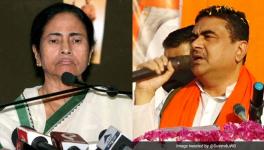
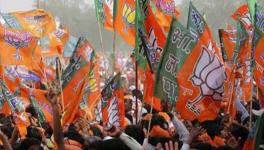
Kolkata: The Bharatiya Janata Party (BJP), which, aided by its ideological parent, the Rashtriya Swayamsevak Sangh (RSS), is making a desperate bid to make its maiden ministry in West Bengal, has included Singur in Hooghly district, Tajpur deep sea port project in Purba Medinipur district and a practically forgotten proposal for a minor port at Kulpi in South 24 Parganas district in their Sankalp Patra or manifesto.
Voting for the first phase of the Assembly elections in West Bengal is taking place today, April 23.
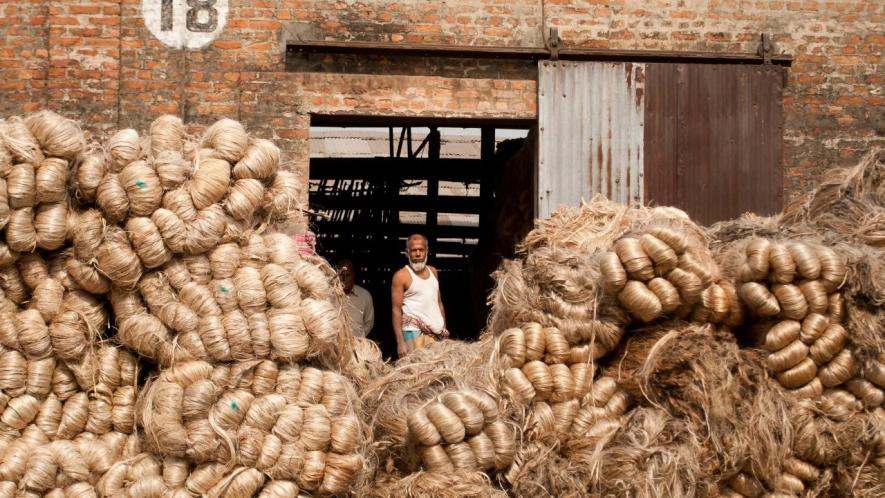
The manifesto also talks, among others, of BJP’s intention to promote four key industrial regions and rejuvenation of the jute mill industry. But, what distinguishes Singur, Tajpur and Kulpi, is their political import and a clear attempt to rebuff Mamata Banerjee, the Trinamool Congress (TMC) chief and Chief Minister since May 2011.
Judged relatively, the reason for a real setback for Banerjee will be Tajpur if indeed BJP succeeds in forming a ministry. Judged from another angle, if TMC manages a fourth term, fortuitous circumstances will act as face-saver for Banerjee and force the project’s execution pace. She has so far failed to do anything meaningful at Singur, wherefrom the Tatas withdrew on October 3, 2008 from their 80% through Nano small car venture in face of violent protests over land acquisition spearheaded by the TMC supremo.
Therefore, an industrial park there will expose the TMC ministry’s administrative ineptness; more so because the affected people there still look forward to the state’s subsistence allowance.
Tajpur marks the TMC chief’s egoistic approach and pronounced tendency to appropriate all credit to herself. The Centre was keen on implementing the deep sea port project, although initially it was focused on the development of a major port at Sagar Island and a Special Purpose Vehicle – Bhor Sagar Port – had been floated. The state government, however, preferred the Tajpur location, which was also recommended by Crisil, commissioned by the West Bengal Industrial Development Corporation.
New Delhi agreed to partner the state and sought, through the Syama Prasad Mookerjee Port (erstwhile Kolkata Port Trust) a 74% stake. But, the TMC ministry gave New Delhi two options – either a higher stake or else it would opt for a PPP (public-private partnership) model in which the state is not a junior partner.
In the initial tender of 2021 for Tajpur, Adani Ports and Special Economic Zone (APSEZ) had emerged as winning bidder and a provisional Letter of Intent to Award (LoIA) was issued to APSEZ in October 2022. Thereafter, nothing was heard. Suddenly, in the last quarter of 2025, the West Bengal government decided to issue a fresh tender. Banerjee, known for her frequent press meets and media statements, did not utter a word on why the decision on the initial tender – for which the Sajjan Jindal Group’s JSW Infrastructure was the other bidder – was suddenly scrapped.
Five years and one month ago, on March 15, 2021, addressing an election rally at Egra in Purba Medinipur district, Union minister Nitin Gadkari had strongly refuted Banerjee’s charge that the Centre had delayed Tajpur. Gadkari claimed that as the Union minister in-charge, he had treated it as “his project”, but the West Bengal government never cooperated with New Delhi. Also, Banerjee’s sudden preference for the PPP model was not conveyed to New Delhi, he said.
For the first time, on December 10, 2025, some information was available as to what had happened. The occasion was a dinner at the residence of senior politician Sharad Pawar to mark his birthday. On that occasion, Gautam Adani told TMC Lok Sabha member Saugata Roy, when the latter raised the matter, that things were not “convenient”; “the situation is not positive”. More than three years had lapsed since the issue of provisional of LoIA. It appears the LoIA holder developed doubts about Tajpur’s viability, considering the fact that two existing deep sea ports – Dhamra and Paradip -- were not far away; the former less than 200 km away and the latter 290 km away. Moreover, West Bengal’s insistence on jobs for 25,000 persons was also part of the viability doubt.
A political angle is also seen by knowledgeable quarters. Toward October 2023-end, TMC’s Lok Sabha member Mahua Moitra got embroiled in a controversy as BJP MP Nishikant Dubey alleged the TMC member asked questions targeting the Adanis as part of a deal with a businessman. Moitra’s party boss preferred silence then too; although the Gujarat-based corporate, with the LoIA, was still ‘formally in the picture’ for Tajpur. There is unanimity in industry and business circles that the Tajpur deep sea port project would have been close to reality had Banerjee accepted the 74:26 deal.
Thus, at the moment, what the state has to show is a fresh Request for Proposal (RFP) published in newspapers of Monday, December 1, 2025 edition. It is clarified that the state wants the project to be implemented on design, build, finance, operate and transfer basis. March 3, 2026 had been set as bid opening date. But, the state has been informally in election mode since early February although the poll dates were announced on March 15.
From whatever information is available, it is seen that the proposal for a minor port and SEZ at Kulpi was conceived in 1997. It was to be a joint venture. The place is located on the eastern bank of the Hooghly river, some 30 km upstream from the sea mouth. It was envisaged as a joint venture among DP World of Dubai, Keventer Agro and WBIDC.
BJP’s political calculations seem to be behind the sudden reactivation of the proposal after so many years. TMC has a very strong base in South 24 Parganas district. If it comes to power and is able to implement the project, it will be politically helpful to it.
Industrialisation Under TMC
Stocktaking of West Bengal’s industrialisation situation during the 15 years of TMC regime led by Chief Minister Mamata Banerjee since May 2011 reveals a lot. The then Opposition leader Banerjee forcing the withdrawal of the Tatas from the small car project at Singur in Hooghly district on October 3, 2008 – then over 80% complete – was only the first step toward blocking the industrialisation efforts of the Left Front ministry headed by Buddhadeb Bhattacharya of CPI (Marxist).
What is of significance is that although the TMC leader, upon assumption of office as Chief Minister in May 2011 had talked of “badal” (change) and not “badla” (revenge), yet with vengeance she did not allow follow-up action and at times advanced weird arguments. She failed to appreciate that those proposals would be not only capital-intensive and employment- generating but also that the promoters were reputed government -owned public sector undertakings and also involved the participation of prestigious institutions.
The proposed projects were 1,600 mw (800 mw x 2) super thermal power project of NTPC at Katwa in Purba Bardhaman district, for which her predecessor, Bhattacharya, had arranged 55% of the land required. Banerjee took no initiative to arrange the balance land. At one stage, NTPC scaled down the capacity to 1,320 mw (660 mw x 2) to facilitate the state’s role, but to no avail.
In one of her interactions with industrialists in Mumbai, the NTPC top brass reminded Banerjee about the pending Katwa venture and she gave the impression that the needful had been done. Nothing happened and the PSU giant quietly withdrew.
The second proposal that became a victim of the land acquisition controversy was for a petro-chemical hub at Nandigram in Purba Medinipur district. This was one of the four such proposals cleared by the then Union minister in-charge, late Ram Vilas Paswan, under the scheme for Petrochemicals and Petroleum Investment Regions (PCPIR) – one each for the country’s four regions. For this project, public sector IOC had agreed to be the key investor.
The third project scuttled by Banerjee was for a large nuclear power complex at Haripur, also in Purba Medinipur district, with Russian collaboration. Then Prime Minister Manmohan Singh personally took the initiative to get Hairpur included in the protocol. She rejected it on grounds of safety and ecology. In sharp contrast, despite some concerns and opposition from the people, Tamil Nadu ensured implementation of the Kudankulam nuclear power project under the aegis of Nuclear Power Corporation of India (NPCIL). The top brass of the Atomic Energy Commission and NPCIL had tried to remove the concerns of the Chief Minister and assured her of the latest safeguards, but she stuck to her opposition.
The fourth initiative of the Left Front government –for a financial hub in the city and for which Banerjee took the unusual step of re-laying the foundation stone a few years ago – remains in the silence zone.
The fifth and at the moment the last proposal not acted upon was the Khagra-Joydev coal block at Dubrajpur in Birbhum district. This coal block was re-allotted on March 31, 2015, by the Coal Ministry to Damodar Valley Corporation (DVC).
Modelled on the Tennessy Valley Corporation of the US, the multi-purpose DVC has three promoters – the Centre, West Bengal and the Jharkand (originally Bihar), with equal shareholding. The block was first allotted to DVC in 2005 but the raging controversy over the nomination process of the coal block allotment ultimately led to the cancellation of all allotments by the Supreme Court in 2014. Hence the need for re-allotment.
The DVC board approved a development and investment plan for 3 million tonnes (mt) capacity (reserves 103 mt) with supply linkage for their Mejia power complex at Durlavpur in Bankura district in April 2017. The organisation waited for five years to get land acquisition and resettlement issues sorted out. Seeing no hope of getting support from the co-promoter state government, DVC surrendered the Khagra-Joydev block to the Centre in August 2022.
The writer is a senior freelance journalist based in Kolkata. The views are personal.
Get the latest reports & analysis with people's perspective on Protests, movements & deep analytical videos, discussions of the current affairs in your Telegram app. Subscribe to NewsClick's Telegram channel & get Real-Time updates on stories, as they get published on our website.