





Civilisation Crisis: Imperialism, War & New International Order
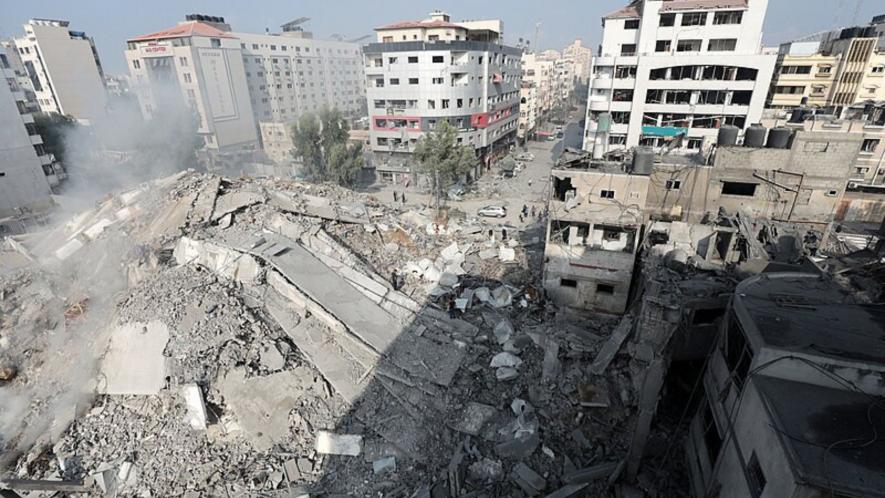
Image Courtesy: Wikimedia Commons
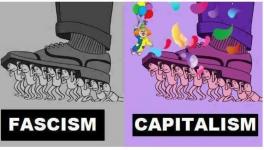
The contemporary world is confronting a profound crisis of civilization, characterised by escalating wars, deepening economic inequalities, ecological degradation, and mass displacement of populations. Armed conflicts across regions such as West Asia, Eastern Europe, Africa, and parts of Asia demonstrate that the global order remains highly unstable. These developments reveal structural contradictions embedded in the global capitalist system.
Since the end of the Second World War, the expansion of military alliances, multinational corporations, and global financial institutions has created an international system in which geopolitical power, economic interests, and militarism are deeply intertwined. Rather than promoting universal prosperity, this system often prioritises strategic dominance, corporate profit, and control over resources.
The Military-Industrial Complex
One of the defining characteristics of modern imperialism is the growing influence of the military-industrial complex. In his farewell address in 1961, US.President Dwight D. Eisenhower warned that the alliance between military institutions, arms manufacturers, and political elites could acquire “unwarranted influence” over national policy (Eisenhower, 1961).
After the Second World War, wartime arms production gradually evolved into a permanent industrial sector closely integrated with State power. Defence contractors, political institutions, and military organisations became interconnected through procurement systems, research funding, and strategic policy planning.
This fusion of State authority and monopoly capital reflects what Marxist theorists describe as the structural integration of economic and military power. Under such conditions, militarisation becomes economically beneficial for sectors of global capital, creating incentives for sustained geopolitical tension.
Empirical evidence highlights the scale of this militarised economy. According to the Stockholm International Peace Research Institute (SIPRI), global military expenditure reached approximately $2.7 trillion in 2024, the highest level ever recorded. The US alone accounted for nearly 37 percent of global military spending, while NATO members collectively represented more than half of total defence expenditure worldwide (SIPRI, 2024).
Such levels of military investment indicate that war preparation has become a permanent feature of the contemporary global economy.
Imperialist Interventions Since World War II
Since 1945, numerous military interventions have occurred across Asia, Africa, Latin America, and West Asia. Countries such as Yugoslavia, Iraq, Afghanistan, Libya, Syria, Somalia, Sudan, Palestine, and Ukraine have experienced direct or indirect forms of external intervention.
These conflicts have produced devastating consequences:
- large-scale loss of human life
- destruction of infrastructure
- collapse of national economies
- displacement of millions of people
The 2003 invasion of Iraq, for example, resulted in hundreds of thousands of civilian deaths and contributed to prolonged regional instability. Similarly, the 2011 NATO intervention in Libya destroyed State institutions and plunged the country into prolonged political fragmentation.
From a Marxist perspective, such interventions are closely connected to struggles over strategic resources—including oil reserves, natural gas pipelines, and key maritime routes—along with efforts to maintain geopolitical dominance within the global system (Harvey, 2003).
Strategic Flashpoints: West Asia, Ukraine, Red Sea
Several contemporary conflicts illustrate how geopolitical competition shapes modern warfare.
Gaza and West Asia: The ongoing humanitarian catastrophe in Gaza reflects the long-standing geopolitical centrality of West Asia. The region’s vast oil reserves and strategic transport corridors—including the Suez Canal and Red Sea maritime routes—have historically made it a focal point of international power struggles.
Repeated wars, sanctions, and occupations have destabilised the region for decades, demonstrating how global power politics intersect with regional conflicts.
The War in Ukraine: The conflict in Ukraine has intensified tensions between Russia and Western military alliances. What began as a regional crisis has evolved into a major geopolitical confrontation involving sanctions, military aid, and expanding defense budgets across Europe.
The war illustrates Lenin’s argument that rival powers within the capitalist system inevitably compete for spheres of influence, generating periodic geopolitical confrontations (Lenin, 1917).
The Red Sea and Global Trade Routes: The Red Sea represents another critical strategic corridor. Connecting Europe and Asia through the Suez Canal, this maritime route carries a substantial share of global trade and energy supplies. Military tensions in this region highlight the vulnerability of global supply chains and the importance of controlling strategic chokepoints within the global economy.
MNCs and Global Economic Exploitation
Beyond military interventions, imperialism operates through economic mechanisms that sustain global inequality.
Multinational corporations (MNCs) headquartered in advanced economies dominate global production networks and international trade. Through investment flows, supply chains, and financial institutions, enormous wealth is extracted from developing regions.
This process operates through several mechanisms:
- extraction of natural resources
- exploitation of low-wage labor
- unequal trade relations
- debt dependency
Africa, Asia, and Latin America supply vast quantities of raw materials—including oil, rare earth minerals, and agricultural commodities—yet many countries in these regions remain trapped in conditions of structural underdevelopment.
The Egyptian Marxist economist Samir Amin described this process as “unequal development,” where wealth systematically flows from the global periphery to the capitalist core (Amin, 2010). Similarly, Indian economist Prabhat Patnaik argues that contemporary capitalism depends on the continuous transfer of surplus from developing economies through unequal trade and financial structures (Patnaik, 2016).
Debt has become a particularly powerful mechanism of control. Many developing countries face severe sovereign debt burdens, forcing governments to implement austerity measures that weaken social welfare systems while prioritising debt repayment.
Human Cost: Refugees andDisplacement
The humanitarian consequences of these conflicts are staggering. According to the United Nations High Commissioner for Refugees (UNHCR), more than 123 million people were forcibly displaced worldwide by the end of 2024, representing the highest figure ever recorded.
This total includes:
- more than 42 million refugees
- approximately 73 million internally displaced persons
In practical terms, one out of every 67 people have been forced to flee their homes due to conflict, persecution, or violence (UNHCR, 2024).
Major displacement crises are currently unfolding in regions such as Sudan, Ukraine, Gaza, Afghanistan, and Myanmar. Entire generations are growing up in refugee camps without adequate access to education, healthcare, or stable livelihoods.
From a Marxist perspective, these populations represent the most vulnerable segments of the global proletariat—communities whose lives are shaped by the violent dynamics of imperialist competition.
Crisis of the Liberal International Order
Following the Second World War, Western powers established a system of global governance often described as the “liberal international order.” Institutions such as the United Nations, the International Monetary Fund (IMF), and the World Bank were designed to promote stability and economic development.
However, critics argue that these institutions frequently reinforce existing power structures within the global economy. Structural adjustment programmes imposed by IMF and World Bank have often required developing countries to implement privatisation, austerity policies, and trade liberalisation.
While intended to promote economic efficiency, such policies have frequently weakened domestic industries and reduced social protections in developing economies (Stiglitz, 2002).
At the same time, the expansion of military alliances—particularly NATO—has intensified geopolitical competition, contributing to rising global tensions.
The Rise of a Multipolar World
Despite these challenges, global power relations are gradually shifting. Emerging economies are increasingly seeking alternatives to Western-dominated financial and institutional structures.
The expansion of BRICS reflects growing efforts among developing nations to reshape global economic governance. Initiatives such as the New Development Bank aim to provide alternative sources of development financing and reduce dependence on Western financial institutions.
For countries like India, participation in such institutions offers opportunities to diversify economic partnerships and strengthen economic sovereignty. However, structural challenges—including debt burdens, technological dependency, and unequal trade relations—continue to shape the development prospects of the Global South.
The transition toward a more multipolar world therefore represents both an opportunity and a period of heightened geopolitical uncertainty.
India’s Foreign Policy
India has historically presented itself as a leading voice of the Global South and a founding member of the BRICS grouping, which aims to promote cooperation among emerging economies and create alternatives to Western-dominated global institutions. In this context, India’s diplomatic conduct during major international crises carries significant political and moral weight. Recent developments in West Asia, however, have raised important questions about the direction and coherence of India’s foreign policy.
The escalation of conflict involving Iran, the US, and Israel generated widespread concern across the developing world. Many observers expected that India—given its strategic position within BRICS and its long-standing commitment to non-alignment—would articulate a clear position calling for restraint, adherence to international law, and the protection of civilian life. Instead, New Delhi’s response appeared cautious and restrained, reflecting what critics describe as a growing ambiguity in India’s diplomatic posture.
This perception was reinforced by Prime Minister Narendra Modi’s high-profile visit to Israel shortly before tensions intensified in the region. The visit emphasised India’s expanding strategic partnership with Israel, particularly in areas such as defence, technology, and trade. While such partnerships are part of normal international relations, critics argue that India’s increasingly close alignment with certain geopolitical blocs risks weakening the country’s traditional role as an independent mediator in global conflicts.
Historically, India’s foreign policy drew legitimacy from the principles associated with Mahatma Gandhi and the Non-Aligned Movement: peaceful coexistence, anti-colonial solidarity, and moral leadership in international affairs. That legacy helped India cultivate credibility among countries across Asia, Africa, and Latin America. Today, however, analysts increasingly debate whether India’s diplomacy is shifting toward a more transactional and security-driven approach.
Prime Minister Modi has often emphasised personal rapport with major world leaders—from Washington and Moscow to Beijing and Tel Aviv—as a means of strengthening India’s global engagement. Yet the persistence of conflicts in Ukraine, Gaza, and the broader West Asian region demonstrates that personal diplomacy alone cannot substitute for a coherent strategic doctrine.
For a country of India’s size and geopolitical importance, the challenge is clear. If India seeks to play a meaningful leadership role in an emerging multipolar world, its foreign policy must balance national interests with the broader principles of peace, strategic autonomy, and solidarity with the Global South.
Toward a More Just Global Order
Addressing the crisis of world civilisation requires more than temporary ceasefires or diplomatic negotiations. It demands a transformation of the global political economy.
A more equitable international order would require several structural changes:
1. Greater economic sovereignty for developing nations
2. Democratic control over natural resources
3. Significant reductions in global military spending
4. Expanded international cooperation for social development
5. Solidarity among working populations across national boundaries
Such changes would involve not only policy reforms but also deeper transformations in the global economic system.
As Karl Marx observed, historical development is shaped by social struggles arising from contradictions within economic systems (Marx & Engels, 1848). The contemporary crisis of global capitalism reflects these structural tensions.
Conclusion
The wars in Gaza, Ukraine, and other regions are not isolated events but manifestations of deeper contradictions within the contemporary global order. Rising military expenditures, persistent economic inequalities, and mass displacement of populations reveal the structural instability of the existing system.
Marxist thinkers such as Lenin, Rosa Luxemburg, Samir Amin, and Prabhat Patnaik argue that imperialism inherently generates rivalry, militarisation, and conflict. Understanding the current crisis therefore requires examining the political and economic structures that sustain global inequality and geopolitical competition.
Whether humanity can move beyond a system organised around war, profit, and domination—and instead construct a cooperative and equitable international order—remains one of the most pressing questions of the 21st century.
The writer, an economics professor and author, is currently engaged in research on Sustainable Economic Development, Political Economy of the Global South, and India’s Socioeconomic Crisis. The views are personal. acpuum@gmail.com.
Get the latest reports & analysis with people's perspective on Protests, movements & deep analytical videos, discussions of the current affairs in your Telegram app. Subscribe to NewsClick's Telegram channel & get Real-Time updates on stories, as they get published on our website.