





Living in Times of Temporality, Narratives and Commoditisation
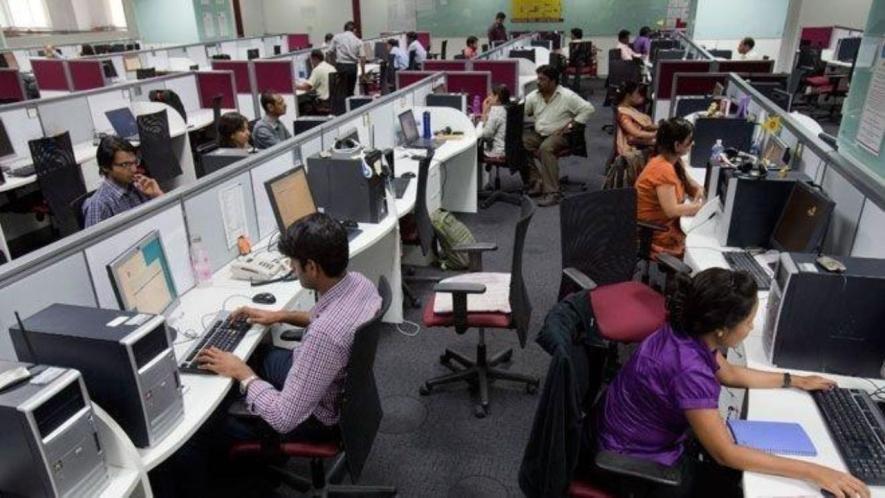
Representational Image. File Image
Trust, if we understand that to be the belief that two or more people have toward each other, is earned incrementally when there is a lack of understanding about the respective positions regarding where each player stands. Factors that are completely beyond the control of these parties weigh on the backdrop of any such encounter.
The terrain of cyberspace while once liberatory has become predatory in some respects as advertisements become the dominant form in which programmes, images, narratives, news, television, and radio become interspersed with. Money is exchanged for each of these performances, and with them we see a decline of dedicated long-form journalism, for example, that has to compete with applications, such as Inshorts, that can deliver summaries of the top stories of the day in 60 words or less, though admittedly they still provide links to the original articles.
Reflection, as the late American philosopher Fredric Jameson once observed, has become reduced to the instant, and a reduction of lived time to the body. This phenomenological poverty is exacerbated by the kind of habits we have imbibed, such as scrolling through reels that are less than 90 seconds long and often much shorter.
Performance is what television emphasises, with choreographed dances reflecting the sensibility that flash mobs have in terms of their organisation and emergence. It is inevitable that human experiences become permeated by such forms and the rhythm of our thoughts attunes to such modes at the expense of others. Capital is at play here and the difference between a genuine advertisement that highlights a product or service, and other less appreciatory forms become evident for all to see.
What happens to sociality in such a terrain? Professional interaction becomes the sole recourse amongst people and we begin to approach what would be a technocracy. This is not to say that the sharing of private experiences and correspondences are necessarily beyond such a logic, for even the presentation of, let us say a condensed family tree or even history is so easily commoditised, instrumentalised and tokenised to serve as a means to secure an interest, or establish primacy.
Where amongst this is any genuine interest for the other? Here, we could say that the common presumption is that such a point of view is reduced to that of the spectator, who caught in, if not the same specificities, is still an actor in society that is subject to the above-mentioned developments.
Author Milan Kundera in 1995 wrote a beautiful short novella titled, Slowness, where he identifies this craze for speed that the motor has introduced into society since the dawn of the industrial revolution. For the first time, man did not need to use the power of his own limbs to propel himself, freeing himself from such a weight and opening himself out to a new temporality that the motor vehicle introduces. It became possible, for example, for the background to disappear into a blurred scenery with only the horizon and road ahead, a sense of adventure perhaps and animated conversations amongst companions evocatively captured in novels such as, On The Road by Jack Kerouac (1957), and yet half a century later where are we? Stuck in traffic jams, watching signals, jammed packed in public transportation, but this is not what slowness is about. Really, slowness is about narrative and how that is exchanged, and the best form that can transmit this remains literature.
What any narrative requires is, apart from the characters themselves, a narrational point of view. That is a perspective that can assimilate what is happening, amongst characters, in characters, when they are apart, when they are together, what transpires between them, where they meet, their silences, aporias, and desires.
What must not be forgotten in any such recollection is that literature is, like any other medium, a commodity in the conditions of capitalism as they exist today and the ability to appreciate such a form demands a temporality that is not driven by the 24-hour news cycle, rummaged by the sound of traffic, complaining neighbours, the sounds of a construction site, and other such distractions that come with the city, which apart from these can yet afford moments of stillness and silence, even if simplicity is now beyond it.
A neighbourhood, for example, has a certain sensibility that permeates it, voices, gazes, some benevolent, some malevolent, and an anticipated consideration which is sadly always too short and broken by a knee-jerk fear that perhaps someone would break out of its sphere of gravity, find a time that is not a merely a plaything of their sensibilities.
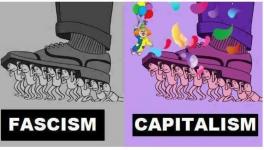
In other words, in capitalism and in the conditions of alienation we now inhabit, we always end up trying to make commodities out of each other that we can consume ourselves, while offering nothing in return, perhaps worse yet, cheapening the nothing that can be shared.
The writer is an independent journalist pursuing a PhD. The views are personal.
Get the latest reports & analysis with people's perspective on Protests, movements & deep analytical videos, discussions of the current affairs in your Telegram app. Subscribe to NewsClick's Telegram channel & get Real-Time updates on stories, as they get published on our website.