





Bengal School Crisis: Empty Classrooms, Overflowing Rolls
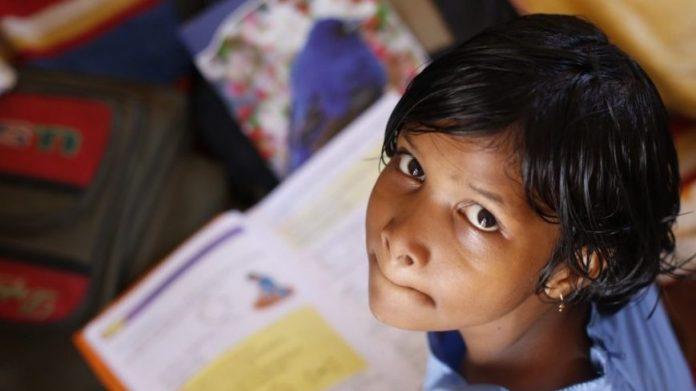
Image Courtesy: Youth Ki Awaaz
Kolkata: In a government-aided school building in Dum Dum, on the northern edge of Kolkata, 10 teachers report to work each morning. There is no one to teach. The last three students of Swami Vivekananda Vidyapith walked out of its gates in 2023, and since then the school has existed only as an entry in a database — chalk gathering dust, benches empty, a laboratory turned storeroom.
A few kilometres away, in the same district, another government school is packed three and four to a bench, one teacher trying to hold the attention of 60-70 scattered across grades. These two schools, standing barely a district apart, are the twin faces of what the Centre's own data now confirms is the most lopsided school system in the country — and it belongs to West Bengal.
The numbers, buried inside the Union Education Ministry's Unified District Information System for Education Plus (UDISE+) report for 2025-26, are stark enough to read like satire if the human cost were not so real. West Bengal has 4,133 schools with not a single student enrolled — and yet 19,502 teachers have been posted to draw salaries within their walls. That is one state alone accounting for almost three-quarters of every zero-enrolment school in India.
Uttar Pradesh, a state with nearly three times Bengal's teaching workforce, comes a distant second with 313 such schools. Nowhere else in the country does the distance between paper and practice yawn so wide.
Walk a little further into the data and the second half of the crisis appears. While thousands of teachers sit in empty buildings, 6,769 schools across the state are being run by a single teacher apiece — for 2,29,569 children. Do the arithmetic and it comes to roughly 34 students for every one teacher in these schools, herded across five or six different grades in a single room, an arrangement that predates almost every modern idea of pedagogy. This is not a shortage of teachers. It is a catastrophic failure to put the teachers who exist anywhere near the children who need them.
A Crisis That Keeps Growing
What makes this especially damning is the trend line. This is not a one-off anomaly thrown up by a single year's flawed data entry — it is a pattern that has hardened with time. In 2023-24, Bengal had 3,254 zero-enrolment schools with 14,627 teachers posted to them. By 2024-25 that had climbed to 3,812 schools and 17,965 teachers.
This year's UDISE+ report puts the figures at 4,133 schools and 19,502 teachers — an increase every single year, even as the state government insists it is "correcting" the system. Single-teacher schools have followed a similar trajectory, rising from 6,482 to 6,769 in a single year. Whatever mechanism the state claims to be building to fix this, the data suggests it is currently moving backward, not forward.
Bengal's School Education Minister, Dipak Barman, has offered an explanation that education workers on the ground find hard to accept: he blames "data disparities," arguing that private schools update teacher records without updating student enrolment figures on the central portal, artificially inflating the zero-enrolment count.
It is true that some data entry is almost certainly faulty. But it strains credulity that a data-entry glitch could explain away 4,133 schools, three years running, in a rising trend, while UP's genuinely mismanaged education system produces barely a tenth of that number. When the state's own second explanation is that "almost no teachers were recruited in the last fifteen years because of huge corruption," the minister is, in effect, admitting that the crisis is not a spreadsheet error but the direct legacy of a broken, halted recruitment pipeline — one frozen for a decade and a half by the very scandal that has put a former minister of his own department behind bars.
That scandal is not incidental to this story; it is close to its root cause. The West Bengal School Service Commission recruitment scam, in which the CBI and Enforcement Directorate arrested then education minister Partha Chatterjee along with a string of Trinamool Congress functionaries, froze fresh teacher recruitment across the state for years while the courts sorted through the wreckage. The Supreme Court eventually cancelled more than 25,000 SSC appointments over corruption in the selection process. The state has since begun a fresh recruitment drive under SLST 2025, but the intervening years of paralysis are precisely the years in which government schools bled students to a mushrooming private and English-medium sector, and existing teachers ossified into postings that no longer had any children attached to them.
The Rest of the Report Card is no Better
Zero-enrolment schools are the most dramatic symptom, but they sit inside a wider pattern of decline that a Comptroller and Auditor General (CAG) performance audit, examining the implementation of the Samagra Shiksha Abhiyan between 2019-20 and 2023-24, has laid out in damning detail. The audit found 520 schools in the state with 8,596 students between them running with no teacher at all, and 5,152 schools with over 1.76 lakh students functioning on a single teacher.
Nearly 30% of primary and upper-primary schools failed to meet even the prescribed student-teacher ratio, a shortfall the CAG pinned on a combined vacancy of roughly 33,700 sanctioned posts. At the other end, 79% of higher secondary schools were found to be overcrowded beyond the prescribed ratio — proof that Bengal's problem is not a shortage of teachers on paper, but a refusal, or an administrative incapacity, to move them to where children actually sit.
The CAG audit also surfaced a transition crisis hiding behind the state's headline dropout numbers: a 28-42% loss of students between upper primary and higher secondary. More than half the dropouts surveyed cited poverty and financial hardship as the reason they left; smaller but significant shares named early marriage, migration for work, and simple unwillingness to continue in a system that was visibly failing them.
Meanwhile, the UDISE+ report for this year finds Bengal has slipped to the second-worst Pupil-Teacher Ratio in the country at 30:1 — behind only Jharkhand — a ratio that has actually worsened from 29:1 the previous year even as the state insists it is rationalising its workforce.
Infrastructure Tells the Same Story
Strip away the staffing numbers and look at what a Bengal government school actually offers a child today, and the picture does not improve. Of the state's 93,147 schools, only 403 — well under half a per cent — have a digital library. Just 23,894 have any computer facility at all, and barely 18,374 are connected to the internet, in an era when the Centre's own policy documents speak of integrating classrooms with national digital learning platforms.
Roughly 8% of the state's schools have 10 or fewer students enrolled, hovering one crisis away from joining the zero-enrolment list, while a smaller cluster of large urban schools carry enrolments above 500, absorbing whatever demand still exists for a public education.
It is two systems wearing one uniform: a state education department nominally overseeing tens of thousands of institutions, when in practice large stretches of rural and semi-urban Bengal have neither the students nor the working infrastructure to justify the label "school" in anything but a bureaucratic sense.
Who Pays for a ‘Decade of Decline’
None of this can be laid solely at the door of one government or one scandal. The Centre's own Samagra Shiksha allocations to states, including Bengal, have repeatedly run behind schedule — parliamentary committees have flagged fund releases to West Bengal held up over disputes with the Centre, and utilisation of the scheme's budget nationally has hovered around barely half of what was allocated in some recent years.
Underfunding from Delhi and mismanagement in Kolkata have fed each other: a scheme starved of timely money gives a state government fewer resources to correct a teacher-deployment crisis it created in the first place, and a state paralysed by its own recruitment scandal is in no position to press hard for the funds it is owed.
What is left, ultimately, is the arithmetic itself — 19,502 salaries paid every month to teach no one, set against over 2 lakh children packed into single-teacher classrooms a bus ride away. The Minister's promise, that rationalisation will fix this "by the end of this calendar year," will be tested against a dataset that has only worsened for three years running. Until teachers are physically moved from the empty rooms of Dum Dum to the crowded ones a district over, West Bengal's children will keep experiencing not one education crisis, but two — a surplus that helps no one, and a scarcity that fails everyone else.
The writer (pseudonym) is a senior journalist, who has headed the Eastern regional bureau of various national publications. The views are personal.
Get the latest reports & analysis with people's perspective on Protests, movements & deep analytical videos, discussions of the current affairs in your Telegram app. Subscribe to NewsClick's Telegram channel & get Real-Time updates on stories, as they get published on our website.