





Bengal Elections: Voter Purge Hits Muslim Districts Hardest
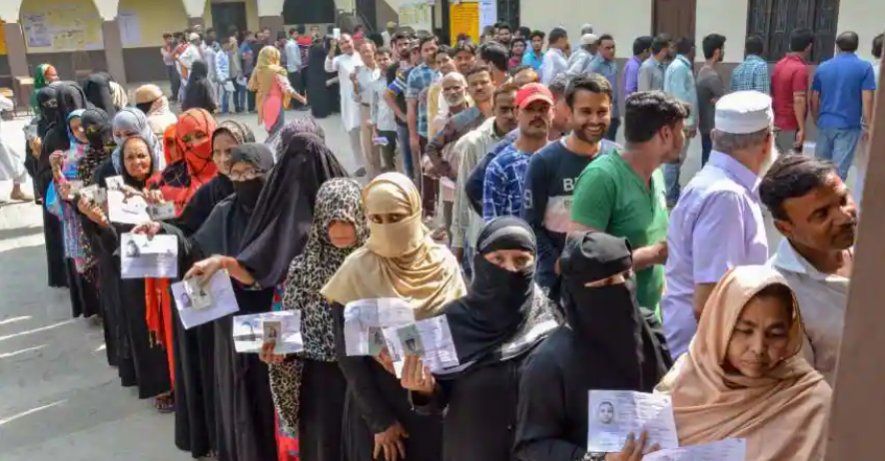
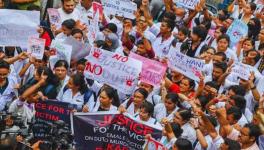
Representational Image. Image Courtesy: PTI
Kolkata: At midnight on March 23, the Election Commission of India (ECI) quietly uploaded a document to its website. It was called a "first supplementary list" — the latest output of the Special Intensive Revision, or SIR, of Bengal's electoral rolls. Within hours, the portal crashed under the weight of people trying to find their names.
For millions of voters across five Muslim-majority districts, that search has become an exercise in dread. Weeks before Assembly elections scheduled to begin April 23, West Bengal is in the grip of the most sweeping episode of disenfranchisement in its post-Independence history — and possibly the country's.
The Scale
The numbers are extraordinary. Over 63.66 lakh names were deleted from Bengal's final electoral rolls published on February 28. That is more than 8.3% of the entire electorate, drawn from a registered base of 7.66 crore voters. Another 60 lakh remain trapped in a category called "Under Adjudication" — their voting rights frozen, no reasons given, no functioning appeals mechanism in place.
Five districts account for over 58% of all adjudicated names: Murshidabad (11.01 lakh), Malda (8.28 lakh), North 24 Parganas (5.91 lakh), South 24 Parganas (5.22 lakh), and Uttar Dinajpur (4.80 lakh). Each has a large Muslim population. The geographic clustering is not incidental — it is the story.
In Lalgola, a constituency where more than three in four residents are Muslim, one polling booth with a 99% Muslim electorate saw over 15% of its voters flagged. A Hindu-majority booth nearby had 2 flagged out of 622.
In Raghunathganj, nearly half of all registered voters were placed under adjudication. Among those whose cases were resolved in the supplementary list, 22.6% were deleted outright — with some booths recording 100% deletion rates among adjudicated cases.
"This is not a voter list revision," said Sabir Ahamed of the Pratichi Institute. "This is a citizenship audit conducted against one community — without notice, and without remedy."
A BLO Who Lost His Own Vote
Mohammad Shafiul Alam spent months going door to door in Bashirhat. As a Booth Level Officer or BLO — an official appointed by the Election Commission itself — he helped voters fill the SIR forms, digitised entries, and ensured compliance. He was, in every formal sense, an instrument of the process.
When the supplementary list came out, his own name was missing.
"I helped others and lost my own vote," he said. "There is no reason mentioned. I have been told to reapply within 15 days."
His parents' names appear in the 2002 SIR rolls — the very benchmark the Commission uses for validation. His documents were complete. None of it mattered.
Fear Along the Bhagirathi
In the villages of Murshidabad, SIR is not experienced as paperwork. It is experienced as fear.
Families that have voted for three generations are being flagged for what officials call "logical discrepancies" — a phrase that has never been officially defined. The Bhagirathi riverbank towns of Domkol and Raghunathganj have seen booth after booth with deletion rates that civil society groups describe as unprecedented.
A weaver in Domkol, who has voted in every election since he turned eighteen, put it plainly: "My grandfather voted here. My father voted here. I have voted here every election. Now they say there is a discrepancy. What is the logic? That I am Muslim?"
Between November 2025 and January 2026, more than 100 deaths were documented across Bengal with links to SIR-related stress — suicides among voters who received deletion notices, and among field staff overwhelmed by impossible workloads. These are not aberrations. The are a pattern.
Bhabanipur Is Not Spared
The SIR has reached even the constituency of Chief Minister Mamata Banerjee. In Bhabanipur, 44,000 names were excluded in earlier rounds. A further 14,000 were placed under adjudication, with 2,000 flagged for discrepancies. In a constituency of 2.6 lakh voters, nearly one in five now faces some form of disenfranchisement.
The figure is significant not just politically, but symbolically: even in the heart of the ruling party's most prominent seat, the SIR's reach has proven indiscriminate.
A Constitutional Void
What the SIR has created is not merely an electoral problem. It is a constitutional one.
India's Supreme Court has repeatedly affirmed that the right to vote, while statutory in origin, is foundational to the democratic structure. Yet millions of voters now exist in a legal no-man's land: their names suspended, no reasons furnished, no appellate tribunals functioning despite court directions to establish them, and elections weeks away.
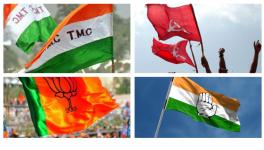
The situation has produced an absurdity with no precedent. Sitting MLAs and candidates from BJP, TMC, and CPI(M) have been found in the "Under Adjudication" category. The question this raises — can a person contest an election in which they are not permitted to vote? — has been posed to no authority. None has answered.
The Calcutta High Court has been engaged at various stages. The Supreme Court has acknowledged a "trust deficit" between the state government and the Election Commission. The process has continued regardless — unresolved and unaccountable.
Politics Behind the Purge
For BJP, the SIR was never purely administrative. Senior leader Sukanta Majumdar said publicly that the revision was intended to "cleanse" the rolls ahead of 2026. The language of infiltration and illegal migration has run alongside the technical language of electoral revision throughout the process.
But empirical analysis complicates the narrative. Researchers examining the deletion lists have found that surnames like "Saha" and "Kumar" — associated with Hindu communities — appear in significant numbers. In Kolkata Port constituency, 60% of deleted voters were non-Muslim. The supposed mass presence of "infiltrator voters" is largely absent from the data.
The fallout has reached BJP's own base. In Gaighata, a constituency dominated by the Matua community — refugees from Bangladesh who have been promised citizenship under the Citizenship Amendment Act or CAA — 14.51% of voters were found unmapped, among the highest rates in the state. The community that was told CAA would secure their citizenship is now finding its members caught in the same adjudicatory limbo as the Muslims the process was ostensibly designed to scrutinise.
The Centre's decision to establish fast-track CAA courts just days after the SIR list was released has deepened suspicion that disenfranchisement and "citizenship rescue" are being politically sequenced — a carrot-and-stick delivered simultaneously.
The Midnight List
The timing of the March 23 release was not an operational accident. Midnight drops of lists determining the voting rights of crore of people, portals that crash hours after going live, "logical discrepancy" flags with no accompanying definition, 15-day reapplication windows with elections imminent — these are not glitches in the system. They are the system.
The ECI was constituted to protect the franchise. In West Bengal, through the SIR, it has administered a process that has suspended millions from exercising it — disproportionately from one community, without explanation, without recourse, and with no time remaining to set things right before polling day.
A weaver in Domkol, a BLO in Bashirhat, a resident of the Chief Minister's own constituency — none of them know if they will be allowed to vote. Elections begin in four weeks.
Democracy is not merely the act of voting. It is the guarantee that one can. In Bengal, that guarantee has been broken
Get the latest reports & analysis with people's perspective on Protests, movements & deep analytical videos, discussions of the current affairs in your Telegram app. Subscribe to NewsClick's Telegram channel & get Real-Time updates on stories, as they get published on our website.