





Assam Polls: Citizens’ Collective Calls for Regime Change
Representational Image. File Image
Kolkata: If at last the Congress-led Opposition in election-bound Assam and the two Left parties – CPI (Marxist) and CPI (M-L) Liberation -- have succeeded in the past 10 days or so in forging functional unity to be able to take on the Bharatiya Janata Party-led National Development Alliance ministry with controversial Himanta Biswa Sarma as Chief Minister, the credit goes to a large extent to the citizens’ collective that functions under the name of Assam Nagarik Sanmilani.
Enhancing the collective’s credentials is the active participation of polymath and scholar Hiren Gohain in the formulation of an action plan to bring about a regime change in Assam. The state is to have single-phase polling on April 9 to elect 126 members for the Assembly. Closely associated with Gohain are ex-DGP Harekrishna Deka, Rajya Sabha member (Independent) Ajit Bhuyan, advocate Santanu Barthakur and social activists Abdul Mannan and Paresh Malakar.
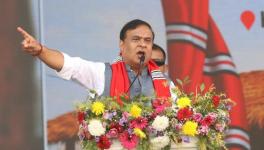
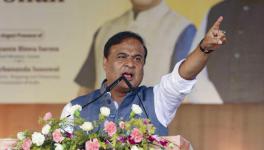
Assam Nagarik Sanmilani’s concern stems from the divisive politics being pursued aggressively by Sarma since he became Chief Minister in 2021. The tone and tenor of his communal politics touched a new low between January-end and February when he continuously targeted ‘Miya Muslims’, calling upon other sections of people (referring indirectly to Hindus] to maltreat them.
Finding that Sarma’s stance was vitiating the atmosphere and threatening communal harmony, Gohain and some persons associated with the Left, moved the Supreme Court on Monday, February 16 under Article 32 of the Constitution, demanded registration of an FIR and formation of a Special Investigation Team or SIT.
On jurisdictional consideration, the Supreme Court division bench headed by Chief Justice Suryakant asked the petitioners to move the Gauhati High Court under Article 226 of the Constitution. The Gauhati High Court, on Thursday, February 26 issued notices to the Chief Minister, the state government, DGP (Director General of Police) and Union of India.
Also, on February 15, a large number of ex-civil servants under the aegis of Constitutional Conduct Group urged President Draupadi Murmu to act “before it is too late” and the Supreme Court to take suo motu cognisance of the Assam Chief Minister’s persistent hate speeches; forgetting that he holds a Constitutional post.
Asked to comment on the effect of these developments, Assam politics watchers told NewsClick that on March 5, just a week after the Gauhati High Court’s notice, Sarma told the media at the state BJP headquarters that “BJP does not view ‘Miya Muslims’ as its enemies; our problem is love jihad ……” Is this not a stunning volte face by the CM? Several political observers noted that it was apparent that much water had flowed down the Brahmaputra.
(Miya’, though a respectable word in large parts of the country, is used by practitioners of divisive politics as a pejorative for Bengali-speaking or Bengal-origin Muslims, often labeled as Bangladeshis or ‘illegal immigrants’).
Healing Touch Eludes Barak Valley Bengalis
Sarma’s caustic remarks against ‘Miya Muslims’ and open call to others to misbehave with them has unfortunately produced some side effects, such as the labelling of Bengali Hindus settled in the Barak Valley as Bangladeshis by communal elements. This is adding to the long-prevailing sense of insecurity among Bengalis of Barak Valley, which comprises three districts – Cachar, Sribhumi (previously Karimganj) and Hailakandi.
When asked for his comments, Uttam Kumar Saha, Cachar district secretary of Barak Upatyaka Banga Sahitya O Sanskriti Sammilan, told NewsClick: “Why do you drag me into this sensitive matter? I will restrict myself to saying that what you have heard does have basis”.
The renaming of Silchar Ralilway Station as ‘Bhasha Shahid Railway Station Silchar’ as a tribute to the 11 ‘language martyrs’ remains a far cry despite an NOC from the Union Home Ministry in 2016 during the concluding stage of the Tarun Gogoi-led Congress ministry. This is of tremendous sentimental value to Bengalis. (On May 19, 1961, police had killed 11 persons who had gathered to protest the enforcement of Assamese as the only official language. The agitation was organised at Silchar, the epicentre of southern Assam’s Bengali-dominated Barak Valley).
Last year, Sarma made a controversial statement in which he said the NOC from the Centre was pending as alternatives were also there. Informed quarters told this correspondent that the Chief Minister was possibly referring to a Dimasa tribal freedom fighter “without a direct connection with the railway station”.
Even in the matter of development projects, Barak Valley has a low priority in Dispur’s scheme of things, sources added.
Asked to explain how the citizens’ collective managed to mobilise support for its demand for a regime change, Gohain told NewsClick: “We have been watching and getting reports that people are getting disenchanted with this ministry. The CM’s rank communal politics, administrative deficiencies, pronounced favouritism of certain industrial houses, disregard for Forest Protection Act provisions and rules thereunder, and reports of his family members amassing wealth are generating anti-regime feelings.”
Gohain further added “our state has a number of small and regional parties but individually none of them can match the organised, resource-rich BJP. The Congress can, but it is organisationally and financially weak. Moreover, it has leaders who are economical with their loyalty to the party. This, in addition to the Chief Minister’s constant efforts to engineer defection. The situation somewhat improved when acting on internal reports of weaknesses, the top brass brought in Jorhat Lok Sabha member Gaurav Gogoi as PCC chief. We, on our part, organised a convention in July last year and followed that up with elector-contact programmes in November and December last.”
According to Deka, there are Nagorik Samaj (citizen’s society) units in the state. “We have been coordinating with them and trying to drive home the message that “BJP’s divisive politics has hollowed out the Assamese identity from within”.
Gohain added: “So, our appeal to electors is that you in your own manner bring about a regime change. Our latest reports indicate electors in Ujani (Upper) Assam are being receptive”.
Meanwhile, the poll battle is between the two coalitions – the ruling NDA led by BJP and the Congress-led Opposition -- with both sides having regional outfits as partners.
The battleground has become larger with the Jharkhand Mukti Morcha (JMM), of which Hemant Soren is the party chief and state Chief Minister, making its maiden attempt to register its presence in Assam. Soren’s decision has to be seen against the backdrop of Assam having a very large number of ‘tea tribes’ and adivasis, whose eligible electors are estimated to be around 60 lakh and matter a lot in 30-35 constituencies. The Congress traditionally had a strong presence in those constituencies, but since 2016, when Assam had its first BJP-led ministry, the decline of the Congress was perceptible. Several of its party leaders shifted to BJP along with their supporters. The Congress failed to win a single seat in 2021 in those areas.
The entry of JMM, which has the Congress as its principal ally in the Jharkhand ministry, has given rise to speculation whether eventually, if results warrant, the Congress will seek JMM’s help. Right now, JMM is going solo. It has put up candidates in 21 constituencies. Reliable reports say that a team from the Congress and one of its allies has already met Soren in Jharkhand.
In his rallies, the JMM supremo has been highlighting the plight of tea tribes and adivasis in Assam. Recently, the Assam ministry approved a Rs 30 hike in the daily wage of tea garden workers, but the raise was termed “paltry” by the Opposition parties because even at the time of 2021 elections, a much higher increase was assured by the BJP-led ministry.
It may be mentioned that during the colonial period, the British tea planters had brought adivasi workers from then Bihar, the Chhota Nagpur Plateau and Odisha, to work in the tea estates on daily wage basis. Over the decades, their population grew and the tea garden workers came to be formally identified as tea tribes, whose long pending recognition as STs (Scheduled Tribes) remains a sensitive issue.
Among the other ‘un-allied’ parties in the Assam battle of the ballot are (number of seats being fought given brackets): Perfume baron Badruddin Ajmal’s All India United Democratic Front (27), Arvind Kejriwal’s Aam Aadmi Party (14), National’s People’s Party of Meghalaya Chief Minister Conrad Sangma (three) and Mamata Banerjee’s Trinamool Congress (23).
Ajmal had partnered the Congress in 2021, but because of its aggressively communal politics, the Congress distanced itself in the 2024 Lok Sabha polls.
The BJP-led combine includes Asom Gana Parishad, Bodoland People’s Front and Rabha Hasong Joutha Mancha.
The Opposition combine being piloted by Congress includes Raijor Dal, Asom Jatiya Parishad, All Party Hill Leaders’ Conference Karbi Anglong, CPI (Marxist) and CPI (Marxist-Leninist)-Liberation. CPI(M) is contesting in two constituencies. Vivek Das, state secretary of CPI (ML)-L, which is fighting for the Bihali seat in Biswanath district in central Assam, confirmed to NewsClick that the coalition partners are jointly campaigning under the banner of Asom Sonmilito Morcha.
While the final position will be known only after the scrutiny of nomination papers, the lead parties, BJP and the Congress, are set to fight 90 and 100 seats, respectively.
For the record: ‘In Jorhat, civility takes centre stage’ is the caption of a copy in The Economic Times edition of March 30 on the impending Assam elections. The copy points that Jorhat has the reputation of being the educational and cultural hub of Assam and this distinction is bolstered by the fact that campaigning here is free of personal attacks and mudslinging. The Assembly segment, which is part of Jorhat Lok Sabha seat, is witnessing “a gentlemanly contest between Gogoi of the Congress and BJP’s Hitendra Nath Goswami. The report quotes a voter Raju Hazarika as saying “the best part is they refrain from mudslinging”. (The Congress nominee’s father Tarun Gogoi had started his political journey from Jorhat and in 1968 he had won as a councillor in the municipality).
“We don’t concern ourselves … just go and vote”: This is what Abdul Khaleq, a 50-year-old pan shop owner who has lived all his life in Bongaigaon, told The Hindu. The report carried in the March 31 edition records Khaleq as saying: “What can we say when the chief minister says things like “trouble the miyas (a pejorative for Muslims with roots in Bangladesh) as much as you can”). The Bongaigaon Assembly seat is part of the Barpeta Lok Sabha constituency.
The writer is a senior freelance journalist based in Kolkata.
Get the latest reports & analysis with people's perspective on Protests, movements & deep analytical videos, discussions of the current affairs in your Telegram app. Subscribe to NewsClick's Telegram channel & get Real-Time updates on stories, as they get published on our website.