





Why Women Lawyers Are Litigating Their Way Into Bar
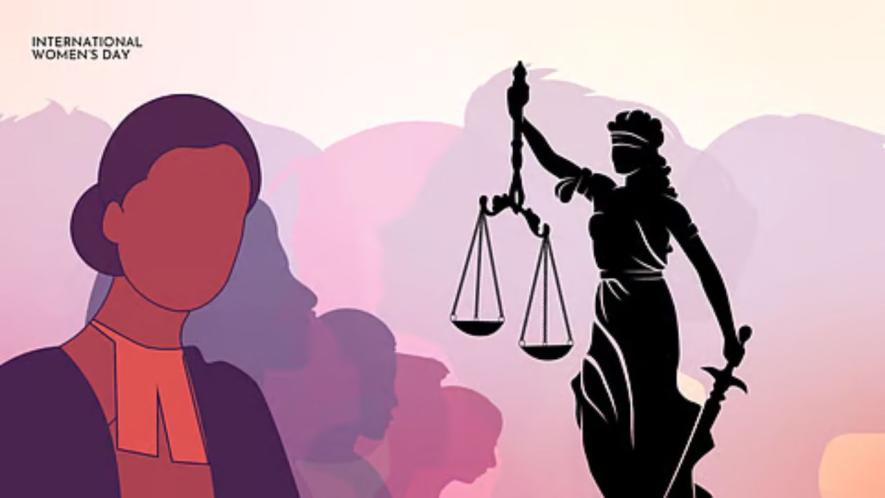
The years spent in courtrooms have helped me realise the difference between what the law says and what institutions actually do. The legal profession in India speaks fluently about equality. It writes it into petitions, argues it before benches, and invokes it in closing statements. What it has been far less willing to do is practise it internally.
This year, the elections to the Bar Council of Delhi witnessed an unusually high participation by women advocates. The surge follows a series of judicial interventions mandating reservations for women in Bar Associations. I will not pretend this happened organically. It did not. It happened because women went to court to make it happen.
Women constitute almost half of India’s population, yet their representation in the institutions of law continues to be a matter of concern. More than seven decades after independence, the number of women judges in the Supreme Court of India have accounted for only about 3.83 percent of all judges who have served on the Court. Today, out of a sanctioned strength of thirty-four judges, there is only one woman who is also expected to become India’s first woman Chief Justice.
At present, no woman is an office bearer in the Bar Council of India. That is a structural outcome and structures do not correct themselves.
This lack of representation penetrates beyond the bench and into the institutions like Bar Councils that regulate elections, welfare schemes, disciplinary proceedings, and professional leadership. At present, no woman is an office bearer in the Bar Council of India. That is a structural outcome and structures do not correct themselves. Without structural intervention, such imbalances tend to reproduce themselves.
Ruth Bader Ginsburg, the second woman judge of the Supreme Court of the United States once responded to a similar question,“... when I'm sometimes asked when will there be enough [women on the supreme court]? And I say when there are nine, people are shocked. But there'd been nine men, and nobody's ever raised a question about that.”
Courts begin correcting the gender imbalance
Let me be clear about what I mean when I say progress. I do not mean that the problem is solved. I mean that we have finally moved from a situation where the profession refused to acknowledge the problem at all, to one where at least some courts are willing to name it.
The need for measures to ensure greater representation of women in governing bodies is already embedded within India’s constitutional framework (Articles 243D&T, Article 243ZJ(1)) and political and cooperative institutions have recently recognised the need for such measures. The Constitution (One Hundred and Sixth Amendment) Act, 2023 reserves one-third of seats for women in the Lok Sabha and State Legislative Assemblies. If democratic governance in these spheres requires gender inclusion, it was perhaps only a matter of time before similar principles were extended to the institutions governing the legal profession.
Women in India gained the right to practise law with the Legal Practitioners (Women) Act, 1923. A century later, we are still litigating for the right to govern the institutions of our own profession. The Supreme Court has now acknowledged that persistent underrepresentation undermines the constitutional promise of equal access to public institutions.
Even within the statutory framework of the profession, the idea of representative governance is not entirely new. Section 3(2)(b) of the Advocates Act, 1961 provides that members of State Bar Councils are to be elected through the system of proportional representation by means of the single transferable vote. Yet, despite this, the composition of Bar Councils across the country has remained overwhelmingly male.
In December last year, the Court urged the Bar Council of India to ensure a non-negotiable 30 percent reservation for women in all State Bar Councils after petitioners highlighted that in 2021 only 9 out of 441 elected representatives across State Bar Councils were women; a mere 2.04%.
The Court tried to address this gap in Supreme Court Bar Association v. B. D. Kaushik and through an order passed in May, 2024, where it directed that one-third of the seats in the Executive Committee and Senior Executive Members of the Supreme Court Bar Association be reserved for women, along with one office-bearer position on a rotational basis. Similarly, in my petition, Fozia Rahman v. Bar Council of Delhi, along with connected matters including Aditi Chaudhary v. Bar Council of Delhi and Shobha Gupta v. Bar Council of Delhi, the Court mandated reservation for the women candidates having at least 10 years practice in Delhi and District Bar Associations.
These decisions reinforce the trajectory of women’s leadership in the Bar. In Deeksha M. Amruthesh v. State of Karnataka (2025), the Court mandated 30 percent reservation for women in Bar Association elections across Karnataka. In Yogamaya M.G. v. Union of India and Shehla Chaudhary v. Union of India, through an order passed in December last year, the Court urged the Bar Council of India to ensure a non-negotiable 30 percent reservation for women in all State Bar Councils after petitioners highlighted that in 2021 only 9 out of 441 elected representatives across State Bar Councils were women; a mere 2.04%.
Why women’s representation matters
Law schools across India today report near gender parity in student enrolment. Yet that parity quickly erodes in professional practice. However, women constitute only around fifteen percent of enrolled advocates in India. A majority of women lawyers drop out of law practice in the middle of their careers. An international survey from 2022 reported that nearly sixty percent of women lawyers leave litigation between the ages of thirty-five and fifty-five, which is often the most critical period of professional growth. In its pilot survey, the Supreme Court Bar Association highlighted statistics on the systemic challenges women face in the legal profession. Recognition within the profession reflects a similar imbalance. As of August 2024, women comprise only about 3.4 percent of the more than three thousand designated senior advocates across the Supreme Court and High Courts.
Is this unforeseen, one might ask, when the institutions that govern the legal profession remain almost entirely male dominated? Women lawyers continue to confront workplace discrimination and harassment even within institutions that are meant to uphold justice and equality. A report by the Supreme Court of India’s Centre for Research and Planning noted that one in five district courts in India do not have separate toilets for women.
Bar Councils that are entirely male do not merely fail to represent women. They actively shape the conditions in which women either persist or leave.
Bar Councils that are entirely male do not merely fail to represent women. They actively shape the conditions in which women either persist or leave. Policy on workplace safety, on maternity, on the distribution of opportunity all flow from who is in the room. When women are not in the room, these questions do not get asked with urgency but get deferred indefinitely. Greater representation within Bar Councils and Bar Associations can therefore have far-reaching implications. Women leaders within these bodies can help transform institutional cultures that have historically marginalised women advocates.
The decision to challenge the status quo
The petition that became Fozia Rahman v. Bar Council of Delhi started on an ordinary Friday in Mr. Shyam Sharma’s chamber in the Delhi High Court. As we wound up the day, the discussion flowed into a lively chai pe charcha, touching upon politics and the upcoming Bar elections. We were talking about the upcoming Bar elections. About who was standing, who was likely to win, who had never had a real chance. The absence of women in that conversation as candidates, as committee members, as people anyone expected to lead was so complete it had become invisible. We decided to make it visible.
The resistance was immediate and, in retrospect, clarifying. The Bar Association pushed back. There was pressure, direct and indirect, to withdraw the petition. But I had spent enough time in practice to know that the alternative to pressing forward was not neutrality. It was a continuation of the status quo and the status quo was 2.04 percent.
Ms. Geeta Luthra argued the matter before the Delhi High Court and the Supreme Court. The support of colleagues, including the women who had fought versions of this same fight for longer than I had been in practice, gave the effort a foundation it would not otherwise have had. I am aware that I did not do this alone. I am also aware that someone had to file the first petition, and I filed it.
What the order does
The Supreme Court's order in Fozia Rahman v. Bar Council of Delhi reserved 30 percent of Executive Committee seats for women. Later, the Court refined this. Half of the reserved seats are to be filled by women with over ten years of practice; the other half carry no such restriction, allowing women at earlier stages of their careers to contest. The Treasurer's post is left to respective by-laws.
But I will say this plainly, an order mandating representation does not automatically produce the culture that makes representation meaningful. Bar Councils can seat women on their executive committees and continue to set agendas that ignore the conditions driving women out of the profession. The mandate is a floor but what happens above the floor depends on what women who enter these institutions choose to do with the access they now have and on whether the men who have long held these spaces are willing to actually share them.
I am cautiously optimistic, not because institutions reform easily but because I have seen what women in this profession do when the door is opened even partially. They change what gets discussed in the room.
This moment of women litigating for leadership positions in the Bar is where we are. Not at the end but, at the beginning of something that will require sustained pressure, continued litigation and women in every governing body of this profession who understand that their presence is not a concession. It is a correction.
The views are personal.
Courtesy: The leaflet
Get the latest reports & analysis with people's perspective on Protests, movements & deep analytical videos, discussions of the current affairs in your Telegram app. Subscribe to NewsClick's Telegram channel & get Real-Time updates on stories, as they get published on our website.