





Why the NewsClick Verdict Matters Beyond NewsClick

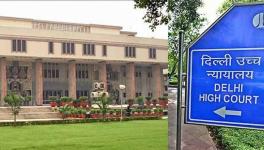
Constitutions are not written on the assumption that governments will always exercise power responsibly. They are written on the understanding that power can (will) be abused. The significance of the Delhi High Court’s decision to quash the FIR and Enforcement Directorate proceedings against NewsClick and its founder-editor Prabir Purkayastha is a result of this constitutional insight.
Though the judgment concerns allegations of financial irregularities and foreign funding, its significance extends far beyond the immediate facts of the case. At its core, it responds to a larger democratic question of what happens when institutions responsible for scrutinising power themselves become the targets of prolonged State scrutiny?
This question has acquired particular importance in contemporary India. Over the past decade, concerns regarding media freedom have become increasingly prominent. India has witnessed a steady decline in international press freedom rankings, while journalists, independent media organisations and civil society groups have repeatedly raised concerns about intimidation, surveillance, legal harassment, sedition prosecutions, anti-terror legislation and the growing use of financial and regulatory investigations against critics of the government. Whether every such allegation is justified is not the central issue. What matters is that a growing number of journalists now operate in an environment where legal vulnerability has become a structural feature of professional life.
The concerns surrounding media freedom in India have not emerged in isolation. A number of journalists, media organisations and civil society institutions have confronted investigations, raids, licence disputes, financial scrutiny or other forms of regulatory intervention over the years. Contributing to a perception that independent and critical voices operate under growing pressure. It is against this backdrop that the NewsClick judgment assumes wider significance.
Independent journalism performs a constitutional function. It enables citizens to scrutinise those who govern in the name of democracy. It gives visibility to social groups whose concerns might otherwise remain unheard. It investigates, questions and challenges. In doing so, it inevitably generates friction with political authority. Such a friction is not a flaw in the democracy. In fact, it is one of democracy’s essential safeguards.
The Indian freedom movement itself relied heavily upon newspapers and journals that challenged colonial rule. From Tilak’s Kesari to Gandhi’s Young India and Harijan, the press served not merely as a vehicle for information but as an instrument of political mobilisation. The makers of the Constitution recognised that freedom of expression was not simply an individual right but a democratic necessity.
Independent India’s experience during the Emergency reinforced the same lesson. The suspension of civil liberties and the imposition of censorship demonstrated how quickly democratic institutions could weaken when independent scrutiny of power was curtailed. The memory of that period continues to shape our understanding of why a free press remains indispensable to a constitutional democracy.
It is for this reason that Article 19(1)(a) guarantees freedom of speech and expression. While the Constitution does not explicitly mention freedom of the press, the Supreme Court has repeatedly recognised it as an essential component of that guarantee. This protection guards the media against forms of State action that undermine the practical ability of journalists and media institutions to function independently.
The importance of the NewsClick judgment lies in the Court’s recognition that threats to press freedom do not always arrive in the form of direct censorship. Newspapers need not be shut down, nor do the journalists need to be formally prohibited from publishing. A media organisation can be constrained in other ways. Years of investigations, raids, financial scrutiny, litigation and public allegations can impose enormous costs even where no offence is ultimately established.
The NewsClick case illustrates precisely this dilemma. After years of investigation and intense public controversy, the Court concluded that the legal foundations of the proceedings could not be sustained and described their continuation as a “gross abuse of the process of law”. That finding is significant not merely because it grants relief to one media organisation. It is significant because it raises a broader constitutional concern. If the coercive powers of the State can be deployed for years without establishing the underlying offence, where should constitutional safeguards intervene?
The answer offered by the Court is clear. Investigative powers are not ends in themselves. Their legitimacy derives from adherence to law, evidence and due process. However powerful the State may be, it cannot be permitted to use its coercive authority without meeting the standards required by the Constitution.
In many contemporary democracies, including India, the management of dissent increasingly occurs through legal, administrative and regulatory mechanisms rather than overt censorship. Raids, investigations, financial scrutiny and prolonged litigation can achieve effects similar to direct restrictions while remaining formally within the framework of law. The danger lies not only in individual instances of overreach but in the gradual normalisation of such practices.
When prolonged investigations become routine, the distinction between law enforcement and political signalling blurs. The process itself becomes punitive, irrespective of the eventual outcome. Individuals may eventually be exonerated, organisations may ultimately prevail in court, but years of uncertainty, expense and disruption leave lasting consequences. The process becomes the punishment.
The Delhi High Court’s decision insists that coercive State action must rest upon demonstrable legal foundations, it reasserts a principle central to constitutional democracy, that power of the State exists within limits, and those limits must be enforced.
The judgment also carries implications beyond journalism. If media organisations can be subjected to years of scrutiny without establishing the underlying offence, similar concerns inevitably arise for universities, trade unions, social movements, researchers, human rights groups and opposition parties. Constitutional safeguards matter precisely because they apply irrespective of ideology, political affiliation or public opinion.
B.R. Ambedkar repeatedly argued that constitutional democracy depends not only upon institutions but also upon constitutional morality, commitment to exercising power within recognised limits. Judgments such as this acquire significance because they enforce those limits when political and administrative institutions fail to do so voluntarily.
The ruling does not settle every debate about media regulation, foreign funding or the role of investigative agencies. Nor does it place any institution beyond scrutiny. Yet, affirms something more fundamental, it affirms that in a constitutional republic, scrutiny must remain subject to constitutional restraint.
At a time when concerns about press freedom, institutional autonomy and civil liberties have become increasingly widespread, that is no small affirmation. The judgment is significant not because NewsClick prevailed, but because it demonstrates that constitutional institutions remain capable of checking executive power when the boundaries of lawful authority are exceeded.
In the final analysis, the significance of the NewsClick judgment lies not in the fate of a single media organisation. It lies in the reaffirmation of a principle fundamental to constitutional democracy: power derives its legitimacy from law, and where law is absent, power must yield.
The writer is Associate Professor at Zakir Husain Delhi College, University of Delhi. The views are personal.
Get the latest reports & analysis with people's perspective on Protests, movements & deep analytical videos, discussions of the current affairs in your Telegram app. Subscribe to NewsClick's Telegram channel & get Real-Time updates on stories, as they get published on our website.