





Who Gets to Define War? Western Media & Politics of Legitimacy
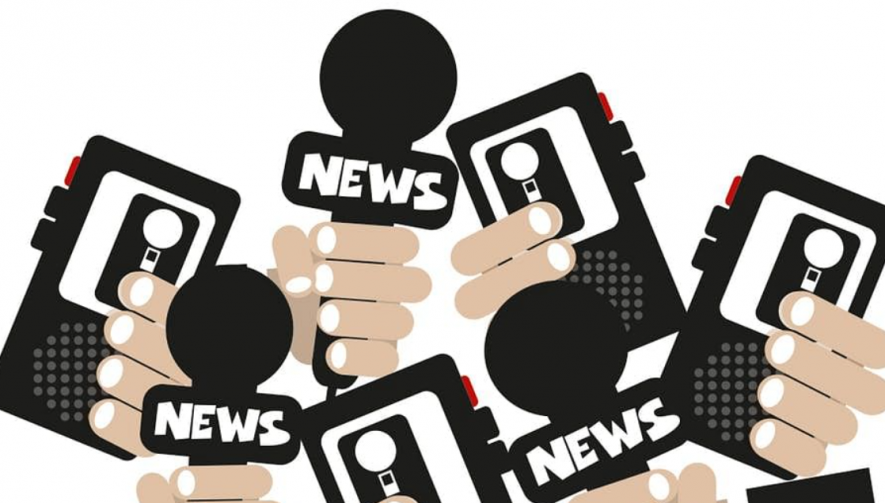
Representational image. File Image
The war involving Iran, Israel and the United States is unfolding not only across airspace, cities and strategic corridors of West Asia, but also within the arena that is far less visible yet no less consequential: the arena of interpretation. Modern wars are not merely fought; they are narrated. The global public encounters them through headlines, breaking news alerts and televised commentary that translate events into meaning.
In this process of translation, language does more than describe reality -- it organises it. The vocabulary through which a conflict is presented often determines how that conflict will be understood. In the current war, the interpretive vocabulary circulating through many Western media institutions illustrates how narratives about the East are constructed, stabilised and circulated within a broader architecture of geopolitical discourse.
The power to narrate global events remains concentrated in a relatively small number of media institutions headquartered in North America and Western Europe. Large newspapers, international wire services and major broadcasters possess an agenda-setting authority that extends far beyond their domestic audiences. Their reporting becomes the baseline from which countless other media outlets derive their own coverage. When these institutions frame a conflict in particular terms, those terms rapidly migrate across the informational landscape. In this way, the language of a handful of influential newsrooms can quietly shape the political imagination of global audiences.
What becomes visible in the coverage of the war involving Iran is not merely a difference in perspective but a difference in linguistic architecture. Similar actions are described through dissimilar vocabularies depending on who performs them. Military operations conducted by Israel or the US are frequently situated within a language of security. Airstrikes are described as “responses,” “preventive actions,” or “deterrent measures.” Each term carries an implicit presumption: that the violence is instrumental, necessary and ultimately defensive. The same semantic pattern appears repeatedly across commentary and analysis. The action may involve the destruction of infrastructure or the killing of combatants, yet it is framed within a narrative of strategic rationality.
When Iran responds--through missile launches, naval threats in the Persian Gulf or rhetoric of resistance--the vocabulary tends to shift. The language becomes heavier with moral judgment: “provocation,” “destabilisation,” “escalation.” These words do not simply describe an event; these assign character to it. The act is no longer framed as a strategic calculation but as a disturbance within the international order. The difference between retaliation and provocation is not merely semantic. It establishes a hierarchy of legitimacy. One action appears as the restoration of stability; the other appears as its disruption.
The grammar of news reporting reinforces this asymmetry in more subtle ways. When violence strikes Israeli territory, the actor responsible is usually named with clarity. Headlines frequently adopt direct constructions in which agency is unmistakable: a missile launched, a city struck, an attack carried out. The chain of responsibility is visible within the sentence itself.
Yet, when explosions occur within Iranian territory following Western or Israeli military operations, the grammar often becomes curiously passive. The actor fades into the background. What remains is the event itself -- an explosion, a blast, a strike whose authorship is presented with caution or ambiguity. Responsibility dissolves into syntax.
This linguistic pattern may appear trivial at first glance, yet it produces cumulative effects. Language shapes perception not through single dramatic statements but through repetition. When similar actions are described through consistently different vocabularies, audiences gradually internalise a moral map of the conflict. One side appears engaged in strategic management of threats; the other appears as the generator of disorder.
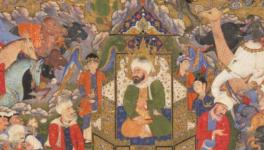
The deeper structure behind this narrative asymmetry was identified decades ago by the cultural theorist, Edward Said, in his influential study of Orientalism. Said argued that Western intellectual traditions had long constructed the East not as a geographical space but as a conceptual category- an imagined terrain characterized by instability, irrationality and perpetual crisis. Within this framework, the West assumed the role of interpreter and manager of Eastern realities. The East became an object to be explained, disciplined or contained. Orientalism was, therefore, not merely a body of scholarship; it was a system of representation through which power operated.
The relevance of Said’s argument becomes striking when one observes contemporary media discourse about conflicts involving West Asian actors. Iran is rarely presented as a state pursuing interests within a recognisable geopolitical logic. Instead, it often appears within narratives of ideological hostility, revolutionary fervour or regional ambition. Israeli and American actions, by contrast, are frequently situated within the language of policy and strategy. The vocabulary itself constructs a difference between rational actors and disruptive forces.
This distinction echoes the deeper cultural grammar that Said described. The East is narrated as volatile and unpredictable, while the West appears as the agent responsible for restoring order. The language of international news thus reproduces a familiar intellectual pattern: a world divided between those who administer stability and those who threaten it.
To recognise this pattern is not to deny the real complexities of the conflict. Iran’s regional alliances, missile programmes and ideological rhetoric generate genuine concern among its adversaries. Israel’s security dilemmas are equally real. But the issue at stake in media representation is not whether these realities exist. The issue is how they are narrated. When language repeatedly situates one actor within narratives of rational strategy and another within narratives of inherent instability, the interpretive field becomes tilted.
The architecture of global journalism reinforces this tilt through structural mechanisms. Journalists rely heavily on official sources for information during rapidly unfolding crises. Governments allied with Western states maintain sophisticated communication infrastructures capable of providing instant briefings, satellite imagery and military assessments. Iranian officials operate at the margins of this information network. Their statements often arrive filtered through diplomatic channels or state media that Western journalists treat with caution. The result is an asymmetry of access that translates into asymmetry of narrative authority.
Yet, structural explanation does not exhaust the problem. Language possesses its own inertia. Once certain patterns of description become habitual, they continue to operate even when journalists believe they are writing neutrally. Words such as “deterrence,” “stability,” and “security” carry implicit moral assumptions that remain largely invisible to those who use them. In the same way, words such as “provocation” or “escalation” subtly mark an actor as the initiator of instability. Over time these linguistic habits become the grammar of international reporting.
The effect is not propaganda in the crude sense of the term. It is something more diffused and, therefore, more powerful: a narrative environment in which certain interpretations appear natural while others appear implausible. Within this environment, the legitimacy of violence becomes unevenly distributed.
When Western or Israeli forces strike Iranian targets, the action is interpreted through the language of strategic necessity. When Iran retaliates, the action is interpreted through the language of destabilisation. The cycle of violence remains the same, yet its moral meaning changes depending on who performs it.
This is where the war of narratives intersects with the war of missiles. In the contemporary international system, legitimacy functions as a form of strategic capital. States seek not only military advantage but also interpretive advantage. They compete to define events before those events solidify into public memory. The media system becomes the arena where this competition unfolds.
The war involving Iran, therefore, exposes a deeper feature of modern geopolitics. Power is exercised not only through force but through language. The authority to name an action -- to call it retaliation, deterrence or escalation -- shapes how the world responds to it. When the vocabulary of international reporting consistently privileges one strategic perspective over another, the narrative terrain of the conflict becomes uneven.
Edward Said once suggested that representation is never innocent; it carries the imprint of the power that produces it. The contemporary media discourse surrounding conflicts in West Asia demonstrates how enduring that insight remains. Beneath the immediacy of breaking news lies a longer history of interpretation, a vocabulary shaped by decades of political alignment and cultural imagination.
Wars end eventually. Ceasefires are negotiated, front lines stabilise, and reconstruction begins. Narratives, however, endure far longer. They shape how conflicts are remembered and how future conflicts are understood. In the war involving Iran, Israel and the US, the struggle over narrative is, therefore, not a secondary drama unfolding beside the battlefield. It is one of the central arenas in which the meaning of the war itself is being decided.
The writer is a Kashmir-based independent researcher. The views are personal. Email: Zahidcuk36@gmail.com.
Get the latest reports & analysis with people's perspective on Protests, movements & deep analytical videos, discussions of the current affairs in your Telegram app. Subscribe to NewsClick's Telegram channel & get Real-Time updates on stories, as they get published on our website.