





Sorry Trump… This War is Yours, Not Ours!
Image Courtesy: Pexels
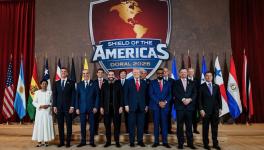
The recent developments in the Strait of Hormuz are not just a military or diplomatic failure for Donald Trump; these are an indication of a major shift taking place in global geopolitics. The US President appealed to seven major countries of the world, including China, Japan, Britain and France to send their Navies to help keep Hormuz open. The silence that followed in response was more effective and carried a clearer message. Not a single country immediately agreed to join the US coalition. Old allies, such as Germany and Japan, clearly distanced themselves. This development is not only a ‘reality check’ for the US, but also carries deep implications for global politics.
Trump’s ‘Party’, Not Our ‘War’
Until some time ago, a phone call from Washington meant that the whole world would go into ‘attention’ mode. But in the Strait of Hormuz episode, Trump received an unexpected response from the world: “Your war, your problem. Keep us out of it.”
It is no secret that US policy in West Asia is often shaped according to Israel. On the chessboard that Israel laid against Iran, the US was in such a hurry to become a pawn that it did not even tie its shoelaces. The result? A tension with Iran was created, which was not needed at all. But the real ‘twist’ came when the US told its allies, “Come, you also pour some oil into this fire.” And the world folded its hands.
Allies Said, “Thanks, But no Thanks”
The world ignoring Trump’s call for ‘Operation Sentinel’ is a rare event in history. The US would not have expected that its attempt to form an international naval coalition to corner Iran would receive absolutely no support, something it is used to. Germany adopted a firm stand and Foreign Minister Heiko Maas clearly said that Germany would not be part of any mission led by the US. His argument is that the US “Maximum Pressure” policy was wrong and would increase the risk of war. Berlin’s message is clear: “We can help in extinguishing your fire, but not in lighting it.”
Japan, which is completely dependent on West Asia for its energy, also refused to join the US coalition while maintaining diplomatic distance. Tokyo instead decided to send its ‘independent’ ship so that it could distance itself from the US's aggressive stance. Europe’s fear was visible in the hesitation of France and Britain (initially). Their view was that increasing tensions with Iran at the behest of Israel would completely bury the nuclear deal (JCPOA).
This “Your war is your war, none of our war” attitude is actually a symbol of global maturity. The rest of the world has understood that the end of every US ‘adventure’ is not the establishment of democracy, but a spike in oil prices and a refugee crisis.
‘America First’ Becomes ‘America Alone’
Trump’s foreign policy has always been based on the slogan of ‘America First’, in which allies were often considered a burden or were asked to bear the cost of their own security. Today, when the US actually needed allies, the world responded in the same coin. This rejection shows that international relations have become ‘transactional’. Allied countries are now asking the US why they should burn their hands in a fire they had no role in igniting.
Lack of Trust in American Leadership
Perhaps, for the first time after the Second World War, the US called for a ‘global security mission’ and its NATO allies stepped back. Germany and France saying that they want a diplomatic solution, not a military one, shows that Europe no longer trusts US strategy. They fear that under Trump’s leadership, any naval mission may turn from defensive to an aggressive war, the consequences of which their own economies will have to bear.
Countries like Japan and Australia, which have traditionally been US’s closest security partners, stepping back is a very serious signal. It shows that these countries no longer trust that any military mission led by the US will bring stability. They fear that sending warships to Hormuz may escalate tensions instead of reducing them, directly affecting their own energy security.
Bid to Avoid Direct Confrontation With Iran
About 20% of the world’s oil passes through the Strait of Hormuz. Logically, keeping it secure is in the interest of every country. Even then, US ally countries stepping back shows that they do not want a direct military confrontation with Iran. This is a new phase of ‘Strategic Autonomy’, where countries are placing their economic interests above the American security umbrella.
Rise of China and a New Axis
Trump asking China for help was in itself unexpected and contradictory. On the one hand, the US considers China its biggest rival, and on the other, it is asking it for security help. China staying away from this coalition was expected, but the hesitation of other Asian countries (like Japan and South Korea) shows that they also do not want to depend only on the US for security in Asia.
Era of the Unipolar World is Now History
This event is proof that the unipolar world—where the world moved at the signal of America—is now over. Countries are now prioritising their ‘national interests’ instead of bloc politics. European countries now want to see their security and diplomacy independently of America. They want to remain ‘security partners’ with America, but not ‘junior partners’ in every war.
The American marine who strongly opposed America fighting Israel’s war and even broke his own arm became a symbol of the frustration growing within the American military. When a soldier realises that he is not fighting for his country’s defence, but for the political agenda of a third country, his morale breaks. Trump perhaps forgot that being a ‘superpower’ does not mean becoming the policeman of the world, but becoming a bridge of peace.
We Want Peace!
“Sorry, Donald Trump… We want peace now” may sound light, but a serious shift is hidden behind it. The world is no longer ready to participate in every conflict. It is now choosing—where to speak, and where to say a lot even through silence.
The ‘Hormuz crisis’ has laid the foundation of a new world order. The world has now rejected the George Bush-era formula of “With us or against us”. This attitude of allies—“If the war is yours, then you fight it yourself”—is actually a courageous step towards peace. Countries like Japan, Germany and Australia have proven that the best way to maintain peace is to not participate in war.
The waves of Hormuz have spread this message across the world that fleets will no longer sail at a signal from Washington. The world is no longer ready to become a ‘scapegoat’ in someone else’s rivalry. For Trump, seen alone in the waves of Hormuz, the message is clear: “Sorry Donald, we don’t have time for your party. We want peace—and we want it now.”
The writer is an independent journalist and a research scholar of economics. The views are personal.
Get the latest reports & analysis with people's perspective on Protests, movements & deep analytical videos, discussions of the current affairs in your Telegram app. Subscribe to NewsClick's Telegram channel & get Real-Time updates on stories, as they get published on our website.