





A War Without Allies: Open Letter to Environmental Law Teachers in India
Dear Professor,
I hope this letter finds you in good health. The semester at our college started in the first week of July, and I have been asked to teach international law. I guess you too have returned to your environmental law classroom. We both teach subjects that feel like sailing through troubled waters. Let me first tell you about the waves I am navigating before I speak of the storm I believe you must be weathering.
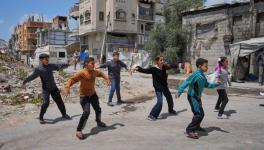
Teaching international law has never been easy. It has become even more challenging this year. I am teaching international law at a time when Israel is committing genocide in Gaza, and international law appears helpless before it. I am teaching international law in a year when American forces have ‘kidnapped’ one head of state and killed another. I am trying to convince my students that international law helps in maintaining global order at a time when the repercussions of anarchy in West Asia have reached our kitchens through shortage of LPG cylinders.
That is why many of my colleagues are sympathetic toward me because I am trying to teach a subject which is so difficult to defend as true ‘law’. Initially, I accepted their sympathy. Then I began thinking about your subject. I realised the sympathy belonged to you. Perhaps the tragedies of international law are less painful than environment law.
At Least, My subject Has An Excuse
The crisis within international law can be attributed to the fact that it tries to bring together 8 billion people living in more than 190 countries. It endeavors to establish order among them in the absence of a sovereign. International law is also burdened with harmonising conflicting interests of people who are culturally and historically alien to each other. Why should the people of Sweden or Norway instinctively care about the people of Sudan or Nigeria? They do not share a common culture or history. Moreover, each State tries to pursue its own national interest even at the cost of others. The inability to bind such diverse societies into a genuine legal community is disappointing, yet understandable.
Your subject has no such excuse. Environmental law in India has a sovereign and operates within a centralised legal system. Also, you teach a law that governs people of the same nation. They share the same Constitution, the same institutions and a common national interest. You teach about rivers and forests to a civilisation that has revered them for centuries. Despite this shared heritage, environmental governance in India seems very chaotic. I am also amazed at the sheer indifference of both the State and society on this issue. Perhaps the crisis of international law is not as structural as the crisis of environmental law in India.
Episodic Vs. Structural Crisis
The crisis in international law appears episodic rather than structural. If there were days this year when the Strait of Hormuz stood effectively blocked, there were also days when it remained open. If Iran and the US are at war, they are also negotiating peace. I do not wish to trivialise the suffering of those caught in armed conflicts, but my point is simply this – the crises of international law are generally episodic. The tragedies of environmental law are structural. They unfold throughout the year.
For instance, every year, January and February bring forest fires in India. The months of April, May and June are about heat waves in North India and water shortages in cities like Bengaluru. July and August are marked by floods in Gurgaon and Bihar. September and October bring landslides in Uttarakhand and Himachal Pradesh. In November and December, Delhi struggles to breathe. And if these were not enough, the wedding season arrives in December with complete disregard for Noise Pollution Rules, as DJs blare music late into the night. The rivers of our country remain polluted throughout the year. There is hardly any month in which we do not see a glaring challenge to the law you teach, my friend.
As an international law teacher, I can also take solace in the fact that if the international regime has failed to secure respect for international humanitarian law, the other branches continue to enjoy reasonable adherence. For instance, International Civil Aviation Law safely coordinates more than a hundred thousand flights every day and International Trade Law keeps global supply chains moving. Similarly, International Telecommunications Law makes global communication possible and Intellectual Property Law protects innovation across borders. I wonder if you can offer your students similar examples.
Can an environmental law teacher confidently say that if the Water Act has failed to keep our rivers clean, the Air Act has at least given us clean air to breathe? Can they argue that even if coastal regulations have failed to protect our shores, the Forest Act has at least preserved our forests? Even those areas of environmental law that are not in direct conflict with corporate interests, like the Noise Pollution Rules, struggle to inspire confidence. The crisis in your subject does not end there. Even the 'occupation of territories' in your subject fails to provoke any outrage.
The 'Occupations' Nobody Condemns
The concept of 'occupation of territories' binds our subjects together. However, the difference lies in how the world responds to it. When a territory is occupied in violation of international law, it triggers outrage across the globe. Russia's occupation of Ukraine united Europe against Vladimir Putin. We are witnessing a growing movement against the occupation of Palestine. Universities across the world have witnessed protests. Whether these responses are sufficient is another question, but the occupation itself is at least acknowledged as a wrong that demands attention.
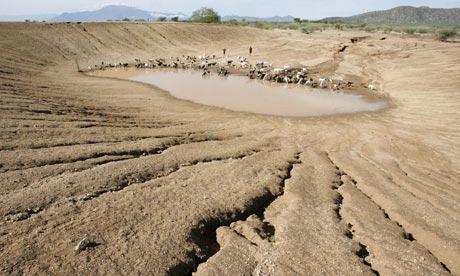
Alas, I wish I could say the same about 'occupation of territories' in your subject. The ‘occupation’ of wetlands, lakes and forests has become a routine exercise in our country. It rarely provokes institutional response or public outrage. For instance, the 'occupation' of the Najafgarh Jheel in Gurgaon presents a classic example. Every monsoon, this encroachment contributes to flooding in Gurgaon. The reason lies in the ‘shrinkage’ of the lake from nearly 220 square km to 7 square km due to encroachment. The wetlands surrounding it have suffered a similar fate. While satellite data cited in the Haryana Environment Management Plan shows that the lake expands to more than 5,000 acres during the monsoon, the Haryana government continues to assert that only about 75 acres qualify as a wetland!
The story is no different in other parts of the country. For example, Chennai has lost nearly 80% of its wetlands since the 1980s. Reports also suggest that 730 of Bangalore's 830 lakes have been encroached upon. In national capital Delhi, six water bodies covering roughly 40,000 square meters, have simply ‘disappeared,’ and hardly anyone noticed. Even the recurring floods in Bihar have been linked to the encroachment of wetlands.
What is unfortunate is that the 'occupation of territories' is not the only phenomenon in your subject that goes unnoticed. While genocide in international law shakes the conscience of the world, the deaths caused by environmental degradation rarely disturb the collective conscience of our nation.
Genocide Vs. Ecocide
While genocide occupies a central place in international law, ecocide is not even recognised as an independent crime in your subject. A World Bank report released some time ago estimates that around 4,657 people die every day due to air pollution in India. Another report informs us that nearly 20 lakh people die every year due to air pollution. The annual death toll from air pollution in India alone exceeds the death toll from many ongoing armed conflicts around the world. Moreover, death by air pollution is only part of the story. Floods caused by poor planning and heatwaves intensified by reckless deforestation also claim thousands of lives every year.
Environmental degradation not only results in death but also displaces people. Though international law has developed a legal framework for refugees fleeing persecution, environmental refugees displaced by floods and other environmental disasters often find themselves without any specific legal protection. The tragedy is that an environmental refugee remains a ‘legal orphan’ within his own country. Unfortunately, it is not only the environmental refugee who is left on his own. I fear you too are left alone on your battlefield, my friend.
A War Without Allies
The principles and values that you stand for represent our civilisational necessity. Ideally, the State and society should do everything they can to support you in this noble mission. Unfortunately, instead of standing with you, they often appear to be standing against you.
You are teaching environmental law at a time when the State is obsessed with improving its ranking on the 'Ease of Doing Business' index. This has resulted in environmental laws being diluted and rendered increasingly toothless. You are trying to convince your students that environmental law deserves respect in a country where a former environment minister has publicly admitted that the Environmental Impact Assessment has become a joke in India. You are preaching intergenerational equity and environmental justice under a judiciary where the Chief Justice of India has said that environmentalists file petitions to stall 'development' in our country!
As for society, we are living in an era where we keep ourselves the most entertained and the least informed. The obsession for entertainment has overwhelmed our concern for the environment. 'Friday for Theatre' matters more to us than environmentalist Greta Thunberg's 'Fridays for Future' campaign.
It is not that we do not get outraged. We do. But for that, we need a ‘villain’ from a community we dislike. If the lakes in Bangalore had been occupied by Tamils, or if Kannadigas had encroached upon the wetlands of Chennai, you would have witnessed massive movements to save those lakes and wetlands. But since these occupations are carried out by our own men in our own states, there is no ‘villain’ in the script. And, perhaps, that explains our indifference toward your struggle.
And yet, you continue to fight. For that, dear Professor, I admire you more than I can express in my words. Every time you explain the value of a wetland or a river, you are doing far more than completing a lecture. You are preserving the moral imagination that this country desperately needs. So, the next time you walk into your classroom and wonder whether your subject still matters, remember that somewhere in another classroom, an international law teacher silently salutes you. I know this battle is exhausting. But please keep wielding your sword, Professor. Because not every battle is fought to be won. Some are fought simply to tell the world that someone stood on the battlefield.
The writer teaches International Law at Lloyd Law College, Greater Noida. The views are personal.
Get the latest reports & analysis with people's perspective on Protests, movements & deep analytical videos, discussions of the current affairs in your Telegram app. Subscribe to NewsClick's Telegram channel & get Real-Time updates on stories, as they get published on our website.