





US-Israel War on Iran Will Reset Strategic Map of West Asia
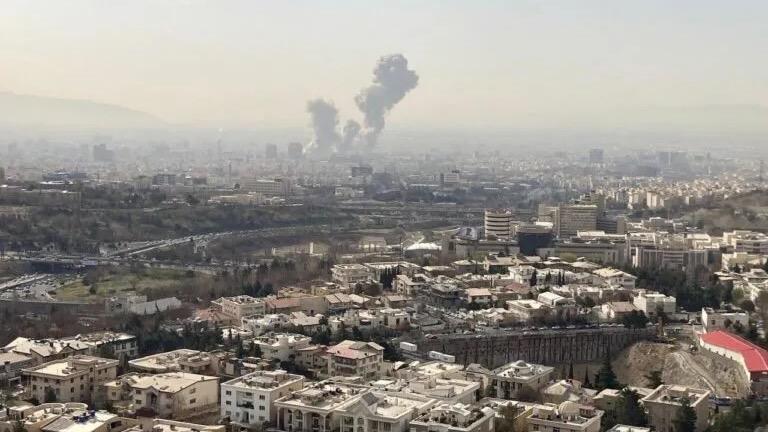
US strikes on Tehran Feb 28. Photo: Mehr News
The war that the US and Israel launched on Iran on February 28, 2026, has entered its 13th day. With this war, the world is facing a rupture not only in oil and gas supplies from the region but also fertilisers, critical to agriculture. All these are vital for Asia, especially India, which is more reliant on West Asia/Middle East’s supplies for the bulk of its hydrocarbons—oil and gas—for energy and fertilisers.
Not surprisingly, the oil price has risen from $60-65 a barrel in February this year to $150 a few days ago, before Trump’s declaration that the Iran war may be winding down, and then dropped to $90. With Russian oil under US and EU sanctions, the price of oil may not return to the earlier $60-65 level before this war.
This will be an onerous burden on countries like India. India, reliant as it is on Russian oil supplies under US sanctions, may have to pay $20-25 more per barrel for its oil. We have got a US “clearance” to buy Russian oil for a month, but not beyond that.
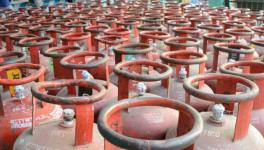
The natural gas scenario remains even more critical, with the Indian government already restricting gas supply to restaurants and other commercial users. If the crisis persists, domestic consumers of gas, either LPG cylinders or piped gas, are also likely to be hit, as fertiliser and other industrial users are likely to be prioritised over them.
It is also clear that Iran’s resistance, particularly its drones and missiles, has created huge issues for not only Israel and the US, but also US allies in the region, the Arab countries that have provided it with military bases. Iran’s position is that if such US bases in Arab countries are used for launching missiles on Iran, then they are legitimate targets for Iran’s retaliation. Though the US media reports “victory” and Iran’s weakening missile strikes as evidence, Iran’s drone strikes appear to continue.
The US maintains THAAD (Terminal High Altitude Area Defence) radar and missile batteries in Israel, Jordan, Qatar, the UAE (two batteries), and Saudi Arabia. These systems consist of the AN/TPY-2 radar — the X-band surveillance array—the core of the THAAD system. Without it, a THAAD battery cannot identify targets or direct antimissile interceptors. With the US-Israel losing the early warning THAAD systems in Qatar and other Gulf states, Israel’s Iron Dome, David’s Sling, and US anti-missile systems have lost their early warning tripwire.
A THAAD radar and anti-missile system is worth an estimated $1.1 billion, while the THAAD radar system itself costs a minimum of half a billion dollars. They are not only expensive but also take about eight years to manufacture. This is why the US has now shifted a THAAD system from South Korea to West Asia, even against the wishes of the South Korean government.
According to military analysts, with the loss of the THAAD early warning system, the time for Israel and US defences to react to drone and missile attacks has dropped from 10-15 minutes to about 1- 2 minutes. Massachusetts Institute of Technology professor and Pentagon advisor Theodore Postol, in a YouTube video, also shows how most of Israel’s anti-missiles are failing now to stop even the relatively slow-moving drones, allowing Iran to launch a lesser number of missiles to score the same number of hits.
According to experts, Iran can continue to fire its relatively low-cost missiles and drones for a long time. Iran has also moved its drone manufacturing underground, and therefore, is relatively impervious to Israel’s and the US's missiles and bombs. Its drone production at relatively low rates can therefore continue for a long time.
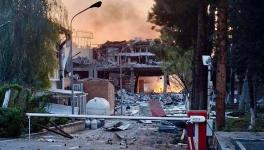
Iran, of course, has taken a huge battering from Israel and US missiles and bombings. The amount of punishment Israel has taken, however, is not public. Haifa refinery appears to have been heavily damaged, as have Israel’s missile launchers. What is critical to Iran in this war is not how much damage it can inflict on Israel, but the strategic impact of its closing the Straits of Hormuz will have on the world, particularly its NATO allies in Western Europe, who, along with the US, have been the major enablers of the Zionist regime. The question for the axis of resistance, and that includes Hezbollah in Lebanon, and Houthis in Yemen, is how long can they paralyse the oil shipments through the Straits of Hormuz and the Red Sea?
If this war continues, not only Asia, including India, will pay a high price, but also Europe, which has already burned their bridges with Russia. Iran is fully aware that its strength lies in its ability to continue fighting and to create conditions in which countries like India, Southeast Asia, and Europe will face the consequences of rising oil prices, as well as its availability. Will such countries then turn on the ex-colonial and settler colonial powers, who still aim to control the world? How long will these countries tolerate the US leveraging its destructive ability to literally blackmail any country it wants and extort whatever it needs from the world? From a supposed Rule-Based International Order to the current one based on the law of the jungle, with the US as its top predator?
There is no question that Iran and its people are paying a huge price for defying the global hegemon, even if the US is a much weaker force today than in its heyday post-World War 2. Though its economy is still the largest in the world, the collective West’s economy, even after including that of its NATO allies in Europe and Asian allies like Japan, South Korea, and Taiwan, no longer dominates the world as it once did.
China, India, Southeast Asia, and Latin America have industrialised, and in terms of Purchasing Power Parity (PPP), the BRICS 5 have now overtaken the G7 countries. The US resorting to war is not a demonstration of its strength in West Asia but a recognition that the only area where the US is still stronger than others is in its military capability: its war budget—the US has officially renamed its Defence Department as War Department—is equal to that of the next nine countries put together.
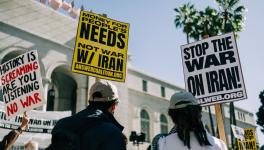
Post World War 2, the US has attacked 30 countries, a record no other country can even come close to. Its “success” lies in convincing its citizens that the US responds only when attacked or when in imminent danger of being attacked. Remember Saddam's weapons of mass destruction? Against Korea, in which US troops bombed North Korea back to the Stone Age and installed its puppet Syngman Rhee in South Korea? Or the US war against Vietnam on the argument that SE Asian countries would otherwise fall to the “Reds” like dominoes? Its toppling of Chile’s democratically elected government and the installation of a brutal military dictatorship under Pinochet? The US war against Serbia? The Bay of Pigs attack on Cuba after Fidel Castro overthrew the brutal dictatorship of Batista? Overthrow of Gaddafi in Libya? Or the war against Iran earlier and now again? The recent US attack on Venezuela?
For many of these US military interventions, the US did not simply overthrow its existing governments, replacing them with a new one. In a number of these countries, it left behind failed states like Iraq and a permanent problem for its neighbours. The Libyan case is particularly important, as it has been a source of instability not only in the Arab world but also in North Africa. The US war motto has been either you surrender to us and become a neocolony, or we will destroy you completely.
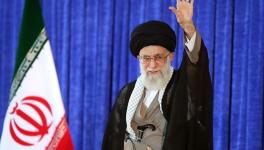
The US, Israel and its allies in the region believed that minorities—Kurds and Baluchis—could be incited into revolts against the Iranian central government, controlled as it is by a theocracy. Yes, a number of Iranians do not like the current rule that straitjackets people, insists on retrograde dress codes and privileges the religious figures. But the Kurds are fully aware that this is a game that the Western powers have played time and again with them, promising statehood and then pulling the rug later after the West achieved its war goals. The most recent example is Syria, but this is also what happened earlier in Iraq. It does not appear that the Kurds are falling into the US trap once again. Yes, they have their grievances against the Iranian government, but aligning with Israel to destroy Iran is not their objective.
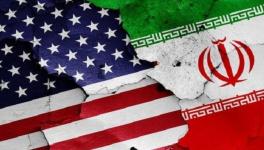
The war between Iran and the US-Israel will continue unless Trump, who started this war, backs off. He can declare victory, of having taught Iran and its allies a lesson, destroying their cities and oil infrastructure, even if he has been unable to stop the flow of missiles striking Israel. In his press conference on March 10, Trump talked about the War ending very soon, after dubbing the past 10 days of war, which has wrought devastation on Iran, a “short-term excursion”.
Again, we cannot take Trump’s statements seriously unless they are matched by action. He has also accepted that the missile strike on the girls' school, which killed 170 girls and injured many more, was indeed a US Tomahawk missile and not an inaccurate Iranian missile, as he had claimed earlier.
Unfortunately for Iran, world opinion means very little for the US or Israel in this war. Israel is now fully committed to a Zionist state in which Palestinians will not only have no rights but can only survive by becoming refugees in neighbouring Arab lands. Zionists in Israel, backed by Christian Zionists like Mark Huckabee, the US Ambassador to Israel, have also declared Israel’s “Biblical right” to occupy lands from the Nile to the Euphrates. As long as the settler colonial and ex-colonial states—the US and its European allies—provide weapons, money and political cover to Israel, the problem of West Asia, or the Middle East as the settler colonial and ex-colonial powers like to call the region, will continue.
Palestine is a global issue and a part of decolonising the world. Iran's closing of the Straits of Hormuz has shown how interconnected the world is, and ghettoising West Asia will not work. And let us not forget, it is not just oil and natural gas we need from the region. The expatriate Indian workers provide a significant share of our hard-currency inflows, which are also at risk if West Asia implodes.
Pretending a new policy of “multiple alignments”, instead of India’s original foreign policy based on non-alignment, does not work. India’s foreign policy today is foundering on the hard rock of reality. The sooner the government owns up to this, the better it will be for all of us. Yes, we are in a multipolar world. But neocolonialism is very much alive. We cannot, as a nation, forget our colonial past and our history of resistance that led to a free India.
As an American philosopher had said: "Those who cannot remember the past are condemned to repeat it”. Let us not fall into the US trap and court neocolonialism in the garb of multiple alignments. Instead, we need to return to our belief in a world where every country has a right to develop its future free from ex-colonial and neocolonial hegemons.
This is the right that Iran is exercising. It does not have to defeat Israel and the US. For Iran, it is an existential question: as long as it exists, it wins. That is what the current Iran war is about and why it will remake the strategic map of West Asia.
Get the latest reports & analysis with people's perspective on Protests, movements & deep analytical videos, discussions of the current affairs in your Telegram app. Subscribe to NewsClick's Telegram channel & get Real-Time updates on stories, as they get published on our website.