





Traditional Knowledge & Modern Knowledge: Is There a Binary?
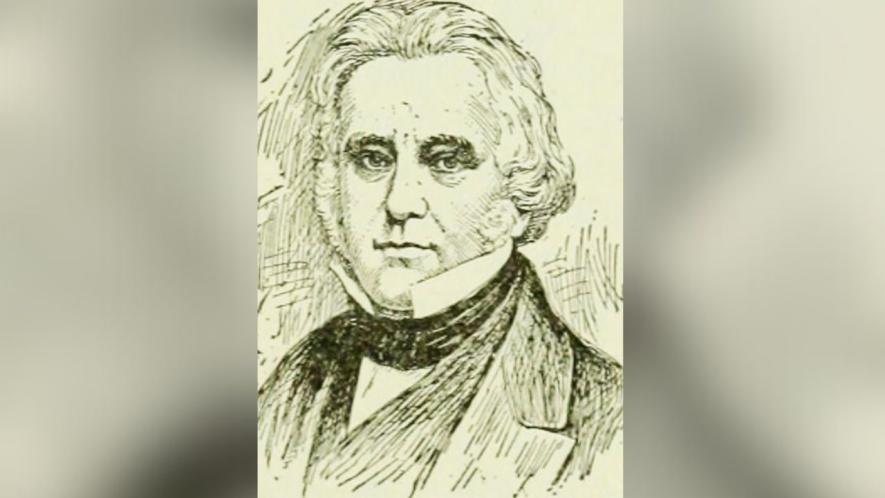
Image Courtesy: Flickr
While delivering the Ramnath Goenka Lecture on November 17, Prime Minister Narendra Modi stated that we should take a 10-year pledge to root out the colonial mindset. In 10 years, it will be 200 years when Lord Macaulay introduced the pattern of education in English.
As per Modi “…Macaulay project was to reshape Indian thought by dismantling indigenous knowledge systems and enforcing colonial education”. Modi goes on to state that Macaulay’s crime was to create Indians “who are Indians in appearance but British in thought”. This system broke India’s self-confidence and introduced a sense of inferiority. (Indian Express, November 18, 2025)
Modi is a Rashtriya Swayamsevak Sangh (RSS) pracharak (preacher) of Hindutva Nationalism. This ideology so far has been focusing more on the “evil Muslim kings” and their atrocities against Hindus, such as breaking Hindu temples and forcing Islam on them. As per the RSS narrative, India had a golden period in the past and the coming of Mughal invaders brought in evil practices here. For some time now, Hindu nationalist thinkers have been focusing on ‘coloniality’ as the evil introduced by British rule. This coloniality stands for the colonial mindset and suppression of traditional knowledge and thought systems, according to them.
These thoughts are coming from an ideology whose followers had kept themselves aloof when the Indian masses, under the leadership of Mahatma Gandhi, were fighting against colonial power at all the levels of struggle.
While the Modi tribe is blaming Macaulay for our ills, Dalit thinkers like Chandrabhan Prasad are hailing the contribution of Macaulay in laying the foundations which, in due course, led to the struggle for dignity and rights of equality for Dalit and marginalised sections of society.
Modi and his ilk think that culture introduced by Macaulay/British traveled in a straight line. Interestingly they themselves stand for European style nationalism, based on language or religion. What developed in India was much more complex where the introduction of English education did contribute to the introduction of modern liberal values and led to opening up of the portals of knowledge for all sections of society, like Dalits and women, who were deprived of education, where education, as in Gurukuls, was restricted exclusively to upper caste males.
In India, traditional knowledge contributed by the likes of Sushrut, Aryabhata, Brahmagupta, Lokayat stream and Bhaskar, had a tremendous impact on pushing forward society in the direction of enlightenment. Knowledge was then under the control of the traditional elite and was restricted. Knowledge, and thereby power and wealth, belonged to a privileged few.
Read Also: Lobbying Games: RSS Connections in US
True, Macaulay had vested interests in producing clerks and other sections who could serve the British empire. It is also true that the likes of Rudyard Kipling tried to undermine Indians when they glorified the British by terming their mission here as “white man's burden”.
Through the womb of modern education also emerged nationalists who rose tall to combat the colonial enslavers. The likes of Gandhi, Patel, Subhash Chandra Bose and Nehru were all educated in England. It is their contributions that combated colonialism to give us a new path for our development, which was summarised in Jawaharlal Nehru’s famous ‘Tryst with Destiny’ speech.
Did English suppress regional languages? As a matter of fact, education in general promoted regional languages as well. Tilak (Maratha) and Gandhi (Navjivan) started their papers in regional languages. The doyens of regional languages also contributed in this period, Rabindranath Tagore and Munshi Premchand, to name just a few.
Many British researchers contributed to the recovering of our heritage, such as the Brahmi Script and the structures like Ajanta-Ellora. Senior journalist Swaminathan Aiyer (Times of India, November 2025) points out that the British created the… ‘Archaeological Survey of India’ headed by Alexander Cunningham. Digging up mounds across India, he uncovered dozens of dazzling sites from Taxila to Nalanda…” This is one example of the India-centric outcome from colonial rule, though this was not their aim but just an outcome.
India did not accept the thinking promoted by the British lock stock and barrel. There were strong oppositions to their policies by Dadabhai Naoroji, M.G. Ranade, G.K. Gokhale and R. C. Datta. The freedom movement was the biggest opposition and challenge to the British-promoted thinking. English was a tool and in due course it also got Indianised with many brilliant writers in this language acting as mirror of Indian thinking, such as Amitav Ghosh, Arundhati Roy, Kiran Desai.
Traditional knowledge systems can only be enriched by an interaction with other systems of thought. With the formation of linguistic states, there is all the space for regional languages and traditional knowledge systems. The only caveat is that the interaction with the world, not only the West, has been instrumental in combating our traditional caste and gender hierarchy, deeply rooted in our society. Modern education, with all its flaws, opened the door of these marginalised sections of society toward the path of equality and justice.
Read Also: Did RSS Sacrifice for India’s Freedom?
There is an interesting anecdote about the role of colonialism in India. Congress leader author Shashi Tharoor, in his famous Oxford debate, elaborated the plunder of India by the British (this came as a book, Dark Era of British Empire). A few months later, former Prime Minister Manmohan Singh was in England. He eulogised the role of the British in initiating modern administration and education.
The core point is that this was the pathway that strengthened the foundations of liberal values and brought in modern administration. The liberal values laid the path of freedom movement where people, irrespective of their religions participated in it to throw out British rule. The predecessors of present Hindutva nationalists clearly stated that their goal is to restore the glory of ancient times when Manusmriti ruled.
Writer Shamsul Islam highlights Hindu nationalist ideologue M.S Golwalkar's reported statement, "Hindus, don't waste your energy fighting the British. Save your energy to fight our internal enemies that are Muslims, Christians, and Communists". This perspective indicates a focus on communal issues over the anti-colonial struggle.
So, why are Hindutva nationalists now focusing their energies on combating ‘coloniality’ and restoring traditional knowledge systems? This is also reflected in the new National Education Policy or NEP.
Hindutva nationalism stands for the traditional hierarchy of caste and gender, which have been mildly shaken by the freedom struggle and the Indian Constitution. To restore ‘traditional’ social hierarchies, the route of opposing the Macaulay and Western knowledge system is being highlighted.
As such, civilisations don’t travel in straight lines. There is a constant “Alliance of Civilisations” which that takes us forward toward justice and equality.
The writer is a human rights defender and a former professor at the Indian Institute of Technology, Bombay. The views are personal.
Get the latest reports & analysis with people's perspective on Protests, movements & deep analytical videos, discussions of the current affairs in your Telegram app. Subscribe to NewsClick's Telegram channel & get Real-Time updates on stories, as they get published on our website.