





Syria: Al-Sharaa Dismisses Trump’s Proposal for Military Intervention in Lebanon
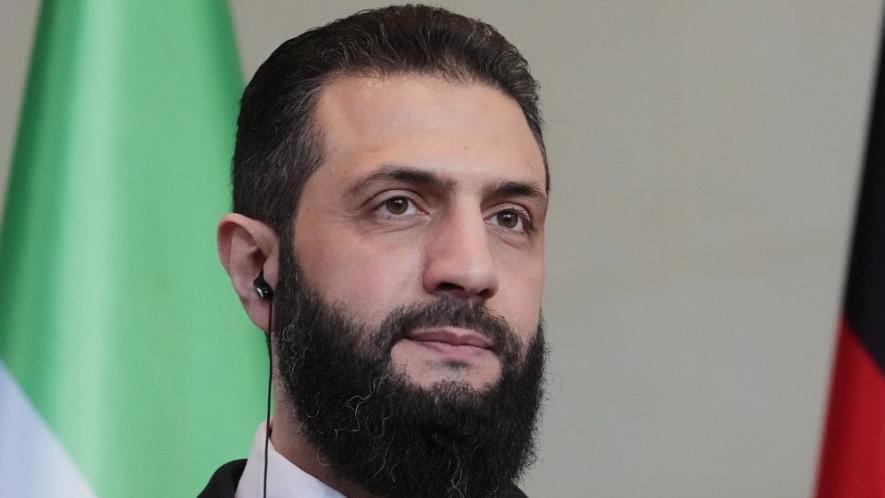
Syrian interim President Ahmad al-Sharaa. Photo: AP
US President Donald Trump announced mid-June that he discussed with Syrian interim President Ahmad al-Sharaa the possibility of Syria’s military intervention in Lebanon to disarm Hezbollah.
Trump claimed that by tasking Syria with this mission, he aims to stop the mass killing committed by Israel during its attempts to dismantle the Lebanese resistance movement.
“I’ll tell you what, Israel is fighting Hezbollah too long and too many people are being killed, and you don’t have to knock down an apartment house every time you are looking for somebody, because there are a lot of people in those apartment houses and they are not all Hezbollah, that I can tell you. And I suggested to Israel to let Syria take care of Hezbollah, cuz to be honest with you, I think they’d do a better job of doing it.” The US President said on the sidelines of the G7 Summit.
The proposal of the US President was, however, interpreted as another attempt by the US to ignite division and sectarian strife in the West Asia region, and to restore the balance of power that shifted during the recent regional war.
Syria’s new rulers have for long adopted a hostile position towards Hezbollah and Iran, due to their support for Syria’s former President Bashar al-Assad. The transitional leadership in Syria, which is known for its extremist background, has also promoted anti-Shia rhetoric since it took over Syria in December 2024. Shia Islam is the religious doctrine followed by the Iranian leadership, Hezbollah, and other actors within the Axis of Resistance.
This sectarian rhetoric was enhanced by a propaganda campaign, which media mouthpieces of the Syrian interim government launched, introducing the new leadership of the country as the successors of the Umayyad Caliphate, the historic rivals of Shia Muslims.
It is worth noting that Syria saw a surge in sectarian violence after Hayat Tahrir al-Sham (HTS) rose to power, resulting in the deaths of hundreds of people from different religious sects, including Druze and Alawites.
Al-Sharaa seems to have recalculated his regional policy
Despite his longstanding hostility to Iran and Hezbollah, as well as his alignment with Washington, Al-Sharaa dismissed Trump’s proposal in an interview with Al Mashhad TV late June.
Al-Sharaa confirmed that his country has no intention of military intervention in Lebanon, but it is willing to cooperate with the Lebanese State in finding “other solutions” for disarming Hezbollah. He also demonstrated openness to dialogue with the Lebanese resistance movement.
“Today, the situation in Lebanon requires collective solutions, and Syria can be relied upon to help chart a safe path forward. However, this does not mean war, nor does it imply a return to the historical tutelage that the former Syrian regime imposed on Lebanon. Rather, it means providing the Lebanese state with support, strengthening its institutions, and finding common ground between various political actors and powerful forces in Lebanon, including Hezbollah, to reach a solution that satisfies everyone,” Al-Sharaa stated.
Analysts argue that the shift in the balance of power across West Asia, which resulted from the recent regional war, has transformed Al-Sharaa’s political position towards Hezbollah.
The US and its proxy in West Asia, Israel, failed to defeat the Axis of Resistance after a three-year all out multi-front war. This in turn seems to have made US allies in the region, including Damascus, reconsider their relations with the Iran-led resistance coalition.
Israel reacts to Al-Sharaa’s statements by escalating its assaults on southern Syria
Al-Sharaa’s refusal to get involved in dismantling Hezbollah has apparently provoked the ire of Israel, which reacted by escalating its assaults on southern Syria during the past week. The Israeli Occupation Forces (IOF) launched artillery shelling, carried out ground incursions, and set up checkpoints in various villages of Daraa and Quneitra.
The escalation showcased Tel Aviv’’s deepening fear of losing its security grip over its neighboring countries, and takes “the Greater Israel” project a step backward. It also indicates that the influence of the Iran-led Axis of Resistance on the region has grown, in a way that represents an existential threat to the Israeli occupation state.
Courtesy: Breakthrough News
Get the latest reports & analysis with people's perspective on Protests, movements & deep analytical videos, discussions of the current affairs in your Telegram app. Subscribe to NewsClick's Telegram channel & get Real-Time updates on stories, as they get published on our website.