





Staying Alone: Emerging Realities of Ageing in India
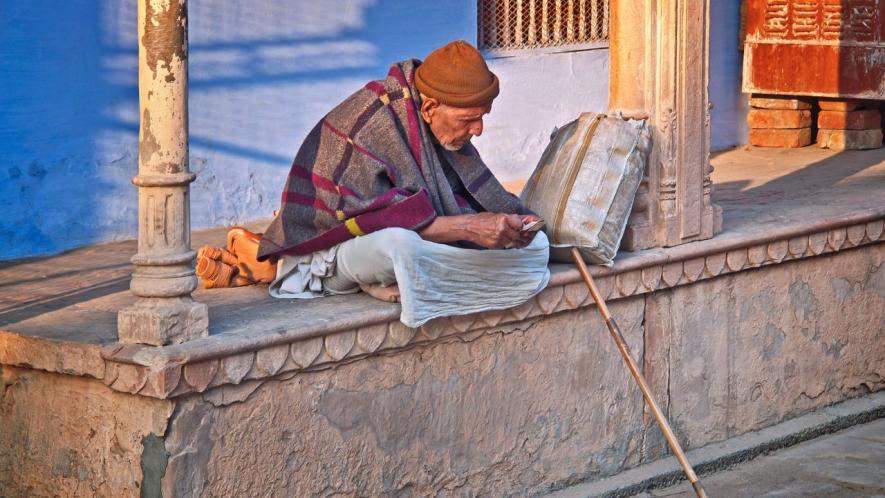
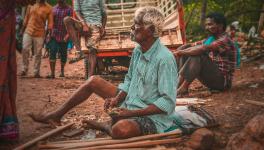
Representational Image. Image Courtesy: PickPik
A growing number of elderly Indians are spending their final years in isolation, some found dead in locked homes, others navigating illness without family, exposing how rapidly changing social norms and weak community support systems are failing the country’s ageing population.
In February, the decomposed body of 65-year-old Tapas Roy, who lived alone in Kolkata’s Salt Lake after his divorce, was found in his GD Block residence after neighbours noticed a foul smell and his absence; police had to break open the door. In the same month, authorities discovered the body of 70-year-old Amarnath inside his home in Andoli village, Uttar Pradesh's Hathras district, prompting investigations.
Last year, in September, Delhi Police discovered the decomposed body of a 65-year-old woman alongside her unconscious husband and son (suffering from mental health conditions), all locked inside their apartment for days with no one aware of their whereabouts.
Such cases have become all too frequent. “These cases are routine now,” says Narpal Singh, SHO of Jamia Nagar Police Station. “There is no one to take care of them. Even neighbours in gated societies don’t interact much,” he told this writer.
India has long prided itself on its joint-family culture, reinforced by the Maintenance and Welfare of Parents and Senior Citizens Act (2007), which allows parents to seek legal action against neglectful adult children. Yet, the reality on the ground is stark.
According to the public policy think-tank, Social Policy Research Foundation’s September 2025 report, seniors now form over 10% of India’s population, which is about 104 million people. This figure is projected to reach 19.5% by 2050.
The Agewell Foundation’s Solo Ageing Report (2024) shows that 10–12% of elderly Indians live alone, and only 10.1% report feeling satisfied with their social life. The rest expressed some form of loneliness.
“By nature, we are wired for social and family life,” says Himanshu Rath, founder and chairman of Agewell Foundation. “Earlier, people died around age 65. Now, because of advanced medicine, they live till 80 or 90. Our people are not prepared for old age and living alone. This is the first time we are truly experiencing it,” he said.
Rath said that technology had deepened this disconnect, adding that “We have become islands of our own individual selves.” The digital shift has limited our emotional outreach.
Middle-aged Indians have become anxious about growing old. Laxmi, 45, a Delhi resident, exemplifies this fear, worrying that her son will abandon her once he gets married.
“These days, our own children don’t want to live with us,” she says. “We can’t socialise on our own, especially those who are physically weak and frail. Five years from now, I won’t be living with my son. He will also abandon me once he has a family,” added Laxmi, who goes by her first name.
For many elderly Indians, the digital age has created more isolation.
Mushtaq, a medical social welfare officer at the National Cancer Institute, AIIMS Jhajjar, says: “Coping in this digital age is difficult. The pace of technological change has marginalised them.” He added that the elderly still prefer gatherings, consultations, and family meetings, which have all been replaced by the internet. This, combined with their reduced status and authority within families, contributes to their loneliness.
Mushtaq, who goes by his first name, recounted meeting an elderly man with neck cancer, wandering confused in the hospital corridors. “His sons were busy. We had to assign him a patient care coordinator,” he said.
Many seniors, living alone, are of the view that community activities can help alleviate loneliness. Nischint Arora, 68, who runs a girls’ PG in New Friends Colony and lives with her son (who suffers from mental health issues), believes attitude matters.
“We need community activities, parties, dressing up, gym, yoga. You have to feel good about yourself. Don’t hesitate to ask for help,” says Arora.
She laughs as she adds, “I have a stoma. Whenever I feel sorry for myself, I ask my friend to come over and help me with the dressing. I talk to everyone, guards, neighbours, anyone.”
However, Mushtaq notes that not everyone has this confidence. “Class and privilege matter. Background builds confidence in old age,” he adds.
Rath reinforces this view, “We can’t expect every elderly person to be social or active. Many feel excluded from their immediate circle or estranged from family. They don’t find meaning in interacting with neighbours.”
Police stations are also expected to maintain a record of elderly people living in their jurisdictions.
“We register them, give them an identification card, and our staff visits them regularly,” says SHO Singh.
However, experts say that this is not enough.
Mushtaq says India urgently needs support groups, weekly community meetings, and inter-generational activities. “We have to create real community bonding.”
He warns that relying solely on social media training will not work. “Digital engagement alone can't bridge the isolation gap. Even if we try to bridge the social isolation gap through phones or apps, it won’t work. These apps are not elderly-friendly at all; their font, icons, emoticons, everything is designed for young people. And creating an entirely new digital interface just for seniors is not practical either,” he says, adding “We need real human connections.”
Rath stresses that awareness must begin early. He explains, “When the British introduced the formal education system, they made children write essays on cows because India was an agrarian society then — education followed the needs of the time. Today, the need has changed. Children must be taught responsibilities towards elders. For 20 years now, we’ve been urging NCERT to include a chapter on old age.”
Arora believes seniors themselves must also evolve. “Gone are the days when kids were dependent on their parents. The sooner we accept that, the better.”
The writer is a Delhi-based journalist from Bihar who reports on caste, politics and social issues.
Get the latest reports & analysis with people's perspective on Protests, movements & deep analytical videos, discussions of the current affairs in your Telegram app. Subscribe to NewsClick's Telegram channel & get Real-Time updates on stories, as they get published on our website.