






Soft Power Isn’t Spectacular Jingoism: Why Loud Cinema Gets it Wrong
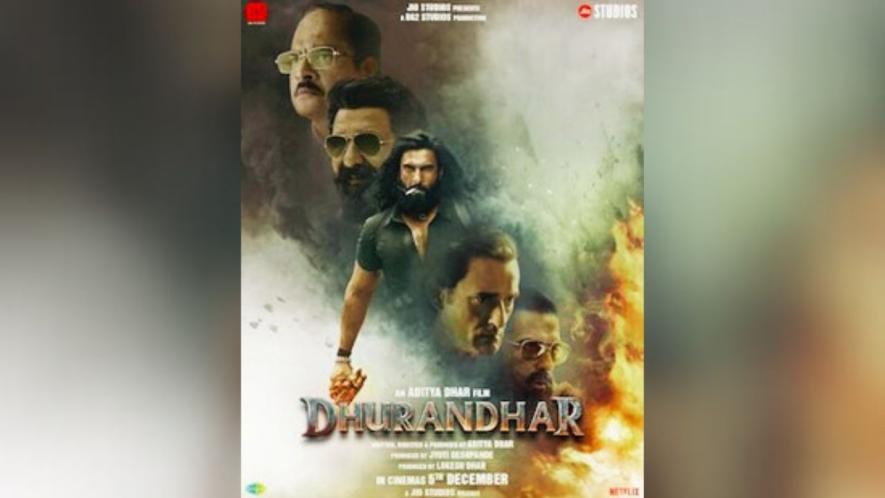
Image Courtesy: Wikipedia
There is a growing tendency to describe Hindi films like Dhurandhar as evidence of India’s expanding soft power. It sounds plausible, even flattering. It is also wrong.
Soft power is not about resounding slaps and choreographed physicality.
It is not about irritating others at no cost.
And it is certainly not about making faces, thumbing your nose, or scoring points in comparative nationalism.
Soft power works only when others want in.
Noise feels powerful. Influence doesn’t announce itself.
Much of what is now being sold as soft power is really morale management. It reassures domestic audiences. It signals toughness. It generates noise and reaction. That may have political uses, but it should not be confused with influence.
The Cold War history makes the distinction clear. Anti-Soviet pulp fiction and caricature villains reassured Western readers; they did not weaken the Soviet imagination. The real seduction came from elsewhere—from everyday images of a freer, fuller life. Abundance without argument. Choice without lectures.
That wasn’t ideology being pushed.
That was desire taking root.
Propaganda tells people what to think.
Soft power makes them wonder.
Soft power doesn’t gatekeep
Here is the simplest way to understand it:
Soft power works when others desire entry into your universe—not when you control the gate, sneer at outsiders, or perform dominance for the home crowd.
The moment culture starts lecturing, punishing or humiliating, attraction collapses.
Irritation feels good, but it achieves nothing durable.
This is the mistake some commentary keeps making—treating irritation as a no-cost nationalist asset. It isn’t. Irritation hardens positions, legitimises whataboutery, and shuts doors. Soft power does the opposite. It co-opts sentiment without bruising pride.
Soft power absorbs hostility.
It doesn’t provoke it.
A small but telling contrast
A useful comparison here is the recently released Hindi film Ikkis, which—whatever one makes of its politics—leans more on shared trauma and human consequence than on provocation. Films like this stand a better chance of building soft power rather than blood smeared jingoism, howsoever glib the cinematics.
Texture travels better than taunt.
When Indian soft power actually worked
India’s cultural influence travelled best when it wasn’t trying to prove anything.
When Raj Kapoor became hugely popular in the Soviet Union, it wasn’t because Indian cinema asserted moral superiority. It was because dignity, struggle, humour, and vulnerability felt recognisable. Soviet audiences did not read India’s politics; they recognised themselves. That recognition was quietly disarming and aligning.
When Hindi film Dangal found extraordinary success in China, it was not nationalism that crossed the border. It was family conflict, ambition, tenderness, and friction. Chinese audiences weren’t consuming Indian ideology; they were watching Indian life-- different texture, shared sentimentality
The same logic explains the global appeal of Hindi film actor Shah Rukh Khan. He travels because he performs vulnerability and emotional risk, not dominance. He is heard because he sounds human before he sounds national.
And when a French president honours an Indian filmmaker, it is not courtesy. France does not hand out cultural respect lightly. Such gestures acknowledge seriousness, cultural density, and equal standing.
Soft power works horizontally.
It is conferred, not claimed.
Reaction is not recognition.
It also helps to be clear about what soft power is not. Even as India’s leadership invests continuously in cultivating goodwill abroad, jingoistic cinema often undermines that effort. Films like Dhurandhar, when banned, do not project strength—they erode carefully nurtured soft power.
The contradiction is stark: diplomacy builds bridges; triumphalist cinema sets them aflame. When West Asian authorities ban an Indian film, it is not an assertion of influence but a signal of misalignment, a weakening of the very goodwill diplomacy strives to sustain.
Soft power is never about rubbing it in—it is about welcoming in, a gentle conversion working beneath the surface of entrenched contrarian narratives and hardened positions, reshaping them without confrontation.
Soft power is never declared.
It is recognised.
Cricket tells the same story
India’s influence in cricket works for the same reason. It grows when India enables participation and hosts the ecosystem. The moment heft becomes a way to dictate or disable, attraction weakens.
People want into ecosystems that feel open, not managed.
The Real Loss
India’s most valuable soft-power asset post-Independence was never just its size or antiquity. It was the example of a large, poor, chaotic country that nevertheless made democracy and diversity work.
That story travelled. Neighbours noticed. Many aspired to it even if the tone of the establishment was contrary.
As that image weakens, moral difference narrows. Whataboutery becomes easier. Even Bangladesh, once instinctively aspiring these traits, now speaks in comparative jingoism. Their national anthem written by Rabindranath Tagore -- an acknowledgement of shared values -- is being called to question.
This is not hostility, it is disenchantment.
It is something quieter—and more damaging.
Once admiration turns into argument, soft power leaks away.
A Plain Conclusion
Soft power is not volume turned up high.
It is not swagger.
It is not making faces across borders.
It is erosion of hostility, and a conversion of contrarian points of view
It works when others say, without being asked:
I don’t belong here—but I want in.
Cinema that scolds or postures may gratify sentiment at home, and travel to a hyper national diaspora. Real soft power does not irritate or erase. It amplifies a quiet admiration, which works below the surface, nuanced and fundamentally effective.
The writer is an independent journalist. The views are personal.
Get the latest reports & analysis with people's perspective on Protests, movements & deep analytical videos, discussions of the current affairs in your Telegram app. Subscribe to NewsClick's Telegram channel & get Real-Time updates on stories, as they get published on our website.