






Social Media, Childhood Vulnerability & Limits of Ban-Based Solutions
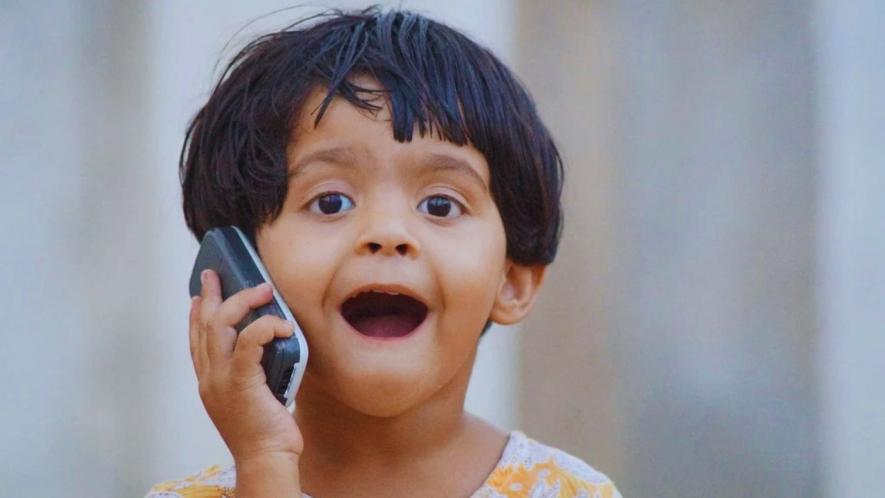
Representational image. Image Courtesy: Collections - GetArchive
The recent announcement by the Karnataka Chief Minister regarding the plan to introduce an age-specific ban on social media has prompted a debate on whether banning children’s access to social media is an appropriate response. There are other Indian states, too, which are exploring similar plans, such as Maharashtra, Andhra Pradesh, Goa, and Kerala. Globally, too, a momentum toward age-based restrictions has accelerated in many countries like Brazil, Fiji, Indonesia, Malaysia, New Zealand, Portugal, Republic of Korea, South Africa, Spain, the UK etc. So far, Australia is the only country where stricter social media access rules are implemented from December 2025 through the enactment of the Online Safety Amendment (Social Media Minimum Age) Act, 2024 for children below 16 years of age.
The Madras High Court in S. Vijayakumar vs. Union of India (2025), while hearing the petition on mandating Internet Service Providers to introduce parental window service to restrict children’s access to child sexual abuse material online, suggested that the Union government should think of an Australia-like social media restriction framework in India.
The issue of a social media ban for children in India is not new and was already deliberated in the Supreme Court last year in Zep Foundation v. Union of India (2025), Child Rights Foundation vs. Union of India (2025), and Centre for Accountability Systemic Change & Anr. vs. Union of India (2025), where the petitioners sought age-specific restrictions on children’s access to social media and online betting platforms disguised as e-sports in the backdrop of a growing mental health crisis among children. However, the Court, rather than banning the social media, deferred the question of a blanket ban to the legislature.
Notably, India already has in place a digital governance framework under the Information Technology (Intermediary Guidelines and Digital Media Ethics Code) Amendment Rules, 2026 (amending the existing 2021 Rules under the Information Technology Act, 2000), though it has raised concerns with regard to freedom of speech. The IT Rules require that social media intermediary observe due diligence to ensure that users do not host, display, upload, or share any content that can cause harm to children, in particular child sexual abuse material.
The 2026 Amendment Rules extend this due diligence specifically to AI-generated content (an emerging area of concern for child rights). Besides, the Protection of Children from Sexual Offences 2012 is focused on restricting child sexual abuse material online.
The Digital Personal Data Protection Act, 2023 (DPDP Act) and Digital Personal Data Protection Rules, 2025 (DPDP Rules) also have specific provisions for the processing of children’s data, such as restricting targeted advertising aimed at minors and behavioural monitoring.
The specific focus on children in digital governance is part of India’s continuous harmonisation of its domestic child rights statutory framework with the United Nations Child Rights Convention.
Despite having a foundational child rights statutory and regulatory framework, civil society groups and individuals have been intermittently petitioning the courts about the improper implementation of fundamental rights for children, highlighting the State's failure. Overall, the child rights statutory framework has progressively expanded the horizon of fundamental rights under Article 21 of the Constitution to include children’s rights to education, health, and food, however, it suffers from implementation challenges, and problems of malnutrition and school dropout continue to persist.
Likewise, the digital governance framework under DPDP Act generated apprehensions with regard to consent fatigue (due to its emphasis on parental consent), circumvention by children (for age verification), reinforcement of parental authority on adolescents (especially girls) whose autonomy is at stake in a family systems guided by customary authority, concerns regarding Data Protection Board’s regulatory autonomy, transparency, and accountability in processing State data, reduced transparency and public accountability affecting the right to information, and unchecked State power and potential surveillance.
This demonstrates that implementation challenges are a critical issue to ensure children's well-being. It is argued in this article that the implementation challenges emerge from three corners: (i) State’s institutional apparatus, which remains indifferent and apathetic, consequently breeding trust deficits among citizens regarding its transparency and accountability; (ii) private actors’ persistent refusal to participate in delivering State’s constitutional obligations for children’s well-being; and (iii) lack of participatory governance models excluding family, community, and children's participation in decision-making.
In this background, the article argues that social media regulation/banning would need to be complemented with three integrated policy responses: (i) restructuring of the social media ecosystem; (ii) restructuring of the educational system; (iii) restructuring of social foundations of care and (iv) promoting a participatory governance framework—all integral to children’s development and well-being.
The restructuring of the social media ecosystem can be envisaged only after understanding the current business model of their operation. Social media is structurally a market-driven system where users' engagement (including children) in various forms (communication, entertainment, content creation, education, information, etc.) generates profit through an advertisement-driven, attention-extractive design architecture wherein the attention of the users is captured through constant engagement and then sold as targeted advertising.
The algorithmic curations of personalised feeds and affective feedback loops continue to keep users engaged, though with a semblance of freedom and autonomy, as users derive knowledge, satisfaction and pleasure.
For children, too, social media provide opportunities for education, information and entertainment, but it also exposes them to harms such as cyberbullying, digital sexual abuse, misinformation etc. Children constitute a vulnerable age group owing to their developmental limitations, putting them in a greater possibility of harm and risks, sometimes even leading to suicides.
The petitions mentioned earlier highlighted that social media addiction is common among children, affecting their mental health. Children are susceptible to imitating what they consume on social media, especially when it is framed as a trend or challenge. There are instances in which imitation caused bodily harm to children, sometimes fatal.
Repeated exposure to algorithmically curated content shapes children’s emotional experiences wherein they start comparing themselves with highly filtered versions of reality that promote unrealistic standards of beauty, success, and happiness, resulting in Fear of Missing Out (FOMO) and anxiety. Platforms amplify emotionally charged experiences that may exacerbate depressive symptoms or distress among children.
Platforms also use algorithms to reinforce viewing patterns through behavioural monitoring, which means that children’s engagement with certain kinds of content, such as sadness or insecurity, will be algorithmically led to further exposure to similar material.
Thus, mental health is a defining feature of social media engagement. In one of the landmark social media cases against giant corporations like Meta and Google for making their platforms (Instagram and YouTube) intentionally addictive, the plaintiff remarked that the case can be as easy as “ABC," which stands for “Addicting the Brains of Children." The plaintiff further said that two of the richest corporations in history, Meta and Google, have “engineered addiction in children’s brains," which clearly reflects that mental health is not an unintended consequence but an engineered one with an engagement-driven architecture (infinite scrolling, algorithmic recommendations, automatic video play etc.).
The social media companies have a structural incentive to intensify user engagement, as their profits are generated not through selling any tangible product, but through capturing and monetising user attention for targeted advertisements, which directly increases the platform's ability to charge higher advertising rates. Therefore, in the existing business model of social media, users (whether adults or children) are products, as their attention, time, and behavioural data are continuously extracted and sold.
While the child-centric safeguards in DPDP Act and DPDP Rules strengthen children’s data protection, the underlying business model of the digital platforms remains unchanged for adults and they continue to be exposed to the engagement-driven architectures, as the regulatory framework under the DPDP Act and Rules is largely centred on consent (though consent fatigue leads to habitual clicking without meaningful understanding) regarding data processing, correction, and erasure of data.
However, civil society groups point out that under the DPDP Act and Rules, data fiduciaries can decide when to make exceptions to the rules about how data is processed and transferred. The companies are obligated to ensure transparency, security, and data minimisation, however, how a business model based on profit maximisation out of data generation will ensure citizens’ right to privacy is an unaddressed question. And the compliance by the companies with the rights of adults and children as envisaged under the Act and Rules remains a critical question, given the history of profit-making business models to evade regulations and dilute accountability.
In such a scenario, the foundational architecture of the social media ecosystem needs to be reconfigured to incorporate democratic governance and cooperative ownership structures, digital commons infrastructures, which will remove the centrality of commercial interests guiding the platform design and operations.
Such a restructuring would promote participatory governance by enabling the meaningful involvement of families, communities, and children in decision-making processes. For instance, the government can support the development of non-profit digital platforms as alternatives to ad-driven models and incentivise educational, community-based, and child-safe online spaces through public investment and grants.
Similarly, government can facilitate the development of platform cooperatives through legal recognition, tax incentives, and funding support where communities have a stake in platform governance and data use.
These are indicative suggestions rather than exhaustive ones, pointing to the possibility of developing alternatives that truly foster democratic and transparent digital governance through citizens’ participation, valuing the importance of mental and physical health for not only children but also the family and community environment in which children are born and grown.
Keeping children safe requires interventions at the school, family, and community levels, says UNICEF, which means a recalibration of the education system and care system is required. Education needs to be redefined to promote social belongingness, emotional resilience, and experiential learning rooted in socio-cultural context, rather than market-oriented skill sets facilitating EdTech companies.
The growing integration of education with technology (ICT, AI etc.) discourages peer interaction and aggressively imposes prolonged screen time among children. They are increasingly relying on companion chatbot interactions (for which civil society groups are advocating a ban), which is described as ‘relational drift’ by child rights scholars. The rapid integration of education and technology has also given rise to anxiety, sleep disruption, and poor academic performance among children. The market-oriented, techno-centred model of education undermines the participatory mechanisms by limiting the space for any meaningful engagement of children, families, and communities in the decision-making process.
The restructuring of socio-economic foundations of childcare will enable the possibilities of participatory governance. It requires, strengthening the existing care system established by the State under its constitutional obligations to promote child well-being (such as the early childhood care and education system that includes Anganwadi services, preschools, etc.) accompanied by regulatory disincentivisation of the commodified private care economy. Coupled with this, fostering responsive caregiving (emotional bonding, sensitivity to child’s needs etc.) in family environments must be prioritised through targeted structural interventions that strengthen caregiving capacities.
UNICEF says that an enabling environment needs to be developed through policies, programmes and services that give families, parents and caregivers the knowledge and resources to provide nurturing care for children. This may include policy measures to mitigate work-life balance-related stress, address excessive digital engagement among adults, and alleviate socio-economic conditions like poverty and inequality, that constrain meaningful family interaction. In the absence of sustained and meaningful emotional interaction within the family, children are more likely to seek connection, validation, and engagement through social media platforms and AI-mediated systems.
This points to the need for a comprehensive ecosystem approach, wherein efforts to regulate digital environments are complemented by social and economic policies that enhance caregivers’ time, capacity, and emotional availability for child development.
However, even an emotionally supportive family environment may be insufficient to ensure child well-being if its cultural practices are not aligned with child rights principles. It is, therefore, essential to ensure that the socio-cultural norms are in harmony with the formal legal frameworks of child rights. As of now, there is a disjuncture between the child rights framework and the customary understanding of treating children in Indian society. This creates conditions of selective invocation of the child rights framework on the part of families and communities, which limits the possibilities of meaningful engagement in governance too.
The lack of consonance of the child rights framework with the social fabric of Indian society originates from the historial trajectory wherein formal legal institutions did not develop from internal social processes of Indian society but were implanted through colonialism. Whereas countries where legal systems emerged from endogenous processes i.e internal processes, tend to develop comparatively better alignment of law and society.
Consequently, corresponding transformation of social norms and practices did not take place in tandem with the formal legal system in India, which can be easily observed in the legal and social treatment of children and adolescents in families and communities in India.
The harmonisation of the socio-cultural norms regarding children and the legal framework of child rights will lead to better participation of families, communities, and children in the governance model. This will also foster a transparent and accountable State institutional apparatus through a sustained and voluntary engagement of families, communities, and children with the governance structure.
This four-pronged approach underscores that family and community, legal system, and governance structure have to ensure children's well-being in an integrated fashion. A stringent regulatory framework is incapable of achieving the desired results, as it does not engage with the socio-economic conditions in which violations of child rights breed. Until those structural conditions are addressed and mitigated, children’s well-being cannot be ensured just by restricting access to social media while keeping the overall structure that feeds violations intact.
Exclusive emphasis on a stringent statutory framework risks inviting surveillance, breach of privacy, and restrictions on freedom of speech and expression, rather than deterrence. Moreover, a standalone emphasis on social media restrictions amidst an existing child-rights statutory framework in alignment with international instruments disregards the fact that State failure is consistently acknowledged by the courts in India. It also overlooks the persistent obstacles that emanate from the opposition of the private sector to fulfil the constitutional obligations.
Jurisprudentially, the principle of ‘reasonable restrictions’ is invoked by the Supreme Court to hold the private sector responsible for compliance with the constitutional mandates within permissible limits of regulation, even then, private companies, especially the giant corporations, invent trivial ways to ensure profit over constitutional duty. The profit-making model of private players limits the possibilities of participatory governance too. Hence, the strengthening of public institutions, accountability, and transparency are fundamental to the realisation of constitutional guarantees and the protection of citizens’ rights.
Kusum Lata is an independent scholar with experience of working with a child rights organisation. The views are personal.
Get the latest reports & analysis with people's perspective on Protests, movements & deep analytical videos, discussions of the current affairs in your Telegram app. Subscribe to NewsClick's Telegram channel & get Real-Time updates on stories, as they get published on our website.