





Sectarian Nationalism and Concept of ‘Duties & Rights’
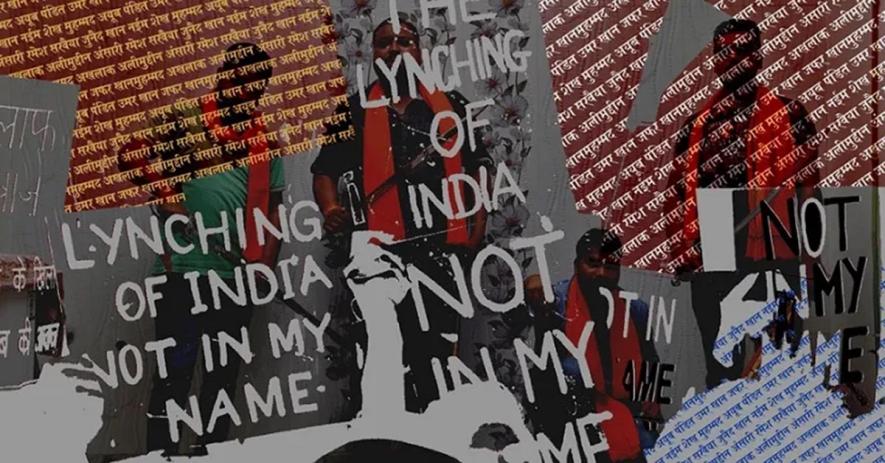
Image Courtesy: Sabrang India
India’s journey from a feudal society toward a potential democratic society based on modern industries and equality began during the colonial period. This was the period when the rise of modern industries created the working class.
Modern education introduced by Lord Macaulay in India laid the foundation of the education system that had the potential of bringing in the liberal open society where the concept of rights was also ingrained.
The feudal, semi-feudal and similar societies did not have the concept of rights and it was based on ‘divine’ power to rule over the lower sections of society. It was during this period that the tendencies which emerged articulated the rights of the emerging sections of society.
While the freedom movement was led by leaders who had imbibed the values with potential of democratic values, they led the movement against colonial rule. The likes of Sardar Patel, Mahatma Gandhi, Jawaharlal Nehru, Maulana Abul Kalam Azad and Subhash Chandra Bose articulated the values with inherent rights for the nation. They took the lead with great cost to their personal life. One of the examples was the inspiration derived by Jyotirao Phule from Thomas Penn’s book, Rights of Man. Ambedkar was an ardent follower of John Dewey. who was steeped in democratic values.
Recently, Prime Minister Narendra Modi went on to criticise Lord Macaulay for this transition to the values of rights, when he emphasised the traditional knowledge system as a dog whistle to highlight the concept of duty over rights.
Interestingly, Modi and his ilk, and the Muslim League, both expressed the values of ‘declining classes of landlords, Nawabs and Kings’. Modi’s Hindutva presented the ancient period where ‘dharma’ was the core, the dharma which the followers of Hindutva claim to be very great and the core of Hinduism.
Dharma stands for the religiously-ordained duties. Hindu ideologues claim there is no equivalent of dharma in other religions. There is Shudra Dhrama, Stree Dharma, Kshatriya Dharma and what have you. At its core was duties that dominated the scene.
The Muslim League emerged from the nawabs/landlords and their leaders eulogised the great rule of Muslim kings, starting from Mohammad bin Kasim, who ruled for some time in Sind. Their model was based on feudal values, looking down on the lower levels of society. The dominant sections were blessed with ‘divine power’ trickling down to these feudal lords etc. Pakistan saw the good definition of secularism by Muhammad Ali Jinnah, but in practice, feudal elements were dominant around him and after his death they came out openly to impose their feudal-semi feudal values on the society.
Read Also: Traditional Knowledge & Modern Knowledge: Is There a Binary?
As Hindu Nationalism is marching in India, the concept of ‘rights’ inherent in our national movement and Constitution have to be gradually undermined by Hindutva politics. This is where the ‘non-biological’ Modi begins the journey to achieve the goal of undermining rights and highlighting duties. His call for a dumping the education system introduced by Lord Macaulay was a subtle attempt in this direction.
Now, putting it more overtly on the Constitution Day, November 26, “In a recent letter to Indian citizens on Constitution Day (November 26, 2025), Prime Minister Narendra Modi heavily emphasised the importance of citizens fulfilling their Fundamental Duties. He argued that performing these duties is the foundation for a strong democracy and national progress towards his "Viksit Bharat" (Developed India) vision for 2047. Modi urged citizens to place their "duties towards the nation foremost in our minds". This aligns with his previous statements where he suggested that "rights are embedded in duties" and that "real rights are a result of the performance of duty,".
Modi also tweeted: “On Constitution Day, wrote a letter to my fellow citizens in which I’ve highlighted the greatness of our Constitution, the importance of Fundamental Duties in our lives…”
Writer Shravasti Dasgupta writes “While this is not the first time that Modi has laid emphasis on citizens duties, or interlinked them with rights to suggest that duties correspond to rights, the constitution shows that such interlinking is incorrect. According to constitutional experts and political scientists, an invocation of duties, placing primacy on them above rights, is a subtle attempt to recast the constitution, ensure compliance in a manner seen in authoritarian regimes, and signals a danger to democratic principles”
Modi went on to invoke Gandhi on this. “…and that "real rights are a result of the performance of duty,". Invoking Gandhi is totally off the mark, as Zoya Hasan (Professor Emerita, Jawaharlal Nehru University) says, “Gandhi often spoke of duties, but he never treated them as a substitute for rights; duties did not supersede rights. For him, duties were a moral path for individuals, while Fundamental Rights remained essential and must be protected by the state. Gandhi’s commitment to duties did not diminish rights in any way,”
Incidentally, to emphasise the concept of rights, many of these were underlined during the United Progressive Alliance (UPA) regime (2004-2014). The first and major amongst these was the "Right to Information”, a mechanism to root democracy in a deeper way. This was followed by the Right to Education, Right to Food and Right to Health. After the UPA government lost in the 2014 elections, the National Democratic Alliance (NDA) came into power, with full majority for Bharatiya Janata Party (BJP). The rights-based approach to public policy has now gone into the freezer and duties are being made a major part of our national policies.
Even our Constitution emphasises on rights in itself. In a way, in Article 21, ‘Right to Life’ incorporates the Right to Health and the Right to Education. The UPA government underlined these in a very appropriate way.
Today, Hindu Nationalism is totally suppressing rights, such as freedom of religion, freedom of expression, among others. Many of these are incorporated in the concept of human rights as well.
What Modi is saying in his letter is the way of suppressing the concept of ‘rights’, which is clear in his policy of relegating the religious minorities to second class status, coining the term ‘Urban Naxals’ for the public intellectuals, among others.
Incidentally, authoritarian states’ constitutions also emphasise more on duties, at the cost of rights.
The writer is a human rights activist, who taught at IIT Bombay. The views are personal.
Get the latest reports & analysis with people's perspective on Protests, movements & deep analytical videos, discussions of the current affairs in your Telegram app. Subscribe to NewsClick's Telegram channel & get Real-Time updates on stories, as they get published on our website.