





Scientists Say Human Lungs Could Become Next Diagnostic Network
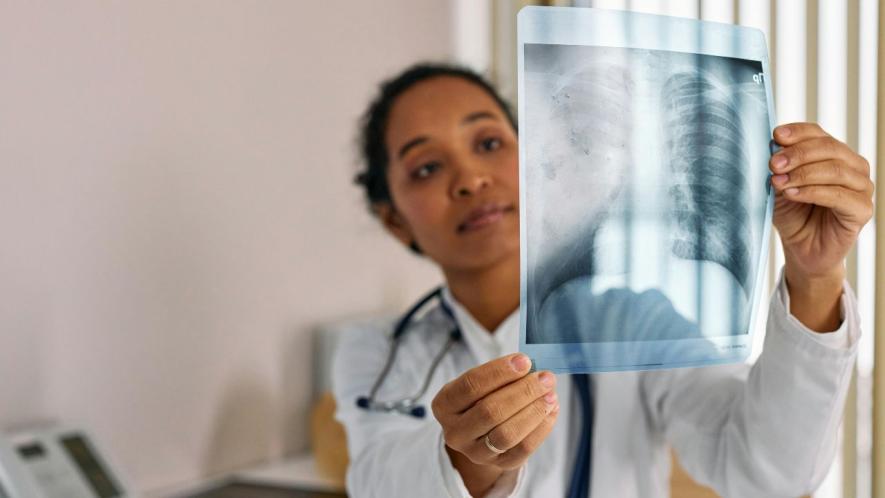
Representational image Image Courtesy: Pexels
What if a simple breath into the air could quietly reveal the earliest signs of diabetes, asthma, lung disease or even cancer long before the symptoms appear?
Scientists across Europe, the United States and Asia are now exploring exactly that possibility, turning human breath into one of the most promising frontiers in modern medicine. Their research suggests that the lungs may function like a biological broadcasting system, continuously releasing invisible chemical signals that reflect what is happening deep inside the body.
The idea sounds futuristic. Yet, inside advanced laboratories from Berlin to Boston, researchers are already building sensors capable of “listening” to these chemical messages in real time.
At the centre of this emerging field is the study of volatile organic compounds (VOCs)—tiny chemical traces released naturally through human breath during metabolism, inflammation, and disease. These microscopic compounds are often measured in parts per billion, meaning they exist in extremely tiny amounts. Still, scientists say these may hold extraordinary medical value.
“Every breath you take carries more than oxygen. It carries information,” researchers noted while explaining the concept behind breath-based diagnostics.
Doctors have known for decades that breath can reveal clues about health. Alcohol breathalysers are the most familiar example. Patients with uncontrolled diabetes sometimes produce a fruity-smelling breath because of rising acetone levels. People with asthma often exhale higher levels of nitric oxide, a gas linked to airway inflammation.
What has changed now is the sophistication of the technology.
Using ultra-sensitive graphene sensors, optical detectors and artificial intelligence systems originally inspired by communication engineering, researchers are attempting to decode these chemical patterns with unprecedented accuracy. Some experts compare the process to detecting WiFi signals hidden within noisy environments.
The human body, they say, acts like a transmitter. Breath becomes the signal. The surrounding air acts as the communication channel. Sensors operate like receivers.
Dr Sunasheer Bhattacharjee of the Technical University of Berlin, says in a paper, the biggest scientific challenge is separating genuine disease signals from everyday “noise” created by pollution, food, smoking or even morning coffee.
“We don’t rely on absolute biomarker values", Bhattacharjee saysadding that “disease shows up as ongoing, related changes in breathing patterns across different sensors, while diet or pollution acts like random or slowly changing background noise.”
In simple language, scientists are not searching for one magical chemical. Instead, they are searching for stable patterns that repeat consistently when illness develops.
This approach is rapidly gaining scientific attention. Recent peer-reviewed studies published in journals, such as Nature Sensors, Biosensors and Bioelectronics, and ACS Nano, have reported major improvements in breath-analysis accuracy using machine learning models trained on thousands of breath samples.
Researchers believe the implications could be enormous for countries like India, where millions still receive diagnoses only after a disease has significantly progressed.
In overcrowded healthcare systems, non-invasive screening tools could potentially reduce dependency on repeated blood tests, lower diagnostic costs and help doctors identify high-risk patients earlier.
The attraction is obvious. Breath testing is painless. No needles. No biopsies. No laboratory reagents.
A frequently discussed example among scientists is the “smart mirror” concept. A person brushing their teeth in front of a bathroom mirror could unknowingly breathe in hidden sensors capable of detecting suspicious changes linked to diabetes, lung inflammation or chronic disease. An alert could then recommend a medical check-up before visible symptoms even begin.
For now, however, the technology remains largely experimental.
Dr Saswati Pal, a researcher at the Technical University of Berlin, working in the same field cautions that real-world environments remain far more difficult than controlled laboratory settings.
“Our work highlights that most current systems are validated under controlled laboratory conditions,” Pal explains. “Future sensors need to include features that allow them to automatically adjust, estimate normal conditions, and process signals based on the environment to deal with changing conditions,” she adds.
The challenge is not trivial.
Airflow constantly changes. Chemical traces linger in rooms. Crowded public spaces create overlapping breath sounds from multiple individuals. Even humidity can interfere with readings.
Inside Berlin laboratories, researchers reportedly spent months testing airflow turbulence, environmental interference and sensor instability before achieving reliable signal detection under simulated public conditions.
Some scientists are also investigating whether future nanosensors placed temporarily inside the respiratory tract could detect incoming toxins or allergens directly from the lungs. But researchers admit the idea faces serious biological and engineering hurdles.
“The respiratory tract is designed to rapidly clear foreign material,” Pal says, adding “any internal sensor must avoid inflammation, toxicity or tissue damage.”
Despite these obstacles, momentum in the field is accelerating because the medical need is enormous.
According to the World Health Organisation, chronic respiratory diseases, diabetes, and cancer collectively account for millions of deaths worldwide each year. Early detection remains one of the strongest predictors of survival.
Yet, alongside scientific excitement, a more unsettling question is beginning to emerge: Who owns the information contained in human breath?
If homes, offices, airports, or shopping centers somehow deploy air-monitoring systems capable of identifying disease-linked chemical signals, privacy concerns could become unavoidable.
“If my breath is broadcasting data, who is allowed to listen?” Bhattacharjee asks while discussing the ethical risks surrounding the technology.
He stresses that future systems must enforce “purpose limitation, irreversible feature extraction, and opt-in consent” so that individual health data cannot be secretly inferred in public spaces.
Experts warn that without strong regulations, breath-monitoring technology could eventually create new forms of discrimination involving employers, insurers, or surveillance systems.
Bhattacharjee argues that patient control must remain central.
“Breath-monitoring systems should suppress non-actionable variability, give users full control over activation and data sharing, and enforce hard firewalls against insurance or employer access", he adds.
For ordinary people, the science may still sound distant. But researchers insist the shift has already begun.
Medicine, they say, is slowly moving away from reacting to disease after symptoms appear and toward identifying invisible warning signs much earlier.
And somewhere in that transition, something as ordinary as breathing may become one of healthcare’s most powerful diagnostic tools.
The writer is a Delhi-based freelancer who writes on health issues and medical discoveries.
Get the latest reports & analysis with people's perspective on Protests, movements & deep analytical videos, discussions of the current affairs in your Telegram app. Subscribe to NewsClick's Telegram channel & get Real-Time updates on stories, as they get published on our website.