





Samudra Manthan: Is India Doubling Down on Fossil Fuels?
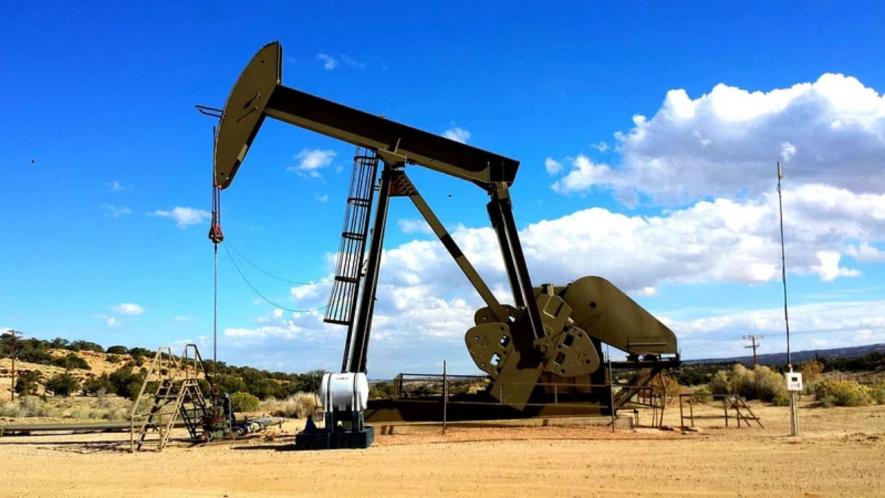
Representational Image. Image Courtesy: Rawpixel
The Union Cabinet has given approval to the ₹84,084-crore National Offshore Exploration Scheme, or Samudra Manthan, India’s largest investment in offshore oil and gas exploration in decades. The programme has been announced by the government as a strategic response to India’s increasing energy needs and dependence on imported crude oil and natural gas. Policymakers hope to find new hydrocarbons and reduce imports, and boost India’s energy independence by encouraging exploration and production in the deepwater and frontier offshore basins.
But the announcement represents a bigger challenge than geology and energy economics. What does a massive public investment in offshore fossil fuel exploration say about the country’s long-term energy strategy at a time when India is positioning itself as a global leader in renewable energy, green hydrogen, electric mobility, and climate diplomacy?
The answer lies in understanding the competing priorities that are increasingly shaping India’s energy policy. India imports over 85% of its crude oil and about half of its natural gas consumption. This reliance has at times made the country vulnerable to global price volatility, geopolitical turbulence, and disruption in supply.
The Russia-Ukraine conflict, the instability in West Asia, and the volatility in international energy markets have all reinforced the view that local exploration is not just an economic goal but a geopolitical imperative.
Samudra Manthan appears more like a move to reduce India’s reliance on external energy shocks than a move away from clean energy. However, energy security and energy transition are not necessarily mutually exclusive objectives.
The programme is a massive public investment in finding and exploiting hydrocarbons that could be years, even decades, away from commercial viability. Deepwater exploration is technically difficult, capital-intensive, and essentially unpredictable. The success rates are modest, and production times are long. That means today’s investment will continue to support fossil fuel production into the 2040s and beyond.
Such a reality poses disturbing questions on the future of India’s climate. India has promised to cut its emissions to net-zero by 2070, cutting its carbon intensity and boosting renewable power generation. It has positioned itself internationally as a leading voice for climate justice, arguing that developing countries need developmental space and equal access to energy. But at home, the country’s energy policy increasingly adopts a dual-track strategy.
On the one side, India is expanding solar parks, wind capacity, battery manufacture, green hydrogen generation, and electric vehicles. But it is increasing coal output, building oil-refining capacity, and recently accelerating offshore hydrocarbon exploration.
Policymakers say this cannot be accomplished overnight, and rather than seeing this as a contradiction. Renewable power can displace more and more of power generation, but industries like aviation, shipping, petrochemicals, heavy industry, and freight transport will continue to depend on oil and gas for years to come. Therefore, domestic production is preferred to imported fuels. The argument is of strategic importance. It is, however, worthy of examination.
Public investment in offshore exploration is a political choice about how to allocate resources. Every dollar spent on fossil fuel exploration is a dollar not spent on grid modernisation, battery storage, offshore wind, energy efficiency or decentralized renewable systems. The question is not whether India needs oil and gas today. Of course it does. The dilemma is whether to use scarce public resources on funding the increase of fossil fuel supply as the country tries to accelerate its clean energy transition.
The advocates of Samudra Manthan believe that eventually domestic production could reduce the import bill and help India’s balance of payments. Critics say offshore finds do not guarantee cheap domestic electricity. The domestic output offers very little insulation from international price fluctuations since world oil markets are still internationalised.
Environmental impacts of more offshore drilling are equally important. Millions of people along India’s coast directly depend on marine ecosystems for their livelihoods. Coastal erosion, pollution, extreme weather conditions due to climate change, and falling fish stocks are already taking a toll on fishing communities in Gujarat, Maharashtra, Goa, Kerala, Tamil Nadu, Andhra Pradesh, and Odisha.
Increased offshore development brings new ecological risks, including habitat disruption, underwater noise, accidental spills, and competition for maritime space. India’s environmental regulatory framework requires impact assessments and legislative clearances. However, there have been questions around the quality of cumulative environmental assessments and the substantive engagement of affected coastal communities. More rigorous monitoring systems, transparent environmental governance, and effective emergency response methods are needed for large-scale offshore development to reduce ecological dangers.
The plan also represents a major shift in the State’s approach to the energy industry. Exploration activities in offshore India have traditionally been dominated by public sector companies, mainly ONGC. Samudra Manthan aims at encouraging exploration activities by making frontier basins financially more attractive and removing geological uncertainty. Essentially, the State is assuming more of the risk of early exploration in the hope of future investment and increased domestic output. But the success of this strategy will depend not only on geological discoveries but also on its commercial viability.
Deepwater projects are among the world’s most expensive hydrocarbon pursuits, requiring complex technology, long investment timelines, and stable policy frameworks. The discovery of reserves does not always mean economically feasible production. More fundamentally, the project is emblematic of the challenges of India’s energy transition.
Many of the industrialised economies began decarbonisation after centuries of industrialisation, while India is still trying to balance economic growth, rising energy demand, poverty alleviation, industrial competitiveness, and climate responsibilities. Electricity consumption is climbing, manufacturing ambitions are increasing, and urbanisation is accelerating. Governments are thus reluctant to cut back on traditional energy sources in view of such facts, unless the alternatives are capable of meeting the total energy needs of the country. That’s why the energy transition in India is more about diversification than substitution.
Renewable energy may be growing rapidly, but fossil fuel is still a key part of the country’s overall growth strategy. Thus, Samudra Manthan is not a stand-alone policy initiative but part of a broader strategy to maximise every viable domestic energy resource while gradually increasing the share of renewable energy. The problem is that this balancing act should not be used to justify delaying structural transformation.
Without commensurate increases in renewable deployment, storage infrastructure, grid flexibility, and energy efficiency, if offshore exploration becomes another long-term pillar of India’s energy economy, the country risks being locked into carbon-intensive development paths at a time when global markets are shifting in the opposite direction.
The real test of Samudra Manthan, therefore, is not whether it finds more oil or gas. The question is whether India can pursue legitimate energy security goals without letting new fossil fuel investments derail the momentum of its clean energy revolution.
Energy security and climate ambition are not mutually exclusive. But achieving that balance is not just a question of announcing great plans. It calls for an open public debate, rigorous environmental oversight, careful fiscal prioritisation, and a clear road map of how conventional energy investments will co-exist with, and ultimately make way for, a low-carbon future.
Ultimately, Samudra Manthan is more than an exploring project. It is a statement of intent on how India plans to handle one of the century’s most urgent policy challenges—to secure cheap power for a developing economy while remaining committed to the long road to decarbonisation.
The writer is a columnist and climate researcher with experience in political research analysis, ESG research, and energy policy. The views are personal.
Get the latest reports & analysis with people's perspective on Protests, movements & deep analytical videos, discussions of the current affairs in your Telegram app. Subscribe to NewsClick's Telegram channel & get Real-Time updates on stories, as they get published on our website.