





Rupee Stability or Rupee Mirage?
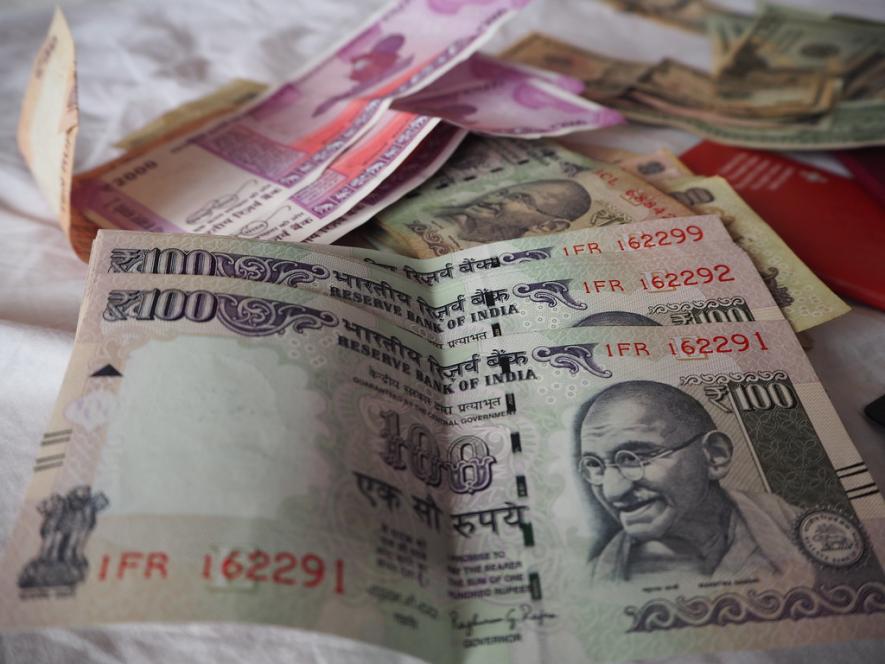
Image Courtesy: Flickr
India’s economy grows at a steady 6.5%, yet its global GDP rank has slipped. The Reserve Bank of India (RBI) projects stability through disciplined interventions, but citizens experience inflation, eroding savings, and uncertainty. Spot sales, forwards, swaps, and futures restrictions reassure markets in the moment, yet they leave households puzzled and offshore hedging unchecked.
This article looks into how RBI’s defence of the rupee balances consistency with limitation. Each case chapter isolates one mechanism to show how stability is projected at home while fragility is exposed abroad. The aim is clear: to replace opacity with clarity, and to ask whether rupee stability is genuine strength or a carefully managed mirage.
Case 1: Spot Dollar Sales – Visible Stability, Invisible Sacrifice
The RBI’s frontline defence of the rupee lies in spot market interventions. Whenever depreciation looms — triggered by oil shocks, capital outflows, or speculative trades — the RBI sells dollars directly into the market. This immediate injection calms volatility and reassures investors, projecting stability in headlines.
In March 2026, the financial press reported multiple episodes of the RBI stepping in with spot sales to prevent the rupee from breaching sensitive levels. These interventions were effective in the moment, but the scale and cost remain opaque. Citizens are told reserves are “adequate,” yet they are not shown how many billions are spent each week or how much of the $600‑plus billion stockpile is silently eroded. Stability is visible, sacrifice invisible.
For households, the contradiction is stark: the rupee appears defended, but fuel and food prices still rise, imports remain costly, and inflation eats into savings. Spot sales succeed in the moment, but they drain national reserves and leave citizens questioning whether stability is genuine or merely a mirage.
Case 2: Forward Contracts – Shield Today, Burden Tomorrow
Beyond the spot market, the RBI relies heavily on forwards to defend the rupee. By committing to deliver dollars at a future date, the RBI shifts obligations forward, smoothing volatility across time and signalling capacity to intervene beyond the present moment.
In March 2026, Bloomberg reported that RBI’s forward book had swelled to nearly $100 billion — a record level that underscored the scale of deferred intervention. This figure revealed the hidden burden: while spot sales drain reserves today, forwards accumulate obligations tomorrow, limiting flexibility when fresh shocks arrive.
For citizens, the mechanics remain invisible. They do not see the contracts or maturities; they only feel the downstream effects — tighter liquidity, inflationary ripples, and the perception that the rupee remains fragile despite official assurances.
The contradiction is evident: forwards act as a shield in the present but build a burden for the future. They reassure global investors while concealing risks from households, leaving stability projected yet fragility unresolved.
Case 3: Swaps & Liquidity Management – Discipline with Hidden Costs
When spot sales and forwards are not enough, the RBI turns to swaps and liquidity operations. By exchanging rupees for dollars with counterparties, the RBI temporarily bolsters reserves and smooths volatility. Alongside swaps, it deploys treasury bill auctions and open market operations to drain excess liquidity and deter speculation.
In March 2026, the Economic Times reported that RBI imposed a new cap on banks’ net open rupee positions (NOP), a move designed to limit speculative exposure but one that also raised costs for the banking system. This showed how liquidity management is not just technical fine‑tuning — it reshapes the operating environment for banks and corporates.
For citizens, the effects are indirect but real. Liquidity tightening translates into higher borrowing costs, reduced credit availability, and pressure on household budgets. Corporates face increased funding costs, while savers feel the ripple effects in EMIs and inflation.
The contradiction is evident: swaps and liquidity discipline reassure investors of RBI’s resolve, yet they impose hidden costs on the very citizens whose trust the institution seeks to uphold.
Case 4: Currency Futures vs NDFs – Control at Home, Loss Abroad
When the RBI introduced currency futures, the goal was to deepen domestic liquidity and provide corporates with a transparent hedge against rupee volatility. Futures were meant to modernise India’s financial system and align it with global practices.
Yet strict participation rules — barring most retail investors and limiting access to corporates with genuine trade exposure — kept the market shallow. Liquidity never matured, and futures remained a niche instrument.
Meanwhile, global demand for rupee hedging flowed offshore. In April 2026, Finnovate highlighted how RBI’s multi‑pronged defence, including NOP limits and restrictions on NDF participation, ironically strengthened the offshore non‑deliverable forward (NDF) market. Settled in dollars outside India, NDFs bypass RBI oversight and have become the dominant hedge for the rupee.
For citizens, this dynamic is invisible; they see headlines about RBI’s discipline but feel the rupee’s fragility in daily life. For analysts, the contradiction is sharper: restrictions intended to safeguard stability at home surrendered influence abroad.
Thus, currency futures versus NDFs embody the central tension of rupee defence — an intervention designed to build strength, undermined by its own limitations, leaving domestic markets constrained and offshore hedging ascendant.
Case 5: GDP Ranking Controversy – Growth Strong, Standing Weak
India’s economy continues to expand at around 6.5% annually, yet in April 2026, the International Monetary Fund ranked the country as the world’s sixth largest economy, behind Japan and the UK. For citizens accustomed to hearing India described as the fifth or even fourth largest, the downgrade was unsettling.
The slippage was not caused by faltering growth but by rupee weakness and statistical revisions. When GDP is measured in US dollars, depreciation magnifies the gap with other economies, exposing the limits of currency defence in shaping global perception.
For households, the contradiction is sharp: the economy booms at home, yet appears weaker abroad. Inflation erodes savings, imports remain costly, and citizens are left questioning whether RBI’s defence of the rupee reflects genuine stability or a carefully managed mirage.
Thus, the GDP ranking controversy crystallises the central theme of this inquiry — India’s growth story is strong, but its currency fragility undermines global standing. Stability is projected, but clarity remains elusive.
The evidence across spot sales, forwards, swaps, and futures restrictions reveals a consistent pattern: interventions that project stability in the moment but conceal fragility beneath the surface. Yet the clearest test of this paradox lies not in technical markets but in global perception. India’s growth story remains robust, but its slipping GDP rank exposes how currency weakness distorts standing abroad.
Critical Appraisal
The RBI’s defence of the rupee has shown discipline and consistency across its toolkit. Yet consistency does not equal effectiveness. Each measure buys time, but none resolves the structural fragility of a partially convertible currency.
Spot sales calm volatility but silently erode reserves. Forwards defer obligations, creating a pipeline of hidden risks. Swaps and liquidity tightening reassure investors but raise costs for banks, corporates, and households. Futures restrictions, intended to safeguard domestic markets, instead strengthened offshore NDFs, weakening RBI’s influence abroad.
The contradiction is stark: India’s economy grows robustly, yet its global GDP rank slips, exposing the limits of currency defence in shaping perception. Stability has been projected, not secured.
For India to move beyond perception, rupee defence must evolve — from opaque manoeuvres to transparent accountability, and from short‑term firefighting to long‑term structural reform. Only then can citizens trust that stability is not a mirage but a reality built on clarity, resilience, and genuine strength.
The writer is a CAIIB (Certified Associate of the Indian Institute of Banking and Finance), has 37 years of work experience in the private sector and in a nationalised bank, and is the ex-All India Deputy General Secretary of the All India Bank Officers’ Confederation.
Get the latest reports & analysis with people's perspective on Protests, movements & deep analytical videos, discussions of the current affairs in your Telegram app. Subscribe to NewsClick's Telegram channel & get Real-Time updates on stories, as they get published on our website.