





Rupee at Lowest Since Independence: Do We All Fall Down?
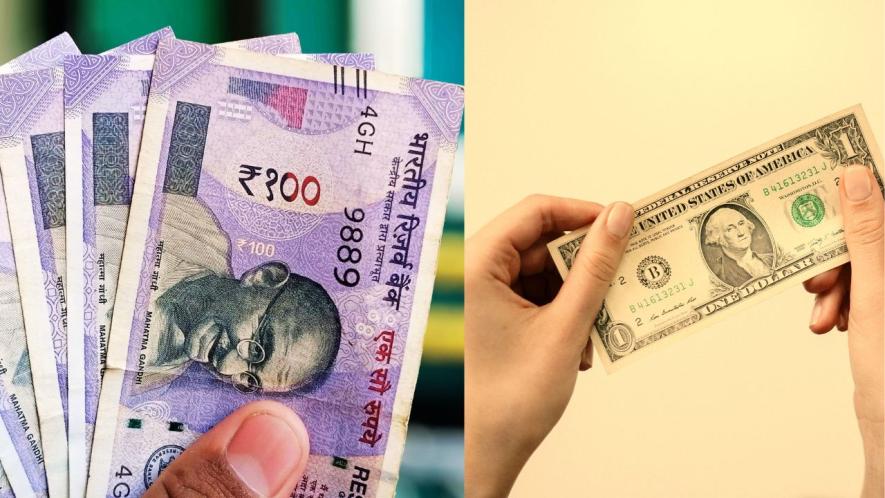
Representational Image. Image Courtesy: Pexels
On December 1, 2025, the Indian rupee plunged to ₹89.59 per US dollar, its lowest value since Independence. The financial media described it as “a historic slide” and “a record low”, reflecting fears of sustained capital outflows, rising import costs, and weakening macroeconomic fundamentals. The currency has now become Asia’s worst performer this year, despite the government’s repeated claims of India being the “fastest-growing major economy”.
The fall is not an isolated event. Currency depreciation reflects deeper tensions in the economy, structural, financial, and political. And yet, even as the rupee touches record lows, the ruling dispensation has remained largely evasive, offering statements that mock the fundamental issues. To understand why this slide was predictable, and why its burden will not be shared equally across society, we must first examine what causes a currency to lose value.
The Economics Behind the Slide
A currency depreciates when demand for foreign currency rises faster than the demand for a domestic currency, or when global and domestic investors lose confidence in long-term economic stability. In India’s case, this year’s record fall is the outcome of different converging forces that reinforce each other.
With central banks, such as the US Federal Reserve maintaining high policy rates, global capital has moved away from emerging markets. Investors prefer dollar assets that now offer higher and safer returns. This sustained exodus of Foreign Portfolio Investment (FPI) has drained foreign exchange and weakened the rupee.
Second, India is still heavily dependent on imported crude oil, fertilisers, electronics, and capital goods. As international prices fluctuate upward, the import bill grows and the demand for dollars rises. This structural dependence makes the rupee particularly vulnerable. Inflation further reduces purchasing power. When domestic prices rise faster than those in global markets, the rupee loses real value.
High inflation also discourages long-term investors, who then shift to safer currencies, putting further pressure on the exchange rate. Once investors anticipate further depreciation, they try to exit early. This accelerates capital outflows, even when fundamentals alone cannot explain the speed of the collapse. The currency begins to fall because people expect it to fall.
Read Also: The Curious Case of Strengthening Dollar, Falling Rupee
Moreover, the foreign exchange markets tend to overreact in the short term. Speculative trades, algorithmic selling, and liquidity shortages can push the rupee down faster than underlying economic factors warrant. Although the Reserve Bank of India (RBI) intervenes, its attempts to stabilise the rupee have been cautious and largely short-term. When markets sense that authorities are unwilling or unable to defend a particular threshold, speculative pressures intensify. This perception itself becomes a force driving the rupee downward.
These forces feed into each other, forming a vicious circle. This is the vicious cycle now gripping the Indian currency. Once such a spiral begins, stabilising the currency becomes far more difficult, especially when structural vulnerabilities remain unaddressed.
The Unequal Burden of a Falling Rupee
Every currency shock produces winners and losers, but the fallout of the rupee’s depreciation, much like inflation, is profoundly unequal. The working class, farmers, small producers, and low-income households bear the harshest costs, while the wealthier segments and export-oriented corporations often gain.
The working class feels the immediate pain. A weaker rupee raises the cost of every imported good. Fuel, LPG, edible oils, medicines, medical equipment, fertilisers, agricultural inputs, electricity, transport, and basic consumer goods all become more expensive. For wage earners and informal workers, whose real incomes have already stagnated, these rising costs translate directly into reduced purchasing power and heightened financial stress.
Industries, like automobiles, electronics, chemicals, pharmaceuticals, textiles, that are heavily dependent on imported inputs, face sharply rising production costs. To maintain profit margins, firms typically cut labour costs by reducing shifts, delaying hiring, outsourcing work, or pushing workers onto precarious contracts. Informal and contract workers, who lack job security or social protection, suffer first and most severely.
With expenses rising and incomes failing to keep pace, working-class households increasingly turn to short-term loans and informal borrowing. Depreciation, therefore, deepens indebtedness, widens inequality, and amplifies economic insecurity across the bottom half of the population.
The capitalist class, however, gains. For exporters, a weaker rupee is undeniably profitable. IT services, pharmaceuticals, textiles, and diamond exporters all paid for in dollars, see higher rupee-denominated earnings without any change in output. Corporations with foreign assets and offshore subsidiaries also benefit, as their overseas holdings instantly appreciate in rupee terms.
Foreign investors enjoy an additional advantage. Indian equities, real estate, and strategic assets become cheaper to acquire. Those with diversified portfolios, dollar assets, and access to currency derivatives can easily hedge against volatility, a luxury unavailable to ordinary citizens. In effect, rupee depreciation triggers an upward redistribution of income and wealth. Gains accrue to exporters, global investors, and transnational corporate interests, while costs are borne by workers, consumers, and small domestic producers.
The Government’s Evasion
The Finance Minister has publicly argued that a weaker rupee is “good for the economy” because it benefits exporters and improves competitiveness. The RBI, too, has intervened repeatedly to manage volatility. But these responses remain narrow, technocratic, and fundamentally evasive. They ignore the structural weaknesses that the depreciation has exposed and they misrepresent who actually gains and who loses when the rupee falls.
The Finance Minister’s argument rests on a partial truth: exporters do earn more rupees when the dollar strengthens. But this overlooks the far larger reality that India is not an export-led economy. India is an import-dependent economy. Crude oil, fertilisers, electronics, edible oils, machinery, medical equipment, and industrial inputs all become more expensive when the rupee weakens. As costs rise across supply chains, inflation accelerates, hurting workers, small businesses, farmers, and lower-income households.
A weaker rupee is “good” only for the small corporate sector and for foreign investors who now acquire Indian assets more cheaply. For the vast majority of the population, depreciation translates into higher prices, lower real incomes, and greater financial stress. In an economy where 90% of the workforce is informal and where consumption demand is already fragile, celebrating a falling rupee as a “positive” sign reveals either a profound disconnect from ground realities or an unwillingness to confront these.
While the RBI has actively intervened, selling dollars in the spot market, entering forward positions, and operating in offshore NDF (non-deliverable forwards) markets, such measures can only smooth volatility, not reverse a structurally driven decline. Each intervention drains foreign exchange reserves and tightens domestic liquidity, raising borrowing costs and constraining investment.
More importantly, currency defence does nothing to correct the underlying weaknesses that make the rupee vulnerable: high import dependence, a widening trade deficit, weak domestic demand, and stagnant manufacturing. The RBI can delay the fall temporarily, but it cannot compensate for the structural fragility created by years of policy complacency.
The Opposition has rightly pointed out that while the government issues statements, they neither explain the seriousness of the depreciation nor acknowledge its social consequences. By framing the fall as a global phenomenon or a harmless boost for exporters, the government is shifting responsibility away from domestic policy failures to avoid any discussion of structural vulnerabilities of weak manufacturing, stagnant wages, fragile rural demand, and rising import dependence.
There is also a clear political-economy dimension. A weaker rupee harms workers through rising prices and shrinking purchasing power, but benefits exporters, financial investors, and corporations with global portfolios, constituencies that remain closest to the ruling establishment. The political cost of depreciation is, therefore, conveniently transferred onto the working population, while the gains are captured by those with the most economic and political influence.
What remains unacknowledged is the depth of policy failure that the rupee’s depreciation lays bare. India’s export base has not diversified; manufacturing competitiveness has eroded; agricultural systems remain vulnerable; and informalisation has expanded. To admit the gravity of the rupee’s fall would require confronting these fractures, something a government reliant on optics and image-building is unwilling to do.
The Fall of the Rupee Is a Warning, Not an Accident
The rupee’s record decline is not merely an exchange rate fluctuation. It is a signal of structural vulnerability, of an economy increasingly dependent on global markets, speculative capital flows, and imported essentials. The question that must be asked loudly and urgently is: Why is the government unwilling to confront the deepest currency fall in independent India’s history, and why must the burden once again fall on the working people? Until this question is answered, the rupee’s slide will remain more than a market event. It will remain a mirror reflecting who this economy protects, and who it has become habitual of sacrificing.
Shirin Akhter is Associate Professor at Zakir Husain Delhi College, University of Delhi. The views are personal.
Get the latest reports & analysis with people's perspective on Protests, movements & deep analytical videos, discussions of the current affairs in your Telegram app. Subscribe to NewsClick's Telegram channel & get Real-Time updates on stories, as they get published on our website.