





Reels to Resistance: How Gen-Z Turned Social Media into Political Power
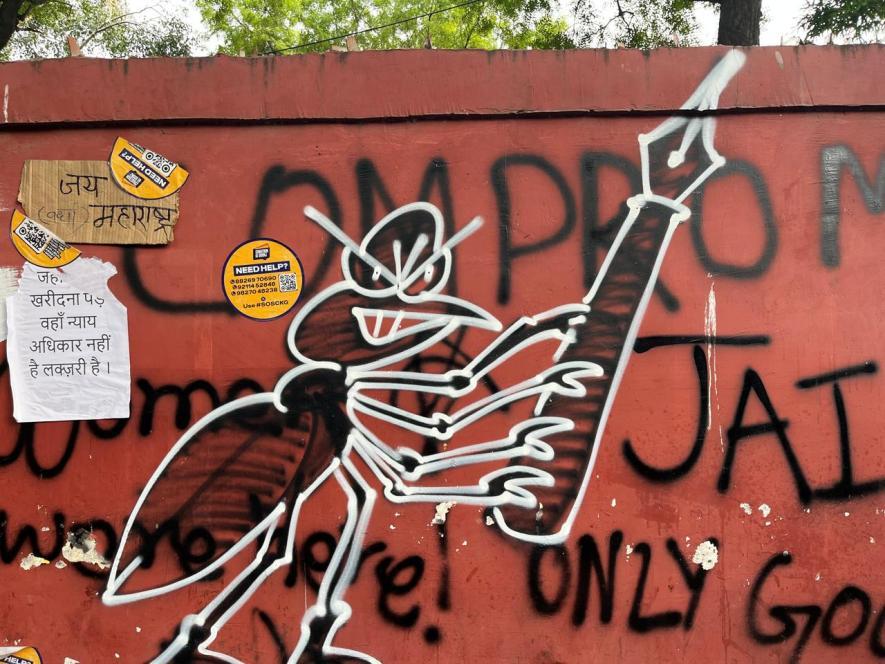
The resignation of Union Education Minister Dharmendra Pradhan marks more than a political development. Whether viewed as a governmental response, a strategic decision, or the outcome of sustained public pressure, it symbolises a new phase in Indian politics: the arrival of Gen-Z as a digitally networked political force.
The movement popularly associated with the “Cockroach Janta Party,” founded by Abhijeet Dipke, an Ambedkarite from Maharashtra, alongside climate activist Sonam Wangchuk and thousands of young Indians, demonstrated that political mobilisation today is shaped as much by Instagram reels and mobile-phone videos, as by speeches or newspaper headlines.
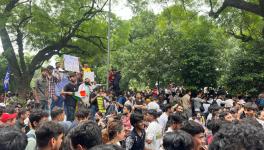
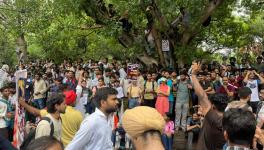
For decades, political communication in India flowed top-down through rallies, television, and press conferences. Social media has now become the primary arena where narratives are created and contested, as the recent youth-led movement at Jantar Mantar illustrates.
One defining moment came when Sonam Wangchuk, on a hunger strike, was forcibly shifted to Safdarjung Hospital. Videos of the incident, filmed on mobile phones and circulated within minutes, travelled across Instagram, YouTube, X, and WhatsApp. Instead of suppressing the movement, these images intensified public attention – every attempt to restrict visibility generated even greater circulation.
Young people who had never visited Delhi or joined a political demonstration suddenly felt emotionally connected to events unfolding hundreds of kilometres away. This reflects what sociologist Manuel Castells called the emergence of a network society, where power flows through digital networks rather than traditional institutions. Political communication is no longer controlled solely by governments or newspaper editors; every protester carrying a smartphone can become a reporter, archivist, and broadcaster, with information travelling horizontally across citizens instead of through institutional gatekeepers.
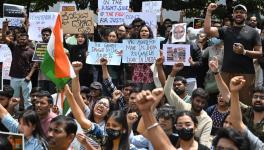
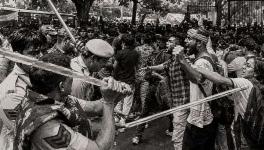
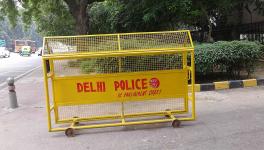
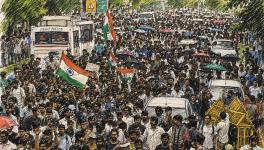
The march from Jantar Mantar toward Parliament on July 20, further demonstrated this new reality. Participants documented the protest continuously, recording the hostility and brutality of Delhi Police; several people were severely injured by lathi charges, tear gas, and pellet guns. Even amid reported attempts to disrupt communication by deploying jammers, visual documentation continued to circulate. The movement’s narrative was thus shaped not by institutional media but by thousands of decentralised creators producing short videos in real time.
Constitution as Placard: Ambedkar’s Return to Streets
If one image recurred across this movement’s thousands of decentralised videos, it was not a party flag or a leader’s portrait in the conventional sense – it was the face of Dr. B.R. Ambedkar. When the organisers called for the march to Parliament, they explicitly asked participants to carry the national flag and a copy of the Constitution, or photographs of Baba Saheb, Mahatma Gandhi, and Bhagat Singh, while deliberately asking people to leave party flags at home. That instruction was not incidental. It was a conscious attempt to frame a youth-led protest against examination irregularities and demands for ministerial accountability as a defence of constitutional values rather than a partisan campaign.
Yet, even if the organisers had not explicitly called on participants to carry Ambedkar’s portrait, it is likely that many would have done so voluntarily, as has been witnessed repeatedly in anti-caste and constitutional movements across India.
Significantly, many public figures and celebrities who expressed solidarity with the protest chose to accompany their statements with images of Ambedkar more often than those of any other historical figure. In doing so, Babasaheb emerged as the central visual and moral symbol through which the movement articulated its claims to justice, equality, and constitutional democracy.
The movement’s own founder embodied this choice. When Dipke arrived in Delhi to join the agitation, he held aloft a copy of Ambedkar’s autobiography as supporters and security personnel swarmed him. After he was later attacked with ink, he captioned the video of the incident “Blue is my colour” – a direct reference to the colour long associated with the Ambedkarite movement.
In a protest otherwise driven by memes, irony, and Gen-Z humour, this was a deliberate, almost solemn gesture: an appeal to the moral authority of the man who authored India’s Constitution rather than to any contemporary politician.
This is not a new phenomenon so much as an intensification of one. Ambedkar’s image has, for years, been the point around which very different protest movements converge and contest meaning – raised by demonstrators arguing that government policy undermines constitutional guarantees of equality, even as ruling-party leaders separately invoke his legacy to argue the opposite. Dalit rights organisations have repeatedly taken to the streets specifically over perceived insults to Ambedkar, treating any slight to him as inseparable from an attack on the Constitution itself.
What makes Ambedkar unusual among India’s political icons is precisely this: he is claimed, simultaneously and sincerely, by Dalit-rights activists, secular liberals, student unions, and the Hindu nationalist right alike, each insisting they are his true ideological heirs.
What is new is the register in which that claim is now being made. Ambedkar’s image travels today not primarily as a printed poster carried at a rally, but as a recurring visual motif across Instagram carousels and meme templates – blue-tinted graphics, quotes from his book, Annihilation of Caste, stitched over protest footage.
In an Instagram-fied movement built on remix and reshareability, Ambedkar functions less like a historical figure being remembered and more like an always-available visual shorthand for a single claim: that the protesters, not the State, are upholding constitutional democracy. A teenager who has never read the Constituent Assembly debates can still, in one swipe, absorb and re-circulate that claim.
This also explains why Ambedkar rather than any living leader became the movement’s unifying symbol. A living politician divides; a constitutional founding figure, invoked in the language of rights and equality rather than party allegiance, allows a Dalit student, an ‘upper caste’ engineering aspirant, and an opposition sympathiser to stand under the same image without appearing to endorse any single party.
In a protest culture wary of being captured by “political or organisational flags,” , as the protest organisers themselves put it, Ambedkar offered something rarer than a mascot — a shared, contestable, but broadly legitimate language of justice that could travel across an otherwise fragmented, algorithm-driven crowd.
Participation, Not Just Broadcast
Equally significant was the architecture of social media itself. Media scholar Henry Jenkins argues that contemporary audiences are no longer passive consumers or bystanders but active participants who create, remix, and circulate content. Thousands of users transformed protest footage into reels, memes, and explainers, allowing the movement to travel far beyond Delhi.
Instagram’s recommendation algorithm rewarded emotionally engaging, shareable content, enabling ordinary citizens – not media organisations – to shape the public conversation. Much of that humour was self-aware, turning the government’s own dismissive language about “cockroaches” into a badge of identity rather than an insult.
Alongside the Ambedkar’s iconography, this ironic, hyper-referential Gen-Z voice travelled to Mumbai, Indore, Udaipur, and Hyderabad as easily as it did within Delhi. This digital momentum also compelled public figures to respond. Celebrities who usually avoid contentious politics found themselves unable to ignore a conversation dominating social feeds – in the platform economy, silence itself becomes visible.
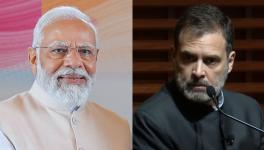
One of the most interesting aspects of this episode was the government’s own adaptation to Gen-Z’s communication style. Prime Minister Narendra Modi’s selfie-mode Instagram reel, addressing viewers as “friends” instead of his familiar “Mitron,” reflected an attempt to speak in the vocabulary of younger audiences, adopting the aesthetics of influencer culture. The reel drew more than 393 million views – his second most-viewed ever – and was the only one with shares, reposts, comments, and likes numbering in the millions. Political leadership now recognises that legitimacy increasingly depends on succeeding within digital culture, not merely dominating traditional media.
Beyond a Single campaign
This episode represents something larger than a single campaign or resignation. Media scholar Zeynep Tufekci argues that digital platforms have transformed how protests emerge and attract attention, while W. Lance Bennett and Alexandra Segerberg describe such mobilisation as connective action – driven less by formal organisations than by personalised digital participation. Individuals did not wait for parties or institutions to organise them; they connected through hashtags, reels, and peer-to-peer networks, producing a decentralised yet coordinated public sphere.
Of course, digital mobilisation has limits. Algorithms reward outrage alongside evidence, misinformation spreads as fast as verified information, and viral visibility does not automatically produce structural change. The contest over Ambedkar’s legacy is itself a reminder of this: a symbol powerful enough to unite a movement is also powerful enough to be claimed by rival camps for opposite ends, and a single portrait cannot settle, on its own, what “constitutional values” ought to mean in practice.
Yet, dismissing such movements as mere “internet activism” misses a larger transformation. The generation raised on Instagram and YouTube has learned not only to consume content but to organise through it – and, in reaching for Ambedkar rather than any party symbol, it has also shown a striking instinct to anchor its politics in the vocabulary of constitutional justice rather than personality.
The smartphone has become a political instrument, the algorithm an unexpected arena where public opinion is negotiated, and Ambedkar’s face an enduring reference point translated anew for a scrolling, remixing generation. If the Arab Spring is remembered as the ‘Twitter revolution’, this movement may well be remembered as India’s first major ‘Instagram-reels protest’– one that shows how digital culture, and an old constitutional icon reborn in blue-tinted reels, can together translate into tangible political consequences.
The writer is a researcher specialising in caste and cinema. The views are personal.
Get the latest reports & analysis with people's perspective on Protests, movements & deep analytical videos, discussions of the current affairs in your Telegram app. Subscribe to NewsClick's Telegram channel & get Real-Time updates on stories, as they get published on our website.