





Propaganda, Muslims and New Workplace Exclusion
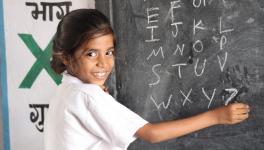
Representational image
“Where the mind is without fear and the head is held high…” wrote Rabindranath Tagore, envisioning a society in which dignity was not conditional, and participation did not depend on identity. That vision was foundational to the idea of equal citizenship.
Today, it stands under strain. What confronts us is not a single moment of breakdown, but a layered and persistent process of exclusion. At times, it is explicit; a school admission quietly denied, a job application rejected without reason, a house refused on the basis of a name. At other times, it is more subtle; a hesitation that cannot be documented, a discomfort that is never articulated, a decision that appears neutral but is not.
These are not isolated incidents. They form a pattern.
This pattern extends across stages of life. It begins in the education system, where access narrows unevenly. It continues into the labour market, where entry into stable employment remains constrained. It shapes where people live, where they work, and how they are seen. What appears as separate moments of denial is, in fact, a connected structure.
Crucially, this structure is not sustained by material conditions alone. It is reinforced by a changing language of public discourse. Narratives such as “love jihad” and “corporate jihad” do more than circulate as political slogans. They attach suspicion to identity. They make exclusion, whether explicit or implicit, appear reasonable.
Once this shift occurs, discrimination no longer needs to be justified. It becomes normalised.
The story, therefore, is not about isolated acts of prejudice. It is about a continuum of disadvantage, one that runs from the classroom to the workplace, and is sustained at every stage by narratives that convert identity into doubt.
Discrimination in Education
At the primary level, Muslim children account for roughly 16 per cent of enrolment, broadly in line with their population share. But this presence steadily declines as education progresses. By the secondary stage, it falls to about 14 per cent, and at higher secondary, to nearly 12 per cent. The transition to higher education reveals a sharper contraction. Muslims constitute less than 5 per cent of total university enrolment, according to AISHE-based estimates, despite being about 14 per cent of the population.
Completion rates reinforce this pattern. NSS-based estimates suggest that only about 25 per cent of Muslims aged 17 and above complete matriculation, significantly lower than the national average. This is not an incidental outcome. It reflects structural constraints like poverty, uneven school access, residential segregation, and differential treatment within institutions.
When public discourse repeatedly associates a community with suspicion or threat, it shapes expectations within institutions as well. Teachers, peers, administrators none operate in isolation from the wider social climate. Bias does not need to be explicit to be effective. It works well even through lowered expectations, reduced encouragement, and subtle distancing. Over time, these experiences accumulate, reinforcing disengagement and dropout.
By the time individuals enter the labour market, the pathway has already narrowed. But even for those who persist, the barriers do not disappear. They change form.
Exclusion from Labour Market
The India Discrimination Report 2022 provides a clear indication of this shift. Only 15.6 per cent of urban Muslims are in regular salaried employment, compared to 23.3 per cent among non-Muslims. More importantly, the report finds that 68.3 per cent of this gap cannot be explained by differences in education, experience, or skills. It points directly to discrimination in access to employment.
Wage data reveals that the inequality continues after entry. In regular employment, non-Muslims earn about 1.49 times the wages of Muslims, even in comparable positions. This is not simply a difference in productivity; it reflects differential valuation.
These outcomes are consistent with earlier findings. The Sachar Committee Report (2006) showed that Muslims accounted for only 2.5 per cent of government jobs, despite being over 13 per cent of the population. In elite services, their presence was extremely limited; about 3 per cent in the IAS, 1.8 per cent in the IFS, and 4 per cent in the IPS. The Kundu Committee (2014) found that there had been minimal improvement in access to organised sector employment, with Muslims continuing to be concentrated in informal and self-employed work.
More recent data from the Periodic Labour Force Survey (PLFS) confirms this pattern. Muslims remain overrepresented in self-employment and informal occupations, and underrepresented in regular salaried jobs. In fact, estimates suggest that their share in stable employment has declined in recent years, while dependence on low-income, insecure work has increased.
This structure of vulnerability becomes sharply visible during economic shocks. During the COVID-19 period, unemployment rates among Muslims rose more steeply than for many other groups, reflecting their concentration in fragile sectors without protection.
At this point, the role of narratives becomes critical. Labour markets do not operate solely on formal criteria. Decisions are shaped by perception; who appears reliable, who fits, who is seen as “safe.” These judgements are rarely documented, but they are decisive.
Normalisation of Exclusion
When narratives such as “love jihad” or “corporate jihad” circulate repeatedly, they do more than create noise. They create a cognitive frame. They associate Muslim identity with risk, intent, and hidden agendas. Over time, this association becomes normalised.
This is how bias intensifies. A recruiter does not explicitly reject a candidate because of identity. But hesitation enters the process. A resume may not be shortlisted. An interview may not convert into an offer. A promotion may be deferred. Each decision appears individually rational. Collectively, they reproduce exclusion.
Cinema plays an important role in reinforcing this process. It constructs social memory and expectation. When certain communities are repeatedly depicted through narratives of suspicion or threat, these representations do not remain confined to fiction. They inform how individuals are perceived in real life. The boundary between representation and reality becomes blurred.
As these narratives intensify, prejudice becomes easier to justify. Suspicion begins to appear reasonable. Bias acquires legitimacy. Discrimination no longer needs to be defended. It becomes embedded in common sense.
Educational disadvantage reduces access to higher-level opportunities. Labour market discrimination limits entry into secure employment. Wage inequality sustains economic vulnerability. Narratives intensify suspicion. Cultural representation normalises that suspicion. Each layer reinforces the other. The result is a structure in which Muslims are persistently channelled away from stable, dignified employment.
This is not exclusion at a single point. It is exclusion across the life cycle.
The consequences do not end with questions of fairness; they reshape the economy itself. When a section of the population is persistently filtered out of stable and productive employment, the loss is not marginal. It is systemic. Skills remain unused, aspirations are blunted, and entire segments of human capability are left outside the circuits of growth. An economy that excludes cannot fully expand. Productivity weakens, inequality sharpens, and growth becomes increasingly narrow, dependent on a shrinking base rather than a broad and inclusive one.
Character of Society
However, deeper concern cannot be contained within economics alone. It is about the character of society. What does it mean when access to work, the most basic route to dignity and participation, becomes conditional on identity? When entry into employment is shaped not by competence but by perception? When suspicion becomes an unspoken criterion, operating quietly but decisively? At that point, exclusion is no longer episodic. It becomes normalised.
As narratives intensify and circulate unchecked, they do not remain at the level of discourse. They enter everyday judgement. They shape hiring decisions, workplace interactions, and institutional behaviour. Data then begins to reflect what perception has already produced. Structural exclusion appears as an outcome, but it is sustained by a prior climate of distrust.
This creates a widening rupture between constitutional promise and lived reality. The Constitution guarantees equality, dignity, and equal opportunity. But when identity begins to mediate access to work, these guarantees are quietly eroded, not through formal withdrawal, but through everyday practice.
The evidence is already present, in numbers that show persistent underrepresentation, and in experiences that reveal silent barriers. The question is not whether exclusion exists. The question is whether it is recognised for what it is, a system sustained by both structure and narrative.
When exclusion becomes a moral failure, what is at stake is not only the position of one community within the labour market. It is the integrity of the idea of equal citizenship, the principle that every individual, regardless of identity, has an equal claim to dignity, opportunity, and participation in the life of the nation.
The writer is Associate Professor at Zakir Husain Delhi College, University of Delhi. The views are personal.
Get the latest reports & analysis with people's perspective on Protests, movements & deep analytical videos, discussions of the current affairs in your Telegram app. Subscribe to NewsClick's Telegram channel & get Real-Time updates on stories, as they get published on our website.