





An Open Letter to Leader of the Opposition
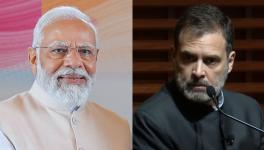
Dear Mr Rahul Gandhi,
I write this letter to you as the Leader of the Opposition in Lok Sabha.
Over the past few years, I have repeatedly argued that the Opposition must move beyond the arithmetic of electoral alliances, rebuild political organisation, create genuine solidarity among Opposition parties, offer a coherent political alternative, and recognise that India’s federal diversity requires political battles to be understood and fought state by state. I continue to believe all of this, but there is a question that logically precedes these questions of electoral strategy: What democratic space does the Opposition propose to contest for power?
An Opposition cannot concern itself only with winning elections while the institutional conditions that make meaningful electoral competition possible are progressively weakened. Elections are indispensable to democracy, but elections alone do not make a democracy. A free press, independent universities, functioning courts, credible electoral institutions, civil society organisations, trade unions, student movements, writers, academics and ordinary citizens willing to question authority constitute the democratic infrastructure within which elections acquire meaning.
This is why the defence of an independent voice cannot be somebody else’s battle. The test of commitment to free speech is not whether we defend speech with which we agree. It is whether we defend the right to speak when the speaker is inconvenient. For the Opposition, defending the institutions through which governments are questioned is not an act of political generosity. It is part of defending the democratic terrain on which the Opposition itself stands.
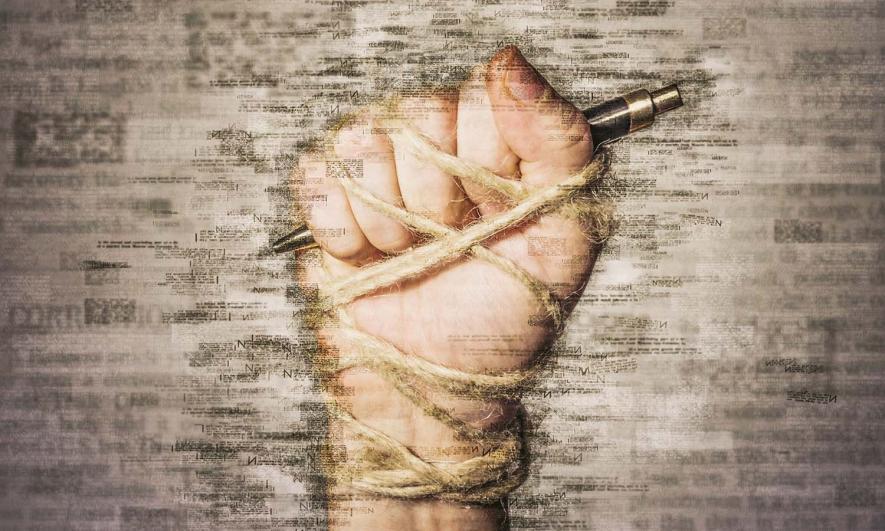
We tend to imagine censorship in its crudest form, a government bans a publication, prohibits a book or imprisons a journalist. However, the erosion of effective freedom can be considerably more complicated. A publication need not formally be prohibited if the economic and legal costs of functioning become increasingly difficult to bear.
A journalist need not receive an explicit instruction to remain silent if repeated litigation, interrogation, criminal proceedings or uncertainty alters the calculation involved in pursuing a story. An academic need not be told what to write if professional incentives create sufficient reasons for caution. A citizen need not formally lose freedom of expression if the perceived consequences of speaking make silence appear safer.
The existence of an investigation by itself may not always establish an intention to suppress journalism. The democratic concern arises when the cumulative costs associated with scrutiny of power become sufficiently high to affect the capacity or willingness to undertake that scrutiny.
Reporters Without Borders places India 157th among 180 countries in its 2026 World Press Freedom Index, down from 151 in 2025. No international index should be treated as an infallible measure of something as complex as press freedom. Yet, the relevant democratic test remains whether journalists retain the institutional and economic capacity to ask difficult questions of those who exercise power.
Consider Dainik Bhaskar, In July 2021, the Income Tax Department conducted searches at premises connected with the Dainik Bhaskar Group across several states. The authorities said the searches concerned alleged tax evasion and subsequently made substantial allegations concerning the group’s financial transactions. Dainik Bhaskar, which had reported extensively on deaths and administrative failures during the devastating second wave of Covid-19, argued that the searches were connected to its critical journalism. The Income Tax Department rejected allegations that its officials had interfered with editorial functioning, and the government denied interference in the work of investigating agencies. The episode generated an important public question about the vulnerability of media organisations to the exercise of investigative power.
In February 2024, the Ministry of Information and Broadcasting directed The Caravan to remove an article reporting allegations of civilian abuse, torture and deaths involving Army personnel in Jammu and Kashmir. The Caravan said it stood by its reporting and would challenge the order.
In May 2025, during the India-Pakistan military confrontation, access to The Wire was blocked in India pursuant to a government order. The block was subsequently lifted after the publication removed an article concerning the conflict, under protest.
Later that year, The Wire’s founding editor Siddharth Varadarajan faced an Assam Police case under Section 152 of the Bharatiya Nyaya Sanhita arising from an article on Operation Sindoor. The Supreme Court granted him interim protection from arrest. In a subsequent FIR, the Court also protected Varadarajan, consulting editor Karan Thapar and members of the Foundation for Independent Journalism from coercive action, subject to their cooperation with the investigation.
Tax investigations, content-removal orders, website blocking and criminal proceedings are distinct exercises of State power. A democracy must permit the legitimate exercise of all such powers where the law allows it. It must simultaneously ask whether sufficient institutional safeguards exist to ensure that their exercise does not produce a chilling effect on journalism. This is not a distinction between law and freedom. It is a question about how the rule of law protects freedom while permitting lawful investigation.
NewsClick’s difficulties began with an Economic Offences Wing FIR in 2020 and Enforcement Directorate proceedings arising from it, including searches in 2021. A separate and particularly consequential development came in October 2023. The Delhi Police Special Cell conducted searches at more than 80 locations linked to NewsClick, its employees and contributors in connection with a case under the Unlawful Activities (Prevention) Act.
The consequences for NewsClick were not confined to the legal proceedings. In the period that followed, its ability to sustain the kind of resource-intensive reporting for which it had been known, particularly ground reporting on workers, farmers and people’s movements, was severely diminished. In May 2024, the Supreme Court declared NewsClick’s Editor-in Chief Prabir Purkayastha’s arrest and subsequent remand in the UAPA case invalid because the grounds of arrest had not been properly communicated to him before his liberty was curtailed, and ordered his release. The Court’s ruling concerned the legality of the arrest and remand; it did not amount to a quashing of the underlying UAPA case.
Two years later, in June 2026, the Delhi High Court quashed the separate 2020 EOW FIR and the Enforcement Directorate proceedings arising from it. The High Court found that the ingredients of the offences alleged in the EOW FIR were not made out and described continuation of that FIR as a “gross abuse of the process of law”. Once the predicate offence was quashed, the consequent ED proceedings were also quashed.
A judicial order can terminate proceedings found unsustainable, but it cannot automatically restore institutional capacity lost during the intervening years. It cannot recreate a reporting network, restore opportunities foregone or reverse every economic consequence of prolonged uncertainty. A democratic system concerned with both accountability and liberty must take those consequences seriously.
Independent journalism produces a positive externality. The person who pays for journalism is not its only beneficiary. A worker benefits when somebody documents unsafe working conditions. A voter benefits when official claims are investigated. A taxpayer benefits when corruption is exposed. A citizen benefits when government statistics are interrogated. The social value of independent journalism, therefore, exceeds the private revenue that journalism can capture.
That creates a structural vulnerability. Ground reporting is expensive. Sending reporters to factory gates, villages, university campuses, workers’ demonstrations, farmers’ movements, slums and courtrooms requires salaries, travel, time and institutional support. Yet such reporting does not necessarily produce revenue commensurate with its social value. When the economic capacity to undertake it disappears, society loses not only another publication. It loses part of its capacity to know itself.
This brings me to the principal reason for writing to you.
Indian political parties tend to defend democratic freedoms reactively. A journalist faces a case. A university comes under pressure. A protest is restricted. A civil society organisation faces action. Those directly affected protest. Statements are issued. Some Opposition leaders intervene. Parliament may take notice. Then public attention moves elsewhere. This is inadequate because political power is distributed unequally.
A small publication does not possess the resources of a national political party. An individual journalist does not have a parliamentary research department. An academic cannot ask a parliamentary question. An ordinary citizen facing legal action may not possess the connections necessary even to bring that action to national attention. The Opposition possesses Members of Parliament, legislators, lawyers, research departments, party organisations, access to parliamentary procedures and public visibility. It should use them.
There should be an institutional mechanism within the Opposition that tracks serious threats to press freedom, academic freedom, civil liberties and the autonomy of democratic institutions. Where circumstances warrant it, MPs should raise such cases without waiting for those affected to approach them. Parliamentary questions can be asked. Relevant committees can be approached. Where laws create excessive scope for arbitrary action, legislative reform can be proposed.
In other words, democratic vigilance must become institutional rather than episodic. That is what I mean when I ask the Opposition to take suo motu political cognisance of threats to democratic freedom.
I address this letter to you because you occupy the office of Leader of the Opposition in the Lok Sabha. Where the Congress is the principal Opposition, it must act. Where regional parties occupy that position, the responsibility belongs equally to them. And where Opposition parties govern, their commitment to democratic freedom must be judged not by how vigorously they defend critics of the Union government, but also by how they treat critics of their own governments.
Mr Gandhi, you have repeatedly invoked the Constitution and spoken about the defence of India’s democratic institutions. I ask you to carry that argument one step further. The Opposition cannot expect journalists to expose governments, academics to interrogate policy, citizens to protest injustice and independent publications to carry uncomfortable truths, and then leave those individuals and institutions largely to themselves when the costs of doing so arrive.
What would happen if democratic institutions continue to exist formally while their effective capacity to perform their democratic functions diminishes? Elections continue. Newspapers publish. Courts hear cases. Parliament sits. Yet democracy resides not merely in the existence of these institutions, but in what they remain capable of doing. Those who ask citizens to defend democracy must, in turn, defend the citizens and institutions that make democracy audible.
When an independent voice is silenced, the loss does not belong only to the person who was speaking. The silence belongs to all of us.
Democratically yours,
The writer is Associate Professor at Zakir Husain Delhi College, University of Delhi. The views are personal.
Get the latest reports & analysis with people's perspective on Protests, movements & deep analytical videos, discussions of the current affairs in your Telegram app. Subscribe to NewsClick's Telegram channel & get Real-Time updates on stories, as they get published on our website.