





Modi Vs. Rahul Gandhi: Contrast in Leadership
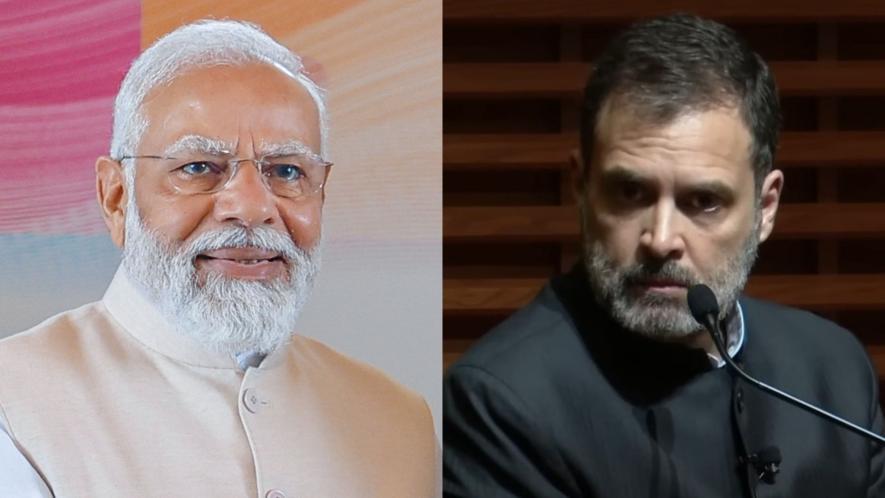
On July 31, Prime Minister Narendra Modi released a video forgiving the students who had abused him during the Cockroach Janta Party (CJP) protests. He called them "misguided children," said their behaviour was a "cultural shock," and appealed to society to accept his forgiveness rather than pursue them through courts.
The gesture was framed as compassion. It was, in fact, a masterclass in patriarchal condescension: the father figure who absorbs the insult of his unruly offspring and magnanimously spares them the rod. Modi did not engage with what the students were angry about, the NEET paper leak, the resignation of an education minister, months of institutional failure. He engaged with their tone, scolded their "daughters" for using foul language, and folded a political crisis into a domestic morality tale.
This is patriarchal leadership in its purest form: protection through discipline, address without dialogue, forgiveness as the ultimate assertion of hierarchy. It is also, following Ashis Nandy's The Intimate Enemy, a script with a colonial genealogy. Nandy argued that the hypermasculinity performed by many post-colonial Indian leaders was itself an inheritance, colonised men internalising a Victorian ideal of virility to compensate for the "effeminacy" the coloniser had ascribed to them.
Modi's leadership, built on militarised borders, bulldozer justice, and unilateral monologue rather than press conferences, sits comfortably within that inheritance. It is also fused with Hindu nationalist ideology, itself embedded in Brahmanical patriarchy, which binds caste hierarchy to rigid gender roles and produces its ideal leader as disciplined, dominant, and unaccountable.
Congress leader Rahul Gandhi has spent the past several years building a different vocabulary. "Muhabbat ki Dukaan," the ‘shop of love’, is his answer to what he calls a marketplace of hatred. The Bharat Jodo Yatra was built on proximity rather than spectacle, walking beside citizens instead of addressing them from a stage. During the CJP-led student protests, Gandhi did not attempt to lead the movement. He showed up, listened, and let students set the terms, an approach best described through María Lugones's concept of the coloniality of gender, which reads rigid, hierarchical gender arrangements not as authentic tradition but as a colonial imposition.
Rahul Gandhi's willingness to be led, to occupy a role coded feminine within India's political grammar, is a direct unsettling of that inherited hierarchy. It is also precisely what has earned him the epithet "Pappu," (useless), a gendered accusation that he has failed at manhood.
But it would be a mistake to read this contrast as simply a matter of persona, as if Indian voters are choosing between two performances of masculinity in a vacuum. The same contrast existed in 2014 and 2019, and it was settled decisively in Modi's favour. What has changed is not Gandhi's style but the ground beneath Modi's.
Years of unresolved unemployment, persistent inflation, and unaddressed corruption have eroded the substantive credibility that once made Modi's toughness feel earned rather than performed. His hyper-nationalism and communal appeals have not disappeared, but have become less effective as a substitute for delivery.
This is a war to win hearts and minds, and it is only in this context of declining material appeal that the affective contrast between Rahul Gandhi and Modi has become politically legible. Affect alone did not move the needle in 2019. It may be moving it now, because the strongman's other claims --prosperity, security, control-- are wearing thin.
Read this way, Modi's forgiveness video is not a sign of strength but of a leader reaching for the only register he has left when substance falters: paternal authority. Calling protesting students "children" who must be "shown the right path" is not compassion, it is a refusal to treat their grievances as political rather than developmental.
Rahul Gandhi's politics of affect does not fill the gap Modi's governance failures have opened. But it does offer India's youth something the strongman script cannot: the sense of being heard rather than managed. Whether that is enough to translate into votes remains uncertain. What is clear is that the terms of the contest, for the first time in a decade, are no longer being set entirely on Modi's ground.
Amrita Datta is a Berlin-based migration scholar. Arani Basu is a media sociologist in Germany. The views are personal.
Get the latest reports & analysis with people's perspective on Protests, movements & deep analytical videos, discussions of the current affairs in your Telegram app. Subscribe to NewsClick's Telegram channel & get Real-Time updates on stories, as they get published on our website.