





Memes to Mobilisation: Political Awakening of India’s Youth
The Constitution of India grants its citizens the right to freedom of speech and expression, the right to assemble peacefully and the right to participate in public life. But these rights are not self-executing guarantees, they remain meaningful only when citizens care to exercise them. Rights survive only when citizens are able to defend them. Institutional accountability exists only when people demand it. Briefly, Institutions function only as well as the society makes them function.
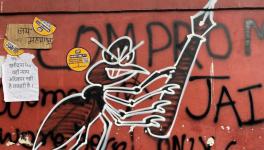
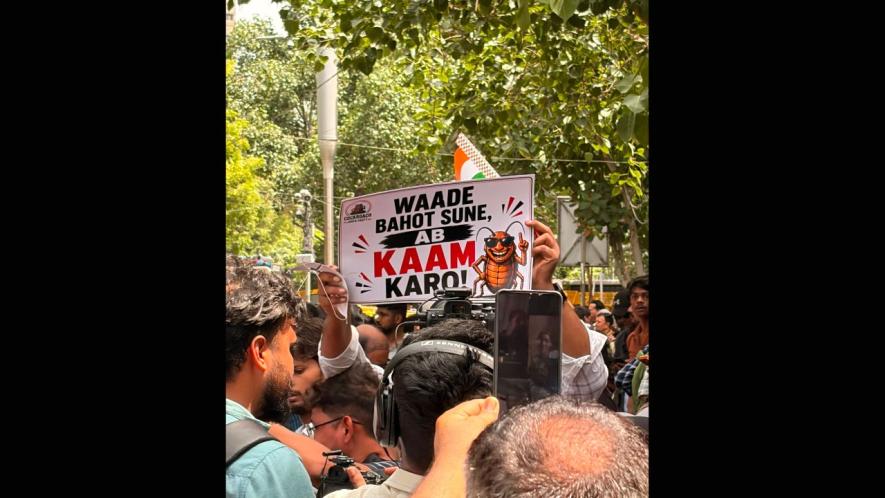
The rapid spread of the metaphor ‘cockroach’ reflected widespread anxieties about unemployment, examination irregularities, shrinking opportunities and a growing sense that public institutions were becoming increasingly indifferent to the concerns of ordinary citizens. The protest at Jantar Mantar suggests that those anxieties have now found collective expression.
Many observers are asking whether the movement will survive? Will there be a second protest? Will the crowds return a second time? Can the organisation sustain itself? Will it evolve into a political force or disappear as quickly as it emerged? These are reasonable questions. Yet they may not be the most important ones.
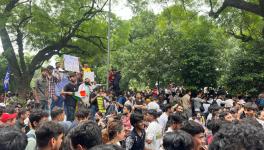
Movements rise and fall. The true significance of this gathering lies in the fact that it is for the first time in many years that a large number of young Indians assembled. They assembled not because they were mobilised by a political party or by a charismatic leader, nor because they were instructed by the opposition leaders. They gathered because they recognised that the challenges they face are not individual failures but collective experiences.
For years, youth have been trained to interpret their struggles as personal shortcomings. If jobs are scarce, they must acquire more skills. If examinations are cancelled, delayed or compromised, they must simply prepare harder and wait longer. If recruitment processes become uncertain, they must remain patient, persevere or find alternatives to dignified employment. Structural failures are routinely transformed into individual responsibilities. As a result, this generation has been a compelled to internalise collective failures as personal inadequacies.
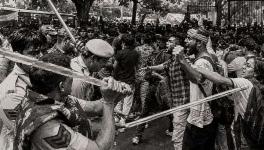
What happened at Jantar Mantar on June 6, challenged this narrative.
Young people from different regions, communities and backgrounds came together around a shared understanding that their difficulties are not isolated incidents. They recognised that unemployment, uncertainty and institutional neglect are social realities affecting millions.
What began as an internet phenomenon, ultimately found expression in a physical gathering of citizens asserting their demands. The language of the movement may have emerged from meme culture. The symbol of the cockroach may have travelled through social media. Yet the concerns being expressed were rooted firmly in the material world of denied aspirations, failed examinations, lack of employment, denial of public accountability. It is a conscious attempt by our youth to secure their future.
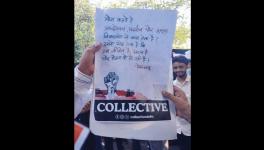
Most importantly, the movement succeeded in translating symbolic politics into a tangible democratic demand. The meme became a vehicle through which thousands of young citizens articulated a clear political objective and demanded accountability from those exercising public authority.
The protest built a bridge between the digital and the real. We may be witnessing a transformation in the location of democratic politics itself. Where collective consciousness is increasingly forged online, but it continues to seek validation through public assembly and collective action. The medium may have changed from pamphlets and student unions to hashtags and memes, yet the democratic impulse remains remarkably familiar, ordinary citizens coming together to insist that power answer to the people.
This is why the gathering deserves recognition irrespective of what happens next.
For too long, many Indians have assumed that the defence of democracy is primarily the responsibility of opposition parties, courts, journalists or civil society organisations. All of these institutions matter. Yet democracy cannot ultimately be outsourced.
No Opposition party can substitute for an engaged citizenry. No court can preserve democratic freedoms if citizens cease to value them. No institution can remain accountable if society stops demanding accountability.
The young people who gathered at Jantar Mantar reminded the country of this fundamental truth.
Whether the movement gathers momentum remains uncertain. Perhaps the crowds will return in greater numbers. Perhaps they will not. Perhaps the organisation that convened the protest will grow. Perhaps it will fade. No one can know.
But something important has already happened.
A generation frequently caricatured as distracted, self-centred and politically disengaged, demonstrated an ability to organise, mobilise and act collectively. Young people stood beside one another and asserted that their concerns matter. They demonstrated that they are not willing to wait indefinitely for others to defend their interests or speak on their behalf.
That achievement should not be underestimated.
At a moment when cynicism often appears easier than hope, they chose participation over passivity. They chose solidarity over isolation. They chose citizenship over resignation. For now, that is enough. Not because the struggle has been won. Not because the future is certain. But because India's youth have shown that they remain conscious of their rights, aware of their responsibilities and willing to stand up for one another.
Democracy is ultimately sustained not by constitutions alone, but by citizens who choose to act as citizens. The young people at Delhi’s Jantar Mantar did precisely that. And for that, they deserve to be congratulated.
The writer is Associate Professor at Zakir Husain Delhi College, University of Delhi. The views are personal.
Get the latest reports & analysis with people's perspective on Protests, movements & deep analytical videos, discussions of the current affairs in your Telegram app. Subscribe to NewsClick's Telegram channel & get Real-Time updates on stories, as they get published on our website.