





The Left and Struggle Against Neo-Fascism in India
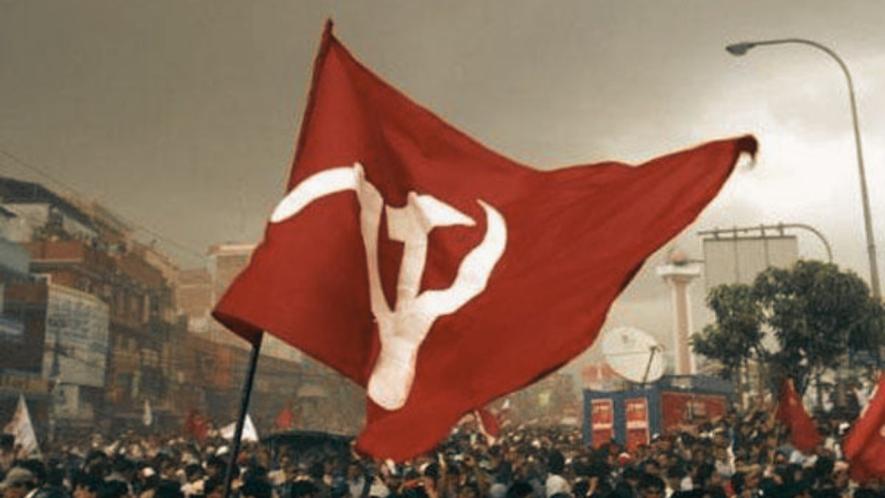
Representational image
The results of the 2026 Assembly elections in five states have triggered a familiar spectacle in sections of the mainstream media, especially those components beholden to the neo-fascist dispensation. An electoral setback to the Left has led to triumphalist declarations about the incontestability of the ideological hegemony of neo-fascism in India.
Such declarations are not only politically shallow; these are dangerous. The danger arises from the fact that much of the non-Left Opposition has only rallied against neo-fascism while remaining fundamentally betrothed to the neoliberal project. This creates a contradiction at the heart of contemporary anti-neo-fascist politics in India: while the non-Left Opposition often resists the autocratic political manoeuvres of neo-fascism, it remains broadly aligned with the neoliberal economic logic that continuously reproduces the premises of neo-fascism.
Since 2014, the neo-fascist dispensation has systematically dismantled almost all constitutional institutions that were set up in India after 1947 to uphold sovereignty, democracy, secularism, social justice, gender justice, federalism, scientific temper and liberties. This dismantling has not always occurred through formal constitutional rupture. More often, it has proceeded through the neo-fascist tactic of institutional hollowing out, the conversion of autonomous bodies into executive appendages, the weakening of parliamentary scrutiny, the intimidation or co-option of sections of the media, and the gradual normalisation of surveillance, communal polarisation and executive overreach.
The setting up of these institutions after 1947, notwithstanding the evident gaps between promise and performance, was a concession wrung out of the ruling classes by the working people due to the latter's stellar role in political decolonisation and the democratic movement thereafter.
The post-colonial Indian republic was, therefore, not a gift bestowed benevolently from above, but the outcome of intense anti-colonial struggles, workers’ movements, peasant mobilisations, anti-caste and gender justice assertions, and democratic agitations. Whatever democratic space existed within the republic emerged from these historical bottom-up mobilisations.
The current dismantling of constitutional institutions furthers the neoliberal project by strengthening the hegemony of neo-fascism over the neoliberal order. The travails of the non-Left Opposition stem principally from their chimeric quest for an “inclusive” neoliberalism that dispenses with neo-fascism. For instance, the non-Left Opposition does not fundamentally resist the economic policy trajectory of the neo-fascist dispensation but only its pace, its intensity, the unprecedented narrowing of the scope of primitive accumulation within the components of monopoly capital etc.
Therefore, the non-Left Opposition is mostly an onlooker when the working people resist the super-exploitation presided over by the neo-fascist dispensation, most recently in the struggles of workers in and around the National Capital Region.
This is precisely why the non-Left Opposition frequently appears politically reactive rather than transformative. It seeks to "moderate" neo-liberalism rather than contest or transcend it. Consequently, it often fails to articulate a structural critique of unemployment, privatisation, precarity, agrarian distress and widening inequality. Yet these material crises constitute the very terrain upon which neo-fascism expands itself through its divisive politics.
Likewise, the non-Left Opposition is not vocal about the neo-fascist compromise of India's strategic autonomy but merely critiques the most egregiously abject gestures of genuflection that this compromise has entailed. In practice, this has meant the gradual accommodation of India within the architecture of US-centred international finance capital notwithstanding empty gestures towards "cultural decolonisation". The weakening of independent foreign policy positions, and the consequent deepening strategic dependence on US imperialism, are characteristic of India's neo-fascism.
This quest for an inclusive neoliberalism is chimeric since the very unfolding of the neoliberal project gives rise to neo-fascism. Neo-fascism is the optimal manoeuvre of the domestic corporate-financial oligarchy, which itself remains beholden to US-centred international finance capital, to diffuse the resistance that the unfolding of the neoliberal project itself engenders by mutually reinforcing differential exploitation and oppression. This tendency of the crisis of the neoliberal project to engender neo-fascism is evident all over the world.
Neo-fascism seeks the redirection of economic insecurity generated by the neoliberal project itself into cultural panic by fanning hatred against minorities, migrants and dissenters. Neo-fascism thus is not an aberration external to neoliberalism but is its necessary consequence.
In practice, the chimeric quest for an inclusive neo-liberalism has entailed varying degrees of compromise by the non-Left Opposition with the neo-fascist agenda. This compromise has been furthered by the crescendo of political re-engineering unleashed by the neo-fascist dispensation. The consequences are visible across institutions: defections engineered through coercive pressure, the deployment of investigative agencies as instruments of political management, the increasing subordination of legislatures to executive authority, and the narrowing of media discourse into a spectacle centred on a personality cult, manufactured communal anxieties and the stoking of xenophobia.
At such moments, the existence of a credible resistance to neo-fascism acquires importance beyond immediate electoral outcomes. This is where the significance of the Left emerges most clearly. Historically, the Left in India shaped trade union rights, agrarian struggles, federal debates, secular discourse, democratic campaigns against gender and caste oppression and redistributive politics long before it participated in government.
Even where the Left remained outside government, it fundamentally shaped the vocabulary of Indian democracy in a progressive direction by foregrounding questions of labour, agrarian distress, class inequality, land redistribution, gender and social justice, public provisioning and secular citizenship.
The influence of the Left emerged not only through governments with Left participation but also through its capacity to organise progressive social transformation through democratic resistance. The Left’s importance, therefore, cannot be measured solely through legislative tallies. Its significance lies equally in its role within trade unions, peasant movements, student struggles, women’s movements, anti-caste mobilisations and campaigns for democratic liberties. These struggles led and sustained by the Left are both a cause and a consequence of the presence of the Left in legislatures and governments.
Neo-fascism cannot be successfully resisted without the Left. For only the Left consistently integrates both in theory and organisations the resistance movements against the attack on minorities, the erosion of democratic institutions, the privatisation of public assets, labour precarity, agrarian distress, compromise of strategic autonomy and the rise in income and wealth inequality. Without such a theoretical and organisational integration, individual resistance movements risk becoming episodic, detached from the political economy that reproduces the premises of neo-fascism.
The recent electoral setbacks of the Left, therefore, should not be interpreted as the exhaustion of Left politics, but as a warning that a fragmentation of democratic resistance to neo-fascism is detrimental to the working people as a whole. A central question confronting India today is not whether the Left can survive without being present in government. Historically, it has done so repeatedly.
A principal question for India is whether Indian democracy can resist neo-fascism without a strong Left. Historical experience provides a clear answer. The various components of the democratic movement, including the Left, need to unitedly craft both theoretically and organisationally the resistance to neo-fascism.
Shirin Akhter is Associate Professor at Zakir Husain Delhi College, University of Delhi. She was a student of Comrade Mahendra Singh. C. Saratchand is Professor, Department of Economics, Satyawati College, University of Delhi. He was a colleague of Comrade Mahendra Singh. The views are personal.
Get the latest reports & analysis with people's perspective on Protests, movements & deep analytical videos, discussions of the current affairs in your Telegram app. Subscribe to NewsClick's Telegram channel & get Real-Time updates on stories, as they get published on our website.