





Kashmir: Belonging, Conditional
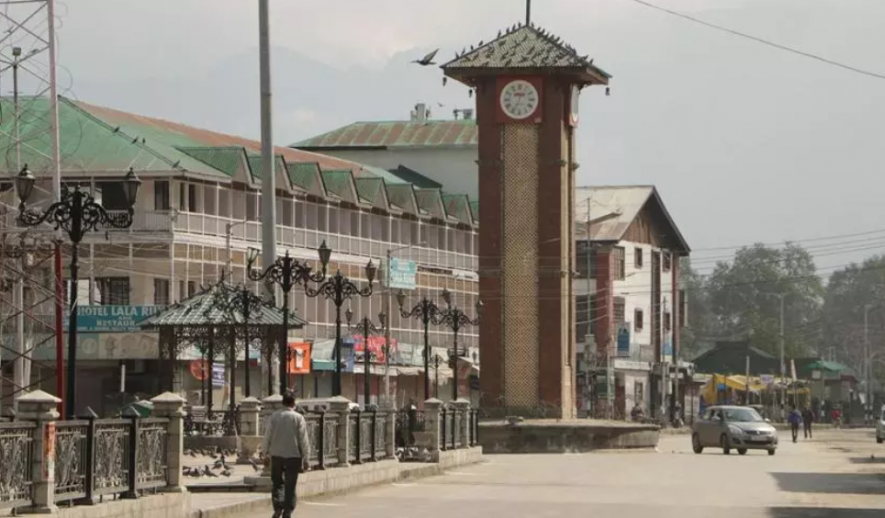
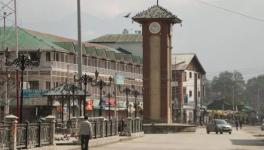
File Photo
I am a Kashmiri Muslim. That sentence alone now carries a burden that it did not always carry in this country. It no longer simply names a place or a faith; it marks a condition -- one of explanation, suspicion, and permanent audition. Every time I step outside the Valley, I am reminded that my citizenship is not assumed. It is examined. It is tested. It is sometimes demanded in the language of slogans, sometimes in the language of threats, and often in silence that waits for me to falter.
For Kashmiri students, artisans, and those who leave home only to earn a living, this is no longer exceptional. It is routine. You are stopped at stations, questioned about identity documents no one else is asked to show, warned about how you should speak, what you should avoid saying, and increasingly, what you must say. Patriotism is no longer inferred from conduct or civic belonging; it is extracted through performance. Chanting has become a substitute for citizenship. Refusal is treated not as choice, but as provocation.
The demand to chant slogans like “Jai Shri Ram” or “Vande Mataram” is rarely framed as violence by those who impose it. It is presented as something lighter -- a gesture, a courtesy, a harmless affirmation. But anyone who has lived at the receiving end knows better. This is not about affection for the nation. It is about power. It is about who gets to decide the terms on which ‘belonging’ is granted. When refusal is followed by threats, beatings, or public humiliation, the real meaning of the demand becomes unmistakable, which is obedience masquerading as patriotism.
“Vande Mataram” occupies a particular place in this discourse. Its defenders insist that it is merely a national song, emptied of context and history. But history does not empty itself so easily. The song emerges from Anand Math, a novel that does not hide its hostility toward Muslims. The Muslim figure in that novel is not a fellow inhabitant of the land but an obstacle to be overcome, an enemy to be defeated. This is not an incidental detail; it is the moral architecture of the text. To ask Muslims to sing this song without acknowledging that inheritance, is to demand amnesia. To insist upon it as proof of loyalty is to ask for something more disturbing -- consent for one’s own symbolic erasure.
Read Also: Identity Issue to Fore: The Vande Mataram Row
For a Kashmiri Muslim, this demand does not arrive in abstraction. It arrives in railway compartments, on streets, near hostels, in workplaces. It arrives backed by numbers, by menace, by the confidence that nothing will happen to those who enforce it. The violence that follows refusal is not spontaneous. It is enabled. It rests on the knowledge that the system will look away, that complaints may dissolve, that accountability is unlikely. This confidence is itself political. It tells us that some forms of violence are now socially legible as acts of “national discipline”.
We have heard enough stories, and seen enough individually, to know that this is not paranoia. Students are cornered and told to chant or leave. Artisans are abused while carrying their goods. Workers are warned that employment comes with conditions that extend beyond labour. Each incident may look small in isolation, but together, these form a pattern -- one in which Kashmiri Muslims are reminded, repeatedly, that they inhabit public space on sufferance.
What is most corrosive is not only the physical risk, but the moral calculation it forces upon Kashmiris. You begin to ask yourself questions no citizen should have to ask. Is silence safer than refusal? Is compliance temporary protection? Will asserting dignity cost more than it preserves? This is how coercion works: it turns conscience into a liability. It teaches you that integrity is expensive, and that safety is conditional. Over time, this produces not loyalty, but exhaustion.
This is not nationalism as shared political commitment, but as surveillance. It does not ask what you contribute, how you live, or whether you respect the law. It asks whether you can be made to say what you are told to say. Symbols become instruments of discipline, not expressions of belonging. In this arrangement, the Kashmiri Muslim is made to feel not a citizen among others, but a permanent suspect -- tolerated when compliant, punished when resistant.
What this kind of regime ultimately destroys is trust -- between citizens, in institutions, in the idea that law, not sentiment, governs public life. When mobs feel authorised to test loyalty, and institutions fail to intervene, the constitutional promise quietly retreats. Rights remain on paper, but their availability becomes uneven. You learn, quickly, that some grievances travel further than others.
The psychological cost of this is cumulative. You begin to move differently. You lower your voice. You avoid certain conversations. You rehearse answers. Identity becomes something to manage rather than inhabit. For students, this bleeds into classrooms where certain questions feel dangerous. For workers, it enters the workplace where silence becomes a strategy. For families, it becomes a constant worry -- about safety.
And yet, what is often misunderstood is that refusal still happens. Quietly, unevenly, without heroism. Many Kashmiri Muslims continue to refuse these demands not because they seek confrontation, but because something in them resists being rewritten. This refusal is not loud. It does not announce itself. But it carries moral weight precisely because of its cost. It says: I will not celebrate a story that erases me. I will not perform loyalty by denying my own history.
This is where the deeper failure of the current moment lies. A democracy confident in itself does not require ritualised affirmation. It does not fear silence. It does not punish refusal. The insistence on compelled speech signals not unity, but anxiety -- about difference, about memory, about narratives that do not align neatly with power. Nationalism that must be enforced through fear has already confessed its weakness.
For Kashmiri Muslims, the question is no longer abstract: what does it mean to belong to a nation that demands gratitude for humiliation? What does loyalty mean when it requires forgetting? These are not ideological provocations. These are questions that arise naturally when citizenship is experienced as conditional, when dignity must be bargained for, and when history is treated as an inconvenience rather than a shared inheritance.
If the nation insists that patriotism can only be expressed in one voice, through one set of symbols, then it is not building solidarity -- it is narrowing itself. A political community that cannot accommodate refusal will eventually criminalise memory. And when memory becomes suspect, justice follows.
We refuse such demands because we take the idea of citizenship seriously. Because we believe that belonging cannot be coerced, that loyalty cannot be beaten into someone, and that dignity cannot be conditional. To say this as a Kashmiri Muslim today is to accept risk. But it is also to insist that the nation must be larger than its loudest slogans.
Patriotism does not live in chants extracted under threat. It lives in the ordinary, difficult work of living together without forcing each other into moral submission. Until that truth is reclaimed, every forced slogan will speak less about love for the nation and more about fear of those who refuse to disappear.
Zahid Sultan is Kashmir-based independent researcher. Anusreeta Dutta is a columnist and climate researcher. The views are personal.
Get the latest reports & analysis with people's perspective on Protests, movements & deep analytical videos, discussions of the current affairs in your Telegram app. Subscribe to NewsClick's Telegram channel & get Real-Time updates on stories, as they get published on our website.