





Italy Referendum: Millions Defeat Meloni’s Judiciary Reform Plans
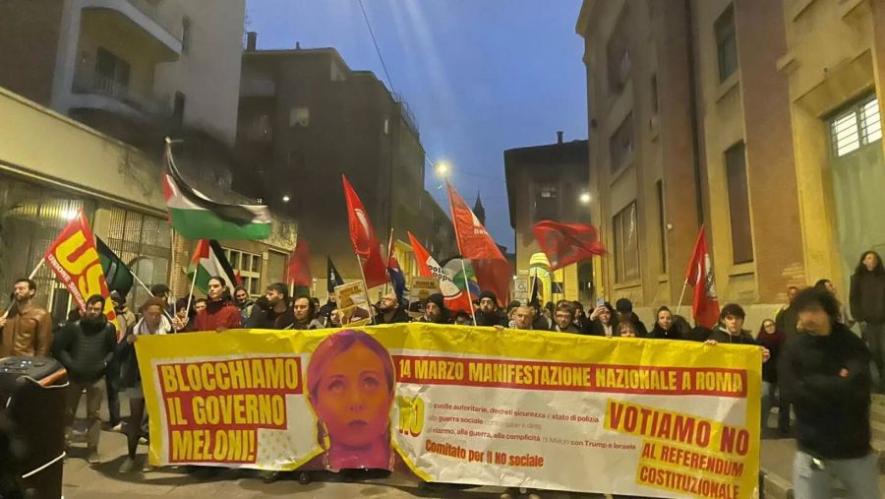
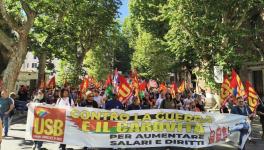
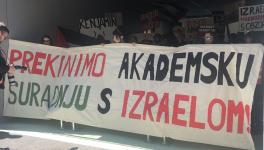
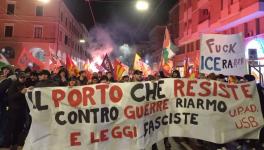
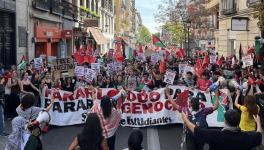
Protest ahead of March 22-23 referendum in Italy. Source: Cambiare Rotta/Facebook
More than 15 million people defeated Giorgia Meloni’s intention to reform the judiciary and erode the separation of powers by voting “NO” at a referendum on March 22-23. With almost 60% of eligible voters participating, the outcome has sent waves across the political landscape – and marked an enormous victory for social movements, trade unions, and youth associations that have built resistance to Meloni’s repressive agenda over the past years.
The far-right administration wanted to introduce constitutional changes that would increase government control over the judiciary, under the pretext of an inefficient magistrature slowing down legal processes. The entire state apparatus, including Italy’s biggest media houses, was mobilized to ensure the reform would pass – and failed.
According to Giuliano Granato from the left party Potere al Popolo, the referendum’s high participation is a breakthrough in itself. In the weeks leading up to the vote, students found ways to bypass bureaucratic and economic obstacles that would have prevented them from voting away from home, while others traveled literally across the world to participate.
“This is important, on the one hand, because many people wanted to take action on the issue at hand,” Granato told Peoples Dispatch. “But many also voted because they saw it as an opportunity to send a political message.”
All the layers of a “no”
For “yes” votes, the political message was pretty straightforward: confirmation of the right-wing government’s mandate and more space to implement its program. For “no” votes, however, the meaning should be analyzed through multiple layers, Granato emphasizes. The first “no,” he points out, was in defense of the constitution – a progressive constitution forged after the defeat of fascism with participation from those who took part in the resistance.
The “no” was also a refutation of the government in general, Potere al Popolo and other left organizations insist. “We believe,” Granato says of the mass vote against, “this has acted as a catalyst for much broader discontent that traditional political opposition couldn’t adequately channel.”
The referendum numbers surpass the voting base of traditional center and center-left parties, indicating many voters who usually abstain took part. Granato suggests this should be interpreted in the context that, due to Italy’s political landscape – where options from right to center-left essentially run on the same economic premises – people usually feel their vote does not change anything. In this case, it was different. “People knew their vote would count,” he points out.
This was one of the results of a highly polarized campaign, reinforced by uncertain polls up until the very end. Even the day before the referendum began, Granato notes, one could not predict which way the vote would swing. “People participate when they feel their input matters. When they think it makes no difference, they stay at home.”
The “no” was also a rejection of anti-worker policies, as demonstrated by trade unions’ participation in the building of a campaign for a “social ‘no.’” According to the grassroots union Unione Sindacale di Base (USB), the result “sends a strong signal of change and struggle that should be channeled into efforts to protect living and working conditions, as well as getting Italy out of wars and demanding the dismissal of the Meloni government.”
Opposition to war and militarization is another layer to the referendum’s results, stemming not only from massive mobilization in solidarity with Palestine that brought Italy to a halt three times during the genocide, but also from opposition to the administration’s silence and servility toward illegal attacks launched by the Trump and Netanyahu governments – including in Iran and Lebanon, but also Venezuela and Cuba.
“And this isn’t just an ethical ‘no,’” Granato adds. “It’s a ‘no’ with immediate material consequences for Italy, since the country is already hard-hit by inflation [stemming from these assaults]. Fuel prices have already risen, along with utility bills and the cost of essential supplies.”
Generation Gaza is alert and active
In this context, Potere al Popolo, USB, student associations Cambiare Rotta, CAU and OSA, and many more took to the streets across dozens of cities immediately after the results were announced, demanding the Meloni government resign. While the administration has repeatedly demonstrated its ability to ignore popular demands and is expected to do so in this case as well, these organizations intend to seize the referendum’s momentum and build the transformative power Italy needs.
This includes, as Granato details, fighting for radical change in labor and living conditions, including living wages and safe working conditions for all workers, shaping a true industrial strategy oriented toward the wellbeing of the majority rather than wealthy industrialists and corporations, and building energy sovereignty. Finally, it includes introducing a different foreign policy independent of NATO and US interests and rooted in global cooperation and solidarity.
The high participation of young voters – with around 58% of this population group rejecting Meloni’s proposals – gives hope that this battle can be won. “Generation Gaza” in Italy is “alert and active,” Granato says – and together with other progressive forces, it will not give in to the far right.
Courtesy: Peoples Dispatch
Get the latest reports & analysis with people's perspective on Protests, movements & deep analytical videos, discussions of the current affairs in your Telegram app. Subscribe to NewsClick's Telegram channel & get Real-Time updates on stories, as they get published on our website.