





Gen-Z Won a Battle, But War for a Better System is Long!
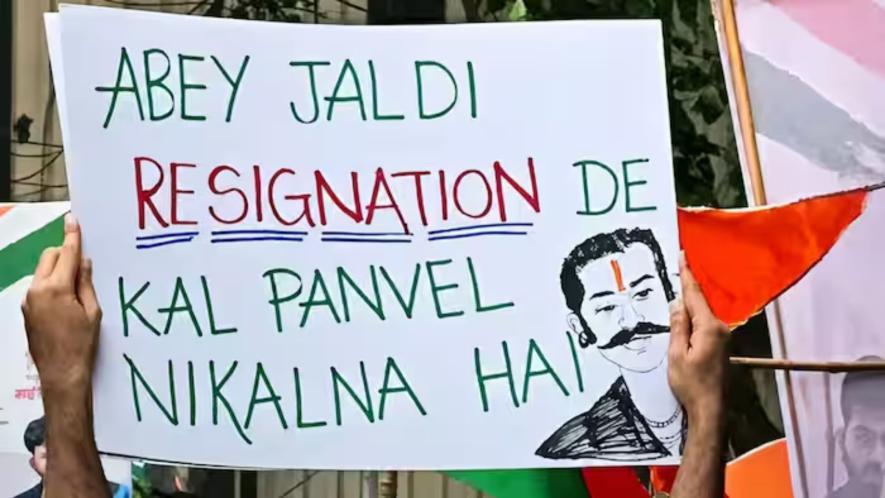
Image Courtesy: @iamneeraj___/X
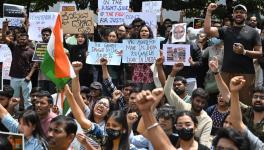
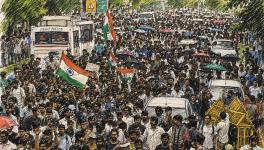
"The sword of revolution is sharpened on the whetting-stone of ideas"—these words of Shaheed-e-Azam Bhagat Singh probably echo the loudest through what India witnessed in July 2026. The student-youth uprising wasn't a single-day ordeal. Years of systematic disarray in education, lack of employment and good jobs, and broken aspirations, with the final nail in the coffin owing to the judiciary's hurtful statements to the people at large, especially the already distraught Gen-Z, culminating into the phenomena which took place.
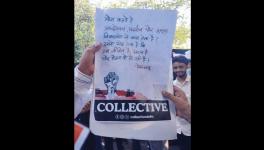
No one could have imagined that a satirical digital initiative, taken thousands of kilometres away from India, could channelise the kind of uprising we all witnessed. A single idea of expression turned into recent years' largest mobilisation, guided by newer entrants like the Cockroach Janta Party, and existing, more structured student organisations like the AISA, KYS, SFI and AISF.
The approaches and outcomes can very well be interpreted through varied lenses, but what remains undeniable is that people organically responded and came together, asking all the right questions and demanding the most basic of democratic principles of accountability and justice.
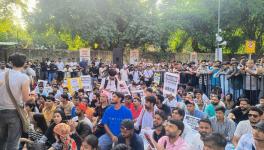
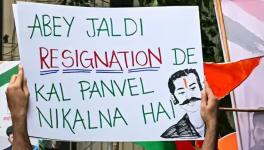
As this writer witnessed the last few moments at Jantar Mantar on July 25, there was gleaming happiness, colours flying, sweets being distributed, and a unison celebration of the Education Minister's resignation. People gave their blood, sweat, and tears, and saw this as a win.
But instead of simply being joyous as a Gen-Z who engages with both policy and politics, two important thoughts come to my mind. What does the history of protests under this very regime tell us about what we achieved, and more importantly, that this isn't a time to pause but to bolster more action—our generation can get it done, but the approaches must be much more nuanced, systemic, and collective.
It is undeniable that mass mobilisation on the streets has yielded us some immediate results. This is not just true for what we witnessed recently, but those of us who were present for the anti-CAA-NRC (Citizenship Act) and farmers' protests, would remember it much the same way. But this same history offers a strong word of caution—not just on the value of these results, but also on their validity.
In both of the past two movements (farmers’ and anti-CAA), as attention faded and time progressed, the State found ways to blunt or reverse the gains that had been made—possibly because the momentum didn’t translate into standing organisational or electoral infrastructure that could hold the State accountable once the cameras left. The quintessential example is the subsequent passing of the CAA and the re-packaging of the NRC or National Register of Citizens through the heavily debated and contested special intensive revisions (SIR) of electoral rolls. Once public attention moved on, there was no durable coalition left to contest the process, and the State simply resumed at its own pace.
The central lesson to be taken here, especially in terms of our Gen-Z, is that FOMO (fear of missing out) and re-activism can only take us so far—they can fill the streets, but cannot alone sustain the agenda once fatigue creeps in and attention fades, unless that energy is captured into something organised and sustained before the crowd disperses. This is probably an important piece of the puzzle that remains yet to be fully focused upon, especially for our organised political opposition groups, from the Congress to the Left.
There is serious cause to stress the question of how the momentum, aspirations, energy, and anger of the hundreds of thousands gets converted into something much more durable. This could look like induction within organisations themselves, or outreach, sensitisation, and sustained follow-up with participants of the movement. It is imperative that we aim to mobilise the masses and practice age-old mass political mobilisation across sections and not just the student groups, especially where mobilisation is becoming, or is already, weaker.
This organising and sensitising process should also pay much more heed to the question of how mobilisation can be shifted from singular issue-based politics toward broader, systemic and rights-based demands. A number of student organisations in this latest movement did make such systemic demands. However, if we broadly assess the key outcomes of the recent movement, it could not achieve systemic reforms or, more importantly, converge the many challenges running in tandem.
There could be a counter-argument that making the agenda or demands too broad, or converging parallel issues, could dilute the issue at hand—and this risk is real. Broad coalitions often lose the focused public sympathy that made the issues of NEET and student-suicide so powerful in the first place. But this is less an argument against convergence than an argument about sequencing.
The narrow, sympathetic fight should be won first, as it largely was, precisely because it builds the organisational capital, credibility, and public trust that a broader coalition can then draw on. Convergence, in other words, is not a Day-One demand—it is what the movement does with its win, once the first battle is behind it.
Skipped entirely, each struggle stays isolated and replaceable and if the ambition is toward actual systemic and structural change, sequenced convergence is potentially the way forward. This is because ultimately it is broader systemic and institutional failures that lead to such challenges in the first place.
Looking back over the previous month, there were a number of movements and unrests that ran parallel to Jantar Mantar where such convergence could have happened, but despite the significance of each, either made only brief appearances or were absent on the collective agenda at Jantar Mantar. This includes the rural Adivasi community's strong movement and the parallel hunger strike in resistance to the Ken-Betwa river-linking project. Many of the workers and activists who raised their voices for basic demands like better wages and working conditions still languish in incarceration. The ongoing challenges of polluted air and the frothing, polluted Yamuna have also been ever-present.
What links all of these—education, displacement, labour, environment—is a shared governance style: top-down decisions made with little to no consultation with the people they affect, followed by silence or suppression when those people push back.
It was apparent that, unlike the insurmountable support garnered for the NEET cancellation and student suicides, the same never happened for these other issues—likely because the affected groups (Adivasi communities, incarcerated workers) are less visible and less socially proximate to the urban, English-speaking Gen-Z that dominated the recent mobilisation, whereas the education crisis hit that same demographic directly.
It remains difficult for one movement to provide all the answers, and that is where all the struggles and mobilisations must come together. Taking all these issues together to make a more structured, systemic demand would highlight this shared governance failure underneath each of them.
And if someone still fails to see this interlinkage, here is a simple way to point it out to the naysayers: the new education secretary, now brought in to oversee reforms, was also in the environment ministry until quite recently—the same administrative culture moving from one broken portfolio to the next.
The other argument is that Delhi remains at the heart of the nation's attention, and student issues are the most topical, which explains the neglect of other issues—and to that point, it can only be a humble appeal to all of us as the younger generation that we need to, and can, do better. Neither issue is bigger than the other, nor can our empathy be selective. So, this begs the question—especially to everyone who voiced their opinion or took to the streets—will we be equally present for all such injustices around us, either in person or in spirit? No matter where we are, will we rise to action again with the same strength, the same voice, for the sake of our better future?
The protesters and Gen-Z remain quite aware that one education minister's resignation isn't the be-all and end-all. However, systemic overhaul means translating political processes into actual policies, which isn't a straightforward job. And as uncharismatic as it may sound, it is an unglamorous, tedious job that happens through years of engaging with severely complex, layered federal and democratic institutions, especially in a country as large, heterogeneous, and developing as India.
Despite that challenge, this writer believes in the words of late President APJ Abdul Kalam—'The ignited mind of the youth is the most powerful resource on the earth, above the earth, and under the earth.'
We have finally peaked as a population group in India, with more than a quarter of us within the 15 to 29 age-group, and we have shown that we are a generation that can fight. This is the call-sign that we should find more ways to engage with socio-economic and political questions through research, public-policy institutions, grassroot civil society, political organisations, or even through simple peer-to-peer conversations that will enable us to find new means to progress society.
What this concretely means is building the unglamorous infrastructure this piece has argued for: induction pipelines that bring protest participants into engaged citizenry and collective actions rather than losing them the day the crowd disperses; sensitisation efforts that converge our broader challenges like education struggle to the Adivasi, labour, and environmental ones; and sustained ground-up mass engagement that keeps pressure on institutions long after the news cycle moves on.
No matter where we are, we need to take accountability and ownership of our actions, educate ourselves on the challenges of our peers and fellow citizens, and, most importantly, be empathetic and politically aware. The future doesn't need one more leader showing us the way—we know that has failed us—but we need to build a society of leadership where we can collectively create a system that is truly for the people, by the people, and of the people.
The writer is a public policy professional who has been associated with environmental and political movements. The views are personal.
Get the latest reports & analysis with people's perspective on Protests, movements & deep analytical videos, discussions of the current affairs in your Telegram app. Subscribe to NewsClick's Telegram channel & get Real-Time updates on stories, as they get published on our website.