





Democracy Runs on Trust: Reflections of a Presiding Officer
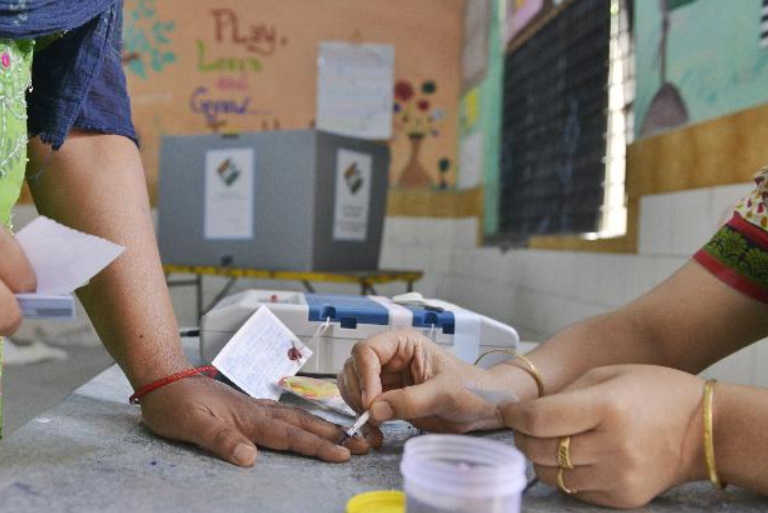
Representational Image(File Image)
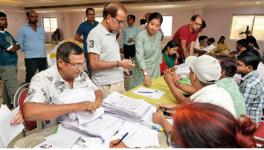
Being a teacher of political philosophy, one learns and discusses the nuances of democracy and its expressions mostly in terms of institutions, procedures, and theories of representation. On assuming the role of a Presiding Officer on an election day, however, one witnesses an aspect of it unfolding in a more immediate and compelling form - as a lived experience of ordinary citizens.
Trust in the System
For example, this fragile old woman at a Kannagi Nagar booth in the Sholinganallur constituency in Tamil Nadu can barely walk or see and moves slowly towards the voting compartment. No authority has commanded her presence, nor does any immediate benefit await her. But she has come, braving age and the blistering sun. More than compliance with a civic duty, this voluntary act is clearly an expression of her faith in a system that recognises her as a political participant.
One observes from the Presiding Officer’s table how resolutely ordinary citizens like her line up to partake in a significant political exercise, the periodic transfer of political authority from the demos to its representatives with a mandate to govern. Fatigue on their face cannot conceal their resolve and faith. This shows that democracy in India is sustained not so much by institutional design or constitutional provisions as by the continually held trust of ordinary citizens in its fairness and accessibility. Its erosion would result in profound moral and political consequences for the country.
Trust that Carries Moral Burden
On an election day, one observes that a few have come dressed up as befitting for some solemn occasion. However, for many, being able to be present at the polling station itself is an achievement. Voting for them is not an event requiring detailed preparation, but an interruption in daily life. Some of them have turned up taking a break from their ordinary work, as seen in the untidy uniforms that they are wearing. Many not-so-lucky others must have lost the day’s wages. However, they show up with reverence for a system that they believe in.
More than procedural compliance, voting is an expression of this civic faith in a system of representation and a commitment to it. Democracy’s success or failure depends heavily on this quasi-ritualistic trust. This ought to concern us. A system that commands such trust also carries a heavy moral burden. It cannot afford to betray that trust.
Exclusion is Devastating
You also don’t miss subdued disappointment and shame on the face of a very few who have to be turned back as their names do not appear in the electoral rolls. They gently complain, with a desire to avoid further humiliation, that they have voted at the same booth earlier. All of a sudden, they have found themselves negated of their political relevance - groundless and homeless in a democracy. Though the exclusion is silent and technical, its effects are devastating.
Here democracy does not merely fail administratively. It betrays the confidence and trust of a people, for whose sake it exists. For the excluded, this is not merely deletion of names or administrative inefficiency, but an ontological obliteration of their very political existence. It is a bureaucratic omission experienced as a withdrawal of recognition – a suspension of their status as participants in politics and a threat to their identity and authority. Such instances reveal the fragility of democratic practices and can risk undermining the very conditions under which our collective political life is built.
The success of democracy in India heavily depends on the trust of a billion people in the representation process itself. It is evident from the high voter turnout in the recently concluded assembly elections, that people still trust it and are loyal to it, despite visible signs of strain.
Democracy Survives on Participation
It follows that any attempt to sabotage this trust or manipulate this process of democratic representation is not merely political corruption. Moral authority in a democratic system is derived from the trust of its citizens. Any attempt to undermine the process of representation hence would constitute a breach of this moral contract – between the citizens and institutions - and would undermine the legitimacy of the elected. Every election in India also tells stories of immense collective effort - sacrifices of voters, party workers, polling officials, security personnel among others, and expenditure of enormous public resources. All of it embodies an expectation that the transfer of political authority is voluntary and legitimate.
Democracy will survive as long as citizens continue to believe that their participation matters. However, it should be remembered that democracy is not sustained by votes alone, but by the trust and loyalty of citizens as well. Trust and loyalty in a system are cultivated through continued practices of fairness and credibility, and once eroded, they are hard to restore. More importantly, if they are ever breached, the consequences wouldn’t be merely electoral. This would threaten the very foundations of our democratic life, the way we live our life with honor and dignity.
The writer is Assistant Professor, Department of Philosophy, Madras Christian College, Chennai. Views are personal.
Get the latest reports & analysis with people's perspective on Protests, movements & deep analytical videos, discussions of the current affairs in your Telegram app. Subscribe to NewsClick's Telegram channel & get Real-Time updates on stories, as they get published on our website.